96% Vehicle Users In Pune And Pimpri-Chinchwad Willing To Shift To Cleaner Transport Options, Reveals ITDP Study
96% Vehicle Users In Pune And Pimpri-Chinchwad Willing To Shift To Cleaner Transport Options, Reveals ITDP Study
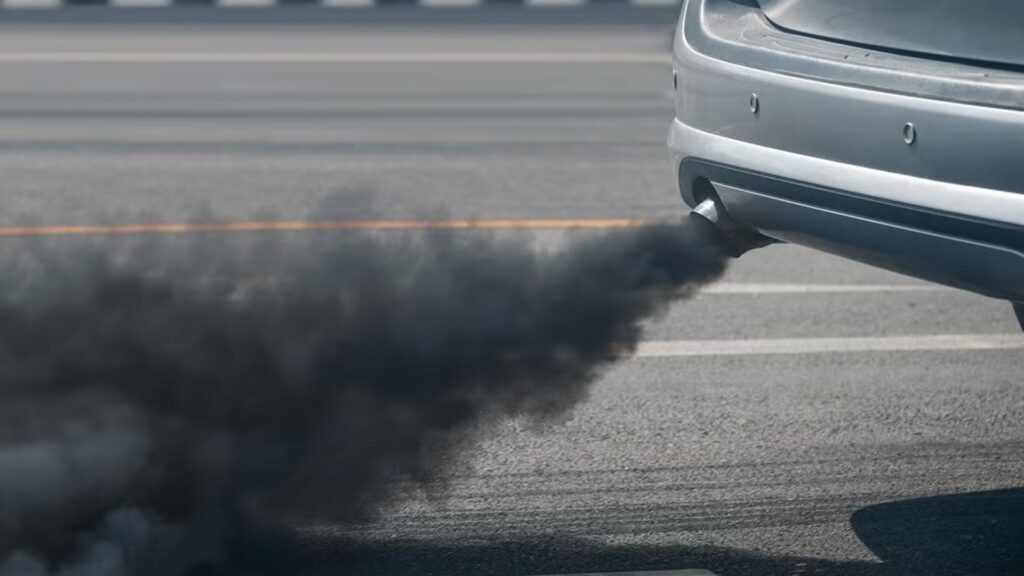
Pune–Pimpri-Chinchwad | February 24, 2025: Amid rising urban pollution and growing health concerns, a new perception survey has revealed that 96% of vehicle users in Pune and Pimpri-Chinchwad are willing to stop using highly polluting vehicles if strong policy measures such as bans or daily pollution charges are implemented.
The study, conducted by ITDP India, surveyed 2,000 citizens within the municipal limits of Pune and Pimpri-Chinchwad between September and October 2025. The respondents included personal two-wheeler and four-wheeler users, comprising 1,213 males and 787 females, across 20 different locations.
The survey found that if a daily pollution charge is imposed on high-polluting vehicles, 96% of users would stop using such vehicles, indicating strong public support for cleaner mobility policies.

Shift in Travel Behaviour
When citizens were asked about their preferred travel choices if a ban on high-polluting vehicles was enforced:
- 96.5% said they would shift to less-polluting or zero-emission private vehicles, such as electric vehicles (EVs) or BS-6 compliant vehicles.
- 24.5% said they would consider public transport, walking, or cycling as one of their top two travel options, showing a positive shift towards sustainable mobility.
In an alternative scenario, respondents were given the option to continue using polluting vehicles by paying a daily pollution charge of ₹75 for two-wheelers and ₹150 for cars instead of a ban. Only 4% agreed to pay the daily cess, mainly for occasional or emergency travel, while 96% still preferred switching to cleaner or EV vehicles rather than paying the charge.
This clearly demonstrates that policies discouraging polluting vehicles while promoting clean alternatives can drive a rapid transition towards low-emission mobility.
Public Perception on Air Pollution
The study also captured strong public concern over environmental and health impacts:
- 82% of respondents believe air pollution is a major problem in the city, with vehicles and industries seen as the main contributors.
- 60% reported experiencing health issues they believe could be linked to poor air quality.
Low Emission Zones (LEZ): A Policy Pathway
The findings highlight the potential for cities to adopt Low Emission Zones (LEZs)—a strategy already used in global cities like London, Seoul, and Brussels. LEZs are designated areas where highly polluting vehicles are either banned or charged a daily pollution fee, ensuring that only cleaner vehicles operate within city limits. Such zones are typically supported by improvements in public transport, walking, and cycling infrastructure.
Earlier surveys by ITDP India and the International Council on Clean Transportation in 2023–2024 found that in Pimpri-Chinchwad, nearly 70% of internal combustion engine (ICE) vehicles are BS-4 or older, while in Pune, about 71% of ICE vehicles fall into the same category. Research shows that PM2.5 emissions in BS-6 diesel vehicles are up to 80% lower than BS-4 diesel vehicles.
Modelling studies further revealed that if Pimpri-Chinchwad discourages BS-4 and older vehicles, particulate matter emissions could fall by 78%–83% within 4–5 years if users shift to BS-6 vehicles, and 85%–91% if they shift to EVs. In Pune, discouraging BS-4 and older vehicles could reduce particulate emissions by 81%–84% with a shift to BS-6 vehicles.
Survey Data Snapshot
- Total respondents: 2,000
- Female: 787 | Male: 1,213
- Two-wheeler users: 555 (female) + 693 (male)
- Four-wheeler users: 232 (female) + 520 (male)
- Locations covered: 20
The study concludes that a phased, citywide Low Emission Zone policy, combined with support for public transport and clean vehicles, could become a transformative step in improving air quality and public health in Pune and Pimpri-Chinchwad.