Can The Government Bulldoze Your House Anytime? Here’s What Indian Law Actually Says
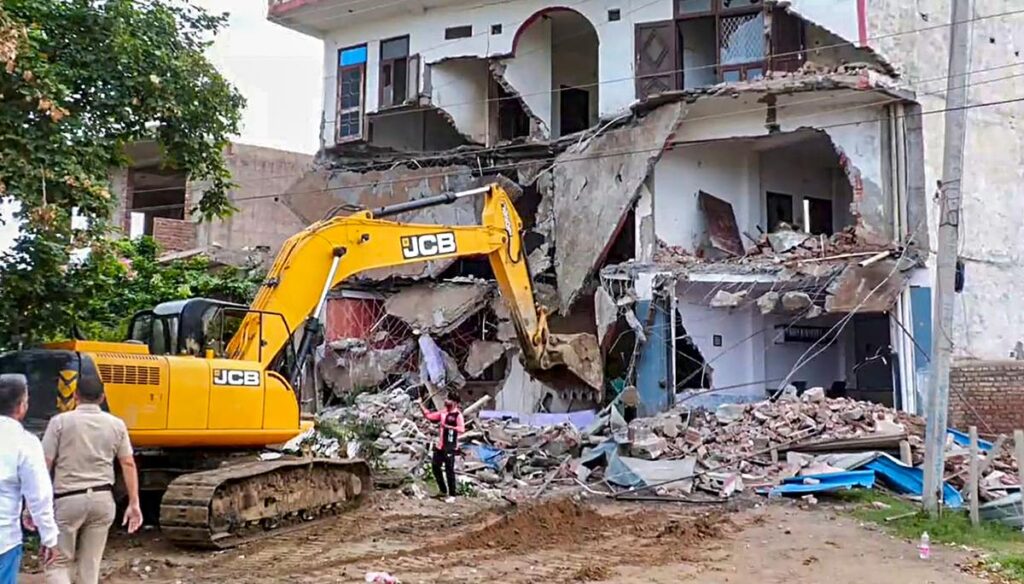
Can The Government Bulldoze Your House Anytime? Here’s What Indian Law Actually Says
Article 300A of the Constitution protects citizens from arbitrary demolition, making legal notice, hearing and due process mandatory before property action is taken.
The increasing use of “bulldozer action” by authorities in different parts of India has raised serious questions about property rights and legal protections available to citizens. While governments and civic bodies can act against illegal constructions or dangerous buildings, Indian law clearly states that such action cannot be arbitrary.

According to Article 300A of the Constitution of India, no person can be deprived of property except through the authority of law. Though the right to property is no longer a fundamental right, it remains a constitutional legal right protected under due legal procedure.
What Article 300A Says
The Constitution makes it clear that the government cannot demolish or acquire property without following lawful procedures. Any action taken must be legally justified and supported by proper administrative process.

Courts, including the Supreme Court, have repeatedly observed that bulldozer action cannot be used as instant punishment or arbitrary state action. Authorities must act strictly within legal limits.
Notice Before Demolition Is Mandatory
Before demolishing a house, shop or structure, authorities are required to issue a formal notice to the owner or occupant. The person must be given reasonable time to respond, present documents and defend their case.
Legal experts explain that direct demolition without notice or hearing can be challenged in court for violating principles of natural justice.
When Can Demolition Be Allowed?
Authorities can legally take action in cases involving:
- Unauthorized or illegal construction
- Encroachment on public land
- Buildings declared dangerous or unsafe
- Land acquisition for public projects such as roads, dams, railways or development works
However, even in such cases, the government must follow legal procedures and provide compensation wherever required by law.
What The MRTP Act Says
In Maharashtra, action against unauthorized constructions is governed by the Maharashtra Regional and Town Planning (MRTP) Act, 1966.
Under Sections 52 and 53 of the Act, civic authorities can issue notices and remove illegal structures after following the prescribed legal process.
The law also allows action against buildings that pose danger to public safety. Municipal corporations and local self-government bodies are empowered to demolish such structures if necessary.
Seven Rights Linked To Property Protection
Legal interpretations of Article 300A highlight several protections citizens are entitled to during property acquisition or demolition proceedings. These include:
- Right to notice
- Right to be heard
- Right to a reasoned decision
- Acquisition only for public purpose
- Fair compensation and rehabilitation
- Timely and efficient legal process
- Proper conclusion of proceedings
What Courts Have Said
The Supreme Court has emphasized that demolition or acquisition cannot happen merely at the discretion of authorities. Governments must prove that action is lawful, necessary and carried out according to established procedure.
Experts say this framework attempts to balance individual property rights with public interest and infrastructure development needs.
While governments do have powers under the principle of eminent domain to acquire land for public purposes, they are legally bound to ensure fairness, transparency and compensation during the process.