‘How Does She Know She’ll Be Sick Tomorrow?’ Man’s Post On Maid’s Leave Goes Viral
‘How Does She Know She’ll Be Sick Tomorrow?’ Man’s Post On Maid’s Leave Goes Viral
Social media divided as users debate fairness, work culture and treatment of domestic help
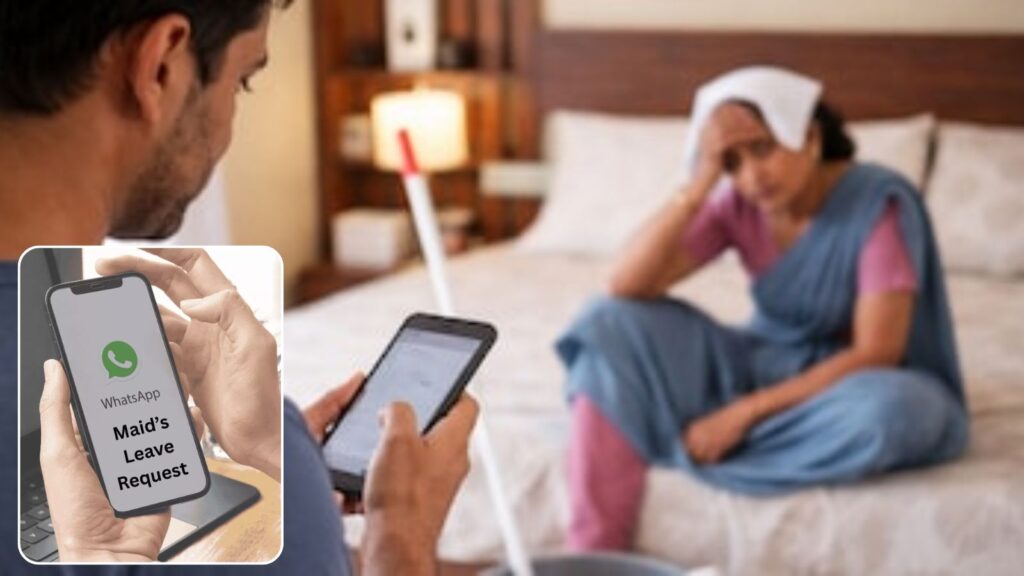
A social media post by a man about his domestic help’s understanding of “sick leave” has gone viral, sparking a wider debate online about workplace behaviour, fairness, and treatment of household workers.
The post, shared on Reddit, described how the domestic help learned about the concept of sick leave after observing the man take time off from work due to illness. Curious, she asked why he was not going to the office, and his mother explained that he was on sick leave.

According to the user, the domestic help soon began using the same concept — but in a different way. He claimed that she now informs in advance that she will be taking “sick leave” the next day, even when the leave appears to be planned.
Sharing his frustration, the user wrote, “How do I make my maid understand the core concept of sick leave?” He also joked about the irony, saying it is difficult to predict illness in advance, yet she seems to do so.
Internet Reacts With Mixed Opinions
The post quickly gained traction, with many users offering differing perspectives on the situation.
Some users questioned whether the issue was significant at all. One comment read, “How often is she actually taking a leave? If it’s just once or twice a month, then I don’t see the problem. They are workers, not slaves.”
Others pointed out a deeper issue, suggesting that people often project their own workplace frustrations onto domestic workers. One user wrote, “Break the trauma cycle… treat her well instead of passing on corporate stress.”
A few responses also took a sarcastic tone, reflecting how corporate work culture influences personal expectations.
Debate Around Work Culture And Fairness
The discussion has highlighted how concepts like sick leave, common in formal workplaces, are interpreted differently in informal sectors like domestic work.
It has also raised broader questions about employer expectations, communication, and fairness in household employment arrangements.
The viral post continues to generate reactions, with many users emphasising empathy and balanced expectations in everyday working relationships.