Pune Citizens Pay Tribute to Atul Subhash, Send ‘Get Well Soon’ Wishes to Judiciary, Urging Accountability and Reforms
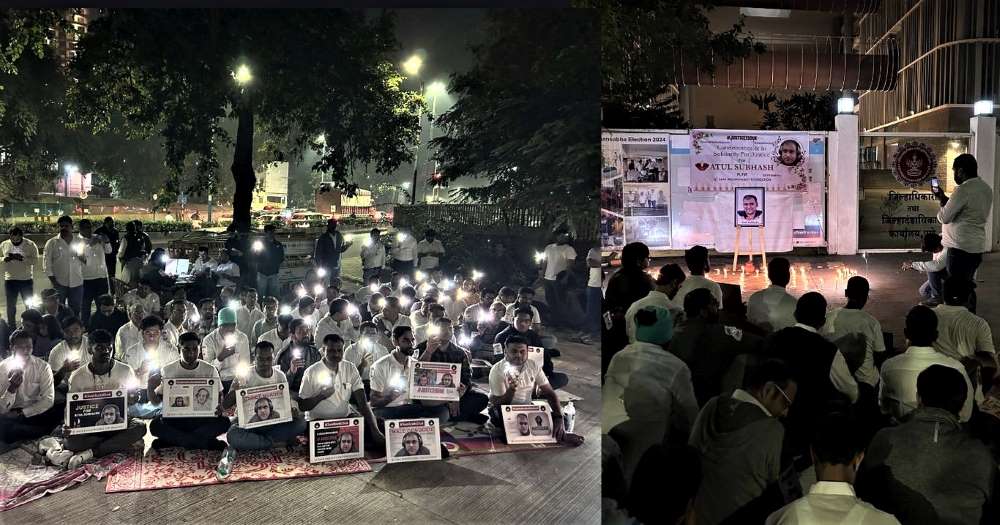
Pune Citizens Pay Tribute to Atul Subhash, Send 'Get Well Soon' Wishes to Judiciary, Urging Accountability and Reforms
Pune, 15th December 2024: In a poignant gathering at the Pune District Collector’s Office, over 100 individuals, including men’s rights activists from the Save Indian Family Foundation (SIFF), came together on Sunday to honor the memory of Atul Subhash, a 34-year-old AI expert who tragically took his life in Bengaluru. The event not only served as a tribute to Subhash but also as a platform to demand urgent reforms in India’s judicial and legislative systems to address challenges faced by men in matrimonial disputes.
A Call for Judicial Reforms
Participants submitted more than 250 letters and flowers to the Chief Justice of India and principal district judges, urging them to shift from “idle mode” to “action mode” in addressing men’s grievances. Activists emphasized the need for a judiciary that treats men with fairness and dignity, instead of perceiving them as “criminals or ATMs.”

“Atul’s case is not an isolated tragedy but a representation of the struggles faced by countless men trapped in an oppressive legal system when marriages fail,” said Sameer Goel, SIFF coordinator.
Nine Demands for Reform
SIFF outlined nine key demands aimed at creating a balanced and equitable judicial process:
- Replace “Maintenance” with “Spousal Support”: Update the terminology and intent to reflect modern societal norms.
- Limit Spousal Support Duration: Cap it at half the length of the marriage, with child support continuing until adulthood or financial independence.
- Disqualify Employable Women: Women with professional qualifications or earnings above the taxable threshold should not be eligible for spousal support, barring exceptional circumstances.
- Restrict Multiple Applications: Courts should allow only a single claim for spousal support to avoid repeated harassment.
- Enable Remote Hearings: Allow video conferencing for litigants living over 300 kilometers from the court.
- Protect Men’s Right to Work and Travel: Prevent workplace harassment or restrictions that hinder employment and mobility.
- Adopt a “One Marriage, One Court” Policy: Consolidate all matrimonial cases into one jurisdiction.
- Stop Arbitrary Arrests Under Section 498A: Ensure proper investigation before arrests in dowry-related cases.
- Ensure Fair Trials and Investigations: Prevent misuse of legal provisions and encourage filing of closure reports where evidence is lacking.
Broader Demands to the Government
In addition to judicial reforms, SIFF urged the government to:
Establish a parliamentary committee to investigate systemic issues in matrimonial disputes, including Subhash’s case.
Penalize false accusations under Section 211 of the IPC.
Protect the right to life and liberty for all, including men, under Article 21 of the Constitution.
Investigate suicides linked to matrimonial disputes and propose actionable solutions.
A Wake-Up Call for Change
Subhash’s death has reignited debates about systemic flaws in India’s judicial system. SIFF highlighted the judiciary’s non-compliance with Supreme Court guidelines, particularly in cases like Rajesh vs. Neha, where maintenance orders are often passed without adequate evidence.
Pandurang Katti, co-founder of SIFF, criticized the lack of accountability in cases of false complaints. “The system must prioritize fairness and ensure justice for all parties,” he said.
About SIFF
Founded in 2005, SIFF is India’s leading men’s rights organization, advocating for legal reforms in dowry laws, alimony, and child custody while promoting fairness in matrimonial disputes. With chapters across India and globally, SIFF has become a prominent voice for justice and gender equality.
A Collective Demand for Justice
As citizens mourned the loss of Atul Subhash, the gathering symbolized a larger movement for systemic reform. Through letters, flowers, and collective action, they sent a clear message to India’s judiciary and government: the urgent need for a fairer and more humane legal system to prevent further tragedies.