Panhala Fort: A Fortress Where Every Stone Has a Story

Panhala Fort: A Fortress Where Every Stone Has a Story
High in the Western Ghats, surrounded by whispering winds and thick blankets of mist, stands a fort that has quietly witnessed the rise and fall of empires — Panhala Fort. It’s not just another relic of the past; it’s a living memory carved into the rugged hills of Kolhapur, Maharashtra. But have you ever wondered where this fort got its name? Or why it still holds such a magnetic pull on historians and travelers alike?
Let’s explore the lesser-known origins and enduring legacy of this majestic hill fort.
What’s in a Name? More Than You Think

Panhala Fort, today, is known for its breathtaking views and historical weight. But dig a little into the past, and you’ll find a different name once echoed in its valleys — ‘Parnal’.
According to one local tale, the name ‘Parnal’ is derived from the word ‘Parn’, meaning “leaf.” A fitting origin, perhaps, considering the lush green canopy that still blankets the fort’s terrain. This name may have symbolized the abundant foliage or possibly a deeper spiritual metaphor rooted in nature.
In another version of the story, the name ‘Panhala’ is believed to represent “innocence and importance.” While the interpretation is open to reflection, the essence of the word speaks volumes about the fort’s dual identity — calm yet commanding, serene yet strategic.
A Stronghold with Centuries Under Its Belt
Built in the 12th century by King Bhoja II of the Shilahara dynasty, Panhala Fort was more than just a military outpost — it was a seat of power. Over the centuries, it changed hands among many ruling dynasties including the Yadavas, the Bahamanis, the Adil Shahis, and eventually, the Marathas under Chhatrapati Shivaji Maharaj.
Its location wasn’t just beautiful — it was smart. Situated along a vital trade route and positioned to monitor movement between inland Maharashtra and the coastal Konkan region, it was a natural choice for rulers looking to control both commerce and security.
Moments That Shaped History
One of the most legendary chapters in Panhala’s story unfolded in 1660. Chhatrapati Shivaji Maharaj, under siege by the Adil Shahi forces, managed a daring escape — a tale still told with pride across Maharashtra. Disguised and smuggled out through clever strategy and loyal sacrifice, Shivaji’s great escape from Panhala remains one of the boldest episodes in Indian history.
And that’s just one moment. Over time, the fort served as a residence, an armory, and a sanctuary for leaders shaping the future of the region.
Inside the Fort: Architecture That Speaks
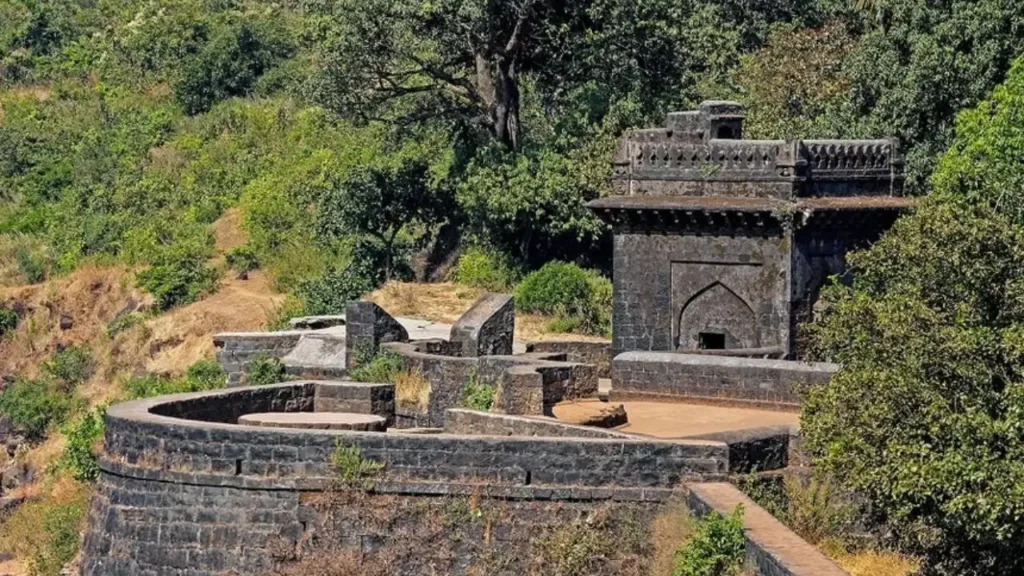
Panhala is a living museum, with every structure echoing stories from different eras:
Teen Darwaza: The grand entrance gate, showcasing Islamic-style arches and intricate carvings.
Sajja Kothi: A scenic watchtower with sweeping views, once used by Shivaji Maharaj himself.
Ambarkhana: Massive grain storehouses — a testament to how forward-thinking the fort’s planners were.
Andhar Bavadi: A hidden well with secret passages, meant to safeguard water during sieges.
Each corner of the fort is a blend of engineering brilliance and artistic detail.
Not Just a Fort, But a Cultural Symbol
Beyond the battles and bastions, Panhala holds spiritual and cultural significance. It is believed that saint Samarth Ramdas, spiritual mentor to Shivaji Maharaj, visited this fort — a symbolic passing of wisdom and strength. Today, the fort is a favorite among tourists, trekkers, and history lovers, not only for its panoramic views but also for the sense of connection it offers to Maharashtra’s proud heritage.
Panhala Fort isn’t just about the past — it’s about presence. Standing there, you don’t just see stones and walls; you feel the pulse of time, the echoes of footsteps that once shaped history.