Delhi May Soon Become Stray Dog Free City, HC Asks Govt To Frame Policy For Phasing Out And Rehabilitation
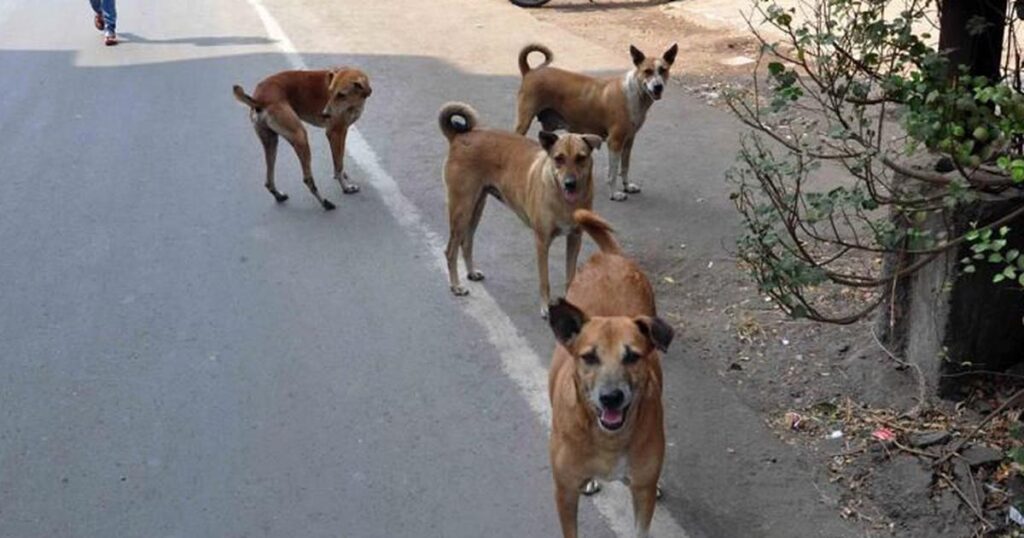
Delhi May Soon Become Stray Dog Free City, HC Asks Govt To Frame Policy For Phasing Out And Rehabilitation
In response to increasing reports of dog bite incidents across the Capital, the Delhi High Court has asked the city administration to develop a comprehensive policy aimed at institutional-level rehabilitation of stray dogs. The directive was issued on May 21 and became public on May 27 during proceedings on a petition filed by Pratima Devi, an elderly caregiver for over 200 stray dogs in Saket.
The court, led by Justice Mini Pushkarna, highlighted the need to gradually remove community dogs from public spaces in a humane manner. “Repeated cases of dog bites reported in the media and ongoing legal petitions make it necessary to have a structured plan to relocate and rehabilitate stray dogs,” the court noted.
However, the directive has sparked concern among animal welfare activists who argue that it clashes with existing legislation. Under the Animal Birth Control (ABC) Rules, 2023, established via the Prevention of Cruelty to Animals Act, 1960, community dogs may only be relocated temporarily for sterilisation and vaccination before being returned to their original locations.

Animal rights advocates fear the court’s order could lead to unintended suffering. Gauri Maulekhi, trustee of People for Animals (PFA), emphasized the impracticality and ethical concerns of mass confinement. “Relocating such a large stray population is neither feasible nor humane,” she said, urging instead a stronger focus on proper ABC implementation.
Activists cite gaps in the current ABC program, lack of designated feeding zones, and limited public awareness as root causes of increasing human-dog conflicts. Mismanaged sterilisation and inadequate return practices are also said to escalate tensions within neighborhoods.
The High Court referred the issue to the Chief Secretary of the Delhi government, calling for urgent policy-level attention. Pratima Devi’s petition had earlier led to interim protection from the demolition of her makeshift dog shelter. A joint meeting between Delhi government officials, the Animal Welfare Board of India (AWBI), and the petitioner was ordered on March 25, following concerns over the safety of 200 dogs left unsheltered.
At the May 21 hearing, authorities proposed releasing the dogs back onto the streets post-sterilisation, a plan the court rejected due to the overwhelming numbers involved. The next hearing is scheduled for August 6.
Animal welfare organisations argue that enhancing current laws is a better approach than seeking mass removal. Ambika Shukla, director of the Sanjay Gandhi Animal Care Centre, questioned the viability of large-scale housing and feeding plans for stray dogs. “Why not just ensure better ABC rule enforcement? That’s more effective and cost-efficient,” she suggested.
Activist Sonya Ghosh, known for her legal work in defending community dog rights, said the court’s directive contradicts both the ABC Rules and past Supreme Court judgments that protect the rights of stray animals. “The 2021 High Court had upheld the right to feed stray dogs, reinforcing their right to live in their territories. This new order goes against those principles,” she stated.
The debate continues as legal and animal welfare experts call for a balanced, humane, and law-abiding solution to Delhi’s stray dog challenges.