Road Accident Victims to Get Free Golden Hour Care and Treatment Coverage Up to ₹1.5 Lakh
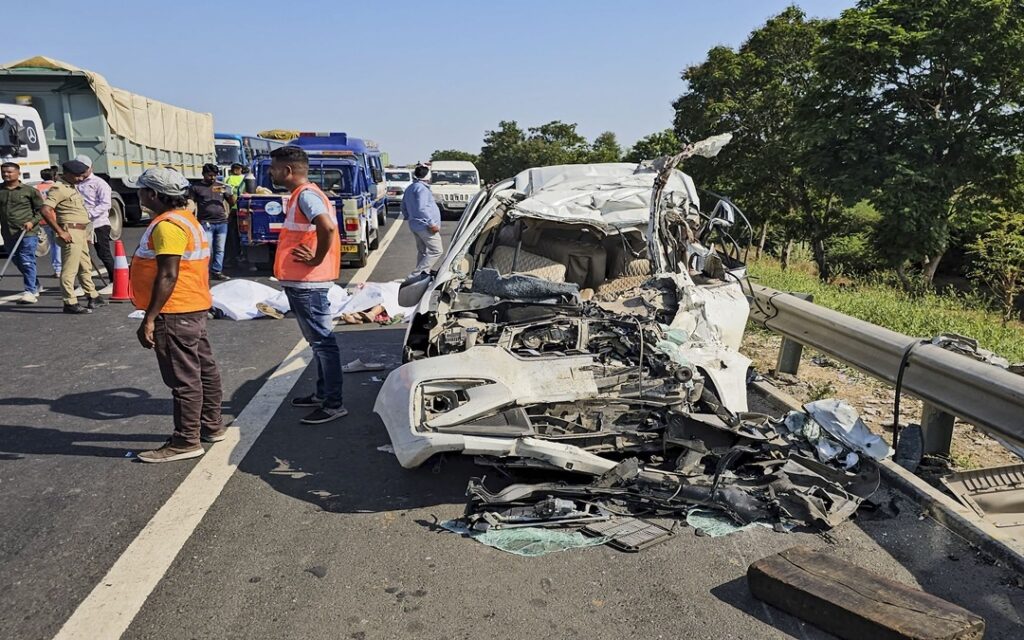
Help Road Accident Victim without Worry: Treatment Up To ₹1.5 Lakh For Road Accident Victims, Golden Hour Care To Be Free Soon
New nationwide scheme aims to remove financial barriers and ensure immediate medical help after accidents
The tension and fear that follow a road accident may soon reduce significantly, as the central government is preparing to launch a nationwide cashless treatment scheme for road accident victims. Under this scheme, every injured person will be eligible for free medical treatment of up to ₹1.5 lakh per accident, without any upfront payment. The objective is to ensure that no life is lost due to delays caused by financial constraints.
India witnesses nearly five lakh road accidents every year, with around 1.8 lakh deaths. A large number of these deaths happen because victims do not receive timely medical care. In many cases, hospitals insist on advance payment before starting treatment. Often, the injured person is alone or accompanied by someone who cannot arrange money immediately. This crucial delay during the “golden hour” – the first hour after an accident – proves fatal for many.
To address this, the government is introducing the Cashless Treatment Scheme for Road Accident Victims, 2025. The scheme will be announced soon by Prime Minister Narendra Modi. Union Road Transport and Highways Minister Nitin Gadkari has said the scheme will ensure that treatment begins immediately, without any concern about payment, insurance status, or documentation.

Under this scheme, accident victims can be taken directly to designated hospitals and will receive cashless treatment for up to seven days from the date of the accident. The maximum financial cover will be ₹1.5 lakh per person per accident. This facility will apply to accidents occurring on both national highways and state roads.
One of the biggest features of the scheme is that it will cover everyone, including those who do not have any health or vehicle insurance. Whether the vehicle involved is insured or not, the victim’s treatment will not be delayed. Ambulances, police personnel, and even common citizens will be able to take injured persons to hospitals without worrying about payment issues.
The treatment will be available at hospitals listed under the Ayushman Bharat health insurance network. These hospitals will be authorised to provide immediate medical care and claim the cost from the government system later. This makes the scheme practical and scalable across the country.
To fund the scheme, insurance companies that provide third-party vehicle insurance will contribute around 1% of their premium collections to a common pool. This fund will be used exclusively to cover the treatment costs of road accident victims. This structure ensures long-term financial sustainability without putting pressure on accident victims or their families.
The government has already tested this model through pilot projects. A pilot was launched in Chandigarh on March 14, 2024, and later expanded to six states. The results were encouraging, showing improved response times and better coordination between hospitals, emergency services, and authorities.
The scheme also works alongside the Rah-Veer initiative, under which “Good Samaritans” who help accident victims reach hospitals quickly are rewarded with ₹25,000. States and Union Territories are reimbursed by the Centre for these rewards. Together, both schemes promote a culture of immediate help and responsibility.
Another important impact of this scheme is the protection of bystanders and helpers. Many people hesitate to assist accident victims due to fear of legal or financial complications. With guaranteed cashless treatment, people can act quickly without hesitation, knowing that hospitals will not demand money before starting care.
The new policy also sends a strong message to hospitals that treatment cannot be denied or delayed. It creates a uniform protocol where saving a life becomes the first and only priority during emergencies.
Experts believe that once implemented nationwide, this scheme could significantly reduce road accident fatalities. Immediate medical attention, especially in severe trauma cases, dramatically increases survival rates. Removing the financial barrier is expected to make emergency care faster, more accessible, and more humane.
For millions of families, this scheme brings relief from one of the most frightening uncertainties after an accident – arranging large sums of money within minutes. With cashless treatment guaranteed, the focus can shift entirely to saving lives.