No More Waiting for Hours: NHAI Plans Puncture Repair Facilities Every 20-25 km on Highways to Improve Road Safety
No More Waiting for Hours: NHAI Plans Puncture Repair Facilities Every 20-25 km on Highways to Improve Road Safety
Wayside amenities on national highways and expressways may soon offer puncture repair, basic vehicle servicing and emergency assistance, reducing waiting time for stranded motorists.
By Vidhi Lalla
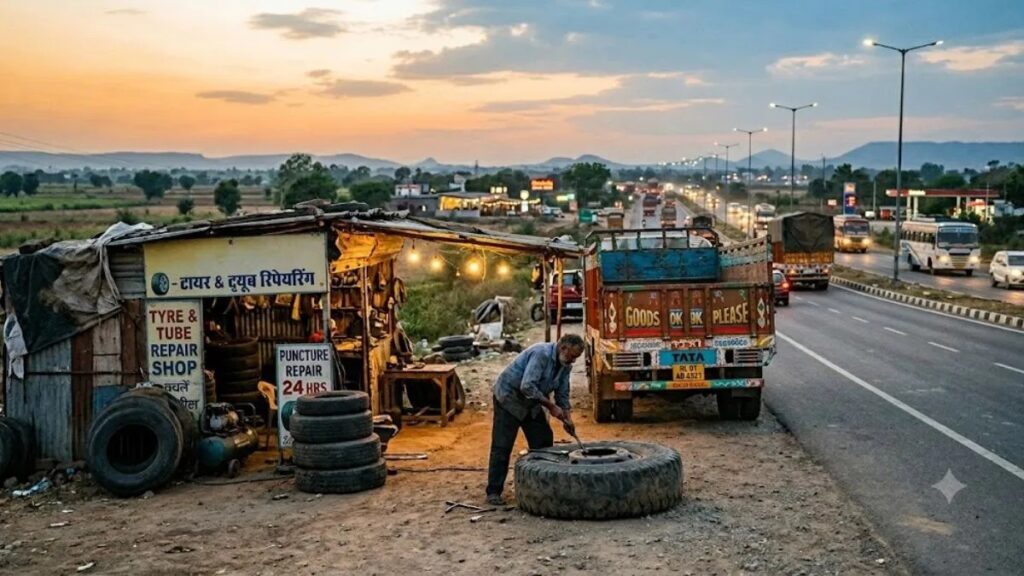
Pune: Getting stranded on a highway because of a punctured tyre or a minor vehicle breakdown may soon become far less stressful. The National Highways Authority of India (NHAI) is planning to introduce puncture repair shops and basic vehicle service centres at Wayside Amenities (WSAs) located every 20 to 25 kilometres along major national highways and expressways.

The initiative aims to provide motorists with quicker roadside assistance, improve travel convenience and enhance safety on India’s rapidly expanding highway network.

At present, many motorists and truck drivers often have to wait for hours or travel long distances to find a mechanic after suffering a puncture or minor mechanical fault, particularly on isolated highway stretches.
To address this, National Highways Logistics Management Limited (NHLML), which develops and manages Wayside Amenities, has directed its field offices to encourage WSA operators to establish puncture repair and vehicle maintenance facilities. These services are already permitted under existing concession agreements along with fuel stations, food courts, restrooms and other traveller facilities.
Mechanics and repair services closer to travellers
Under the proposal, certified mechanics will be available to handle tyre punctures as well as minor mechanical and electrical problems.
The workshops are expected to be equipped with automatic air-filling machines, tyre changers, battery support equipment and commonly required spare parts, enabling motorists to resume their journey quickly.
Highway infrastructure experts said, “Providing repair facilities at regular intervals will significantly reduce the inconvenience faced by motorists stranded due to minor vehicle faults and improve confidence while travelling long distances.”
The authority is also considering operating many of these facilities round the clock, especially on busy expressways where night-time breakdowns can pose serious safety risks.
Improving safety on highways
A vehicle left stranded on the roadside because of a puncture or mechanical failure often becomes a traffic hazard and increases the risk of accidents, particularly on high-speed corridors.
Road safety specialists believe that quicker access to repair services will reduce roadside waiting time and help keep highways safer.
An automobile expert said, “Most highway breakdowns involve simple issues such as tyre punctures, overheating or battery failure. Immediate access to trained mechanics can prevent small problems from turning into dangerous situations.”
The initiative is expected to benefit private motorists, commercial vehicle operators, long-distance travellers and transport companies alike.
Wayside Amenities becoming complete travel hubs
NHLML is developing a nationwide network of modern Wayside Amenities under the Public-Private Partnership (PPP) model.
Besides fuel stations and restaurants, these centres are gradually being expanded to include restrooms, parking, convenience stores, EV charging infrastructure and now vehicle repair services, making them comprehensive travel hubs for highway users.
In addition, NHAI has directed its field offices to undertake immediate audits of all Advanced Traffic Management System (ATMS) installations and ensure that components such as Traffic Monitoring Cameras, Video Incident Detection Systems, Variable Speed Detection Systems, Variable Message Signboards and Emergency Call Boxes are fully operational.
Also, deployment of ambulances and recovery vehicles, enhanced highway patrolling, integration of ATMS alerts with enforcement agencies and proactive maintenance of safety infrastructure are being prioritized to enable faster incident response, improved enforcement and safer travel for National Highway users across the country
Officials believe the additional services will improve the overall travel experience while supporting safer and more reliable long-distance road transport across the country.
What to Do to Ensure Highway Safety:
Do’s
- Check tyre pressure and condition before starting a long journey.
- Carry a properly inflated spare wheel, jack and basic tool kit.
- Keep emergency contact numbers and roadside assistance details handy.
- Park completely off the carriageway if your vehicle develops a fault.
- Switch on hazard lights immediately after stopping.
- Place reflective warning triangles behind the vehicle to alert approaching traffic.
- Wear reflective jackets if stepping out at night or in poor visibility.
- Stay inside the vehicle with seat belts fastened if stopping on a busy expressway is unavoidable.
- Use authorised repair facilities wherever available.
- Keep sufficient fuel, drinking water and a charged mobile phone during long trips.
Don’ts
- Do not stop on blind curves, bridges or near fast-moving traffic unless absolutely necessary.
- Do not attempt tyre repairs in the middle of the traffic lane.
- Do not stand behind or in front of a stranded vehicle on an expressway.
- Do not exceed speed limits after a temporary repair or spare tyre replacement.
- Do not ignore warning signs such as unusual tyre vibration, overheating or battery alerts.
- Do not overload your vehicle, as excess weight increases the risk of tyre failures.
- Do not use damaged or worn-out tyres for long-distance highway travel.
- Do not drive while fatigued, take breaks every two to three hours at designated Wayside Amenities.
Disclaimer: The NHAI proposal is in the implementation stage. Availability of puncture repair and vehicle service facilities may vary across highways until the network is fully operational.