Pune Rain Viral Chat Sparks Workplace Safety Debate After Manager Rejects Employee’s Leave Request
Pune Rain Viral Chat Sparks Workplace Safety Debate After Manager Rejects Employee's Leave Request
WhatsApp conversation from Pune goes viral after an employee’s leave request during heavy rain was rejected, reigniting discussions on employee safety, workplace flexibility and responsible management.
By Vidhi Lalla
Pune:A WhatsApp conversation between a Pune employee and his manager has gone viral on social media after the manager allegedly refused to approve leave despite heavy rain, waterlogging and road closures in the city. The incident has triggered widespread debate on whether employee safety should take priority during extreme weather conditions.

My friend’s manager
by u/These_Ad_669 in pune
According to the viral post shared on Reddit’s r/Pune community by the employee’s friend, the employee had informed his manager that travelling to the office was unsafe because of the heavy rainfall.
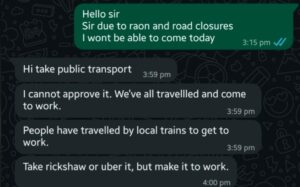
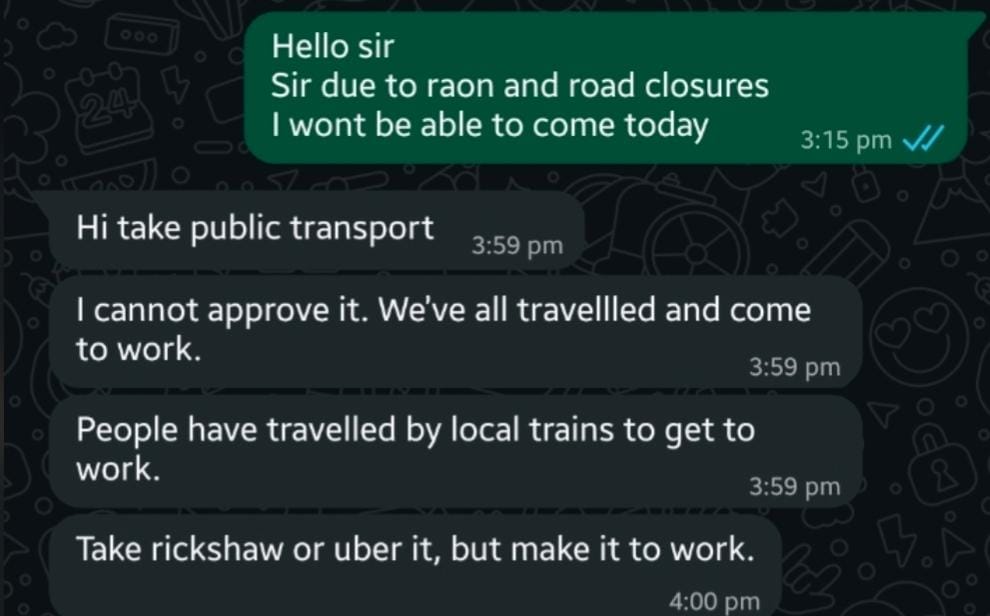
The employee wrote, “Hello Sir, due to heavy rain and road closures, I won’t be able to come to work today.”
The manager replied, “Hi, please use public transport.”
When the employee continued to express difficulty in reaching the office, the manager reportedly declined the leave request, stating, “I cannot approve this leave. We all have come to work.”
The manager further added, “People have travelled by local train to get to work.” He then instructed the employee, “Take an auto or Uber and come.”
The screenshots were shared online with the caption, “Was asking if he should resign.” The post quickly attracted attention, with many users questioning workplace expectations during severe weather and highlighting the importance of employee safety.
Several Reddit users criticised the manager’s response. One user commented, “Name and shame the company.”
Another shared a similar personal experience, writing, “My Rs 6,000 internship boss said the same. I replied, ‘Wish I could take an Uber on this humongous stipend.'”
Some users also contrasted the incident with their own organisations. One person wrote, “My company is strictly asking everyone to work from home for employees’ safety, even if they prefer coming to the office.”
Another user remarked, “This is the cost of working in Pune. You choose your comfort zone, and you end up working in such companies.”
The incident comes as Pune has been witnessing heavy rainfall, waterlogging and traffic disruptions, prompting authorities to issue weather-related advisories in several parts of the city. The viral exchange has once again raised questions about workplace flexibility during emergencies and the balance between operational needs and employee well-being.
While the authenticity of the viral screenshots has not been independently verified, the conversation has fuelled a broader discussion on how organisations should respond during adverse weather conditions and whether flexible work arrangements should be prioritised when commuting becomes unsafe.
Tips for Employees: Staying Safe and Negotiating Smartly During Extreme Weather
- Put your safety first. Avoid travelling if authorities have warned against unnecessary movement or if roads are flooded.
- Inform your manager early with clear details about road closures, waterlogging or transport disruptions.
- Share supporting information such as weather alerts, traffic advisories or photographs if appropriate.
- Offer practical alternatives, including working from home, adjusting work hours or making up the time later, if your role permits.
- Keep all communication professional and in writing. Maintain records of emails or messages regarding attendance during emergencies.
- Know your company’s leave, remote work and emergency policies before situations like these arise.
- Avoid making emotional decisions during stressful situations. If you feel your concerns are repeatedly ignored, discuss the issue with HR or senior management before considering resignation.
- If workplace practices consistently compromise employee safety or disregard genuine emergencies, evaluate whether the organisation’s work culture aligns with your long-term career and well-being goals.