FDA Approves First Once-Daily Pill To Lower ‘Bad’ Cholesterol; Here’s Who Could Benefit
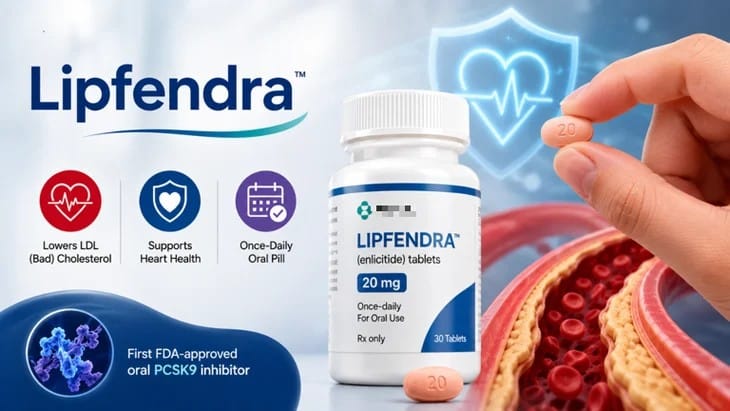
FDA Approves First Once-Daily Pill To Lower 'Bad' Cholesterol; Here's Who Could Benefit
Lipfendra becomes the world’s first oral PCSK9 inhibitor, offering a new treatment option for adults with high LDL cholesterol alongside diet, exercise and standard therapy.
By Vidhi Lalla
The US Food and Drug Administration (FDA) has approved Lipfendra (enlicitide), the world’s first once-daily oral PCSK9 inhibitor, marking a significant development in the treatment of high LDL, or “bad”, cholesterol. Until now, medicines that targeted the PCSK9 protein were available only as injections.


The new tablet has been approved for adults with high LDL cholesterol, including those with heterozygous familial hypercholesterolaemia (HeFH), an inherited condition that causes very high cholesterol levels from birth. The medicine is intended to be used along with a healthy diet, regular exercise and existing cholesterol-lowering treatment where appropriate.
LDL cholesterol is considered “bad” because excess amounts can build up inside artery walls, forming fatty plaques that narrow blood vessels. If these plaques rupture, they can trigger blood clots, increasing the risk of heart attacks and strokes. High cholesterol often develops without symptoms and is usually detected through routine blood tests.
Unlike statins, which reduce cholesterol production in the liver, Lipfendra works by blocking the PCSK9 protein. This allows the liver to keep more LDL receptors active, enabling it to remove greater amounts of LDL cholesterol from the bloodstream. Doctors say the tablet may be particularly useful for patients who require additional cholesterol reduction despite taking statins or for those who prefer an oral medicine over injectable treatments.
The FDA’s approval is based on two Phase III clinical trials involving 3,207 adults already receiving the highest dose of statins they could tolerate. Among people with established or high-risk cardiovascular disease, the medicine reduced LDL cholesterol by an average of 56 per cent after 24 weeks compared with a placebo. In patients with inherited high cholesterol (HeFH), LDL levels fell by 59 per cent.
The most commonly reported side effects during the trials were diarrhoea and dizziness, although researchers said the medicine was generally well tolerated. Experts emphasise that longer-term studies are still underway to determine whether the reduction in cholesterol also leads to fewer heart attacks and strokes over time.
Doctors have also clarified that the approval does not replace statins as the standard first-line treatment for high cholesterol. Statins remain the most widely recommended medicines because decades of evidence have shown they reduce the risk of cardiovascular events. Lipfendra is expected to become an additional treatment option for selected patients who need further LDL reduction despite existing therapy.
Cardiovascular disease remains the leading cause of death globally. According to the World Health Organization, nearly 19.8 million people died from cardiovascular diseases in 2022. In India, studies estimate that more than 200 million people have high cholesterol, highlighting the growing burden of heart disease.
Disclaimer: This article is for informational purposes only and should not be considered medical advice. Patients should consult a qualified healthcare professional before starting, stopping or changing any cholesterol-lowering medication.