India Needs Managers Over Administrators in Governance: Narayana Murthy speaks
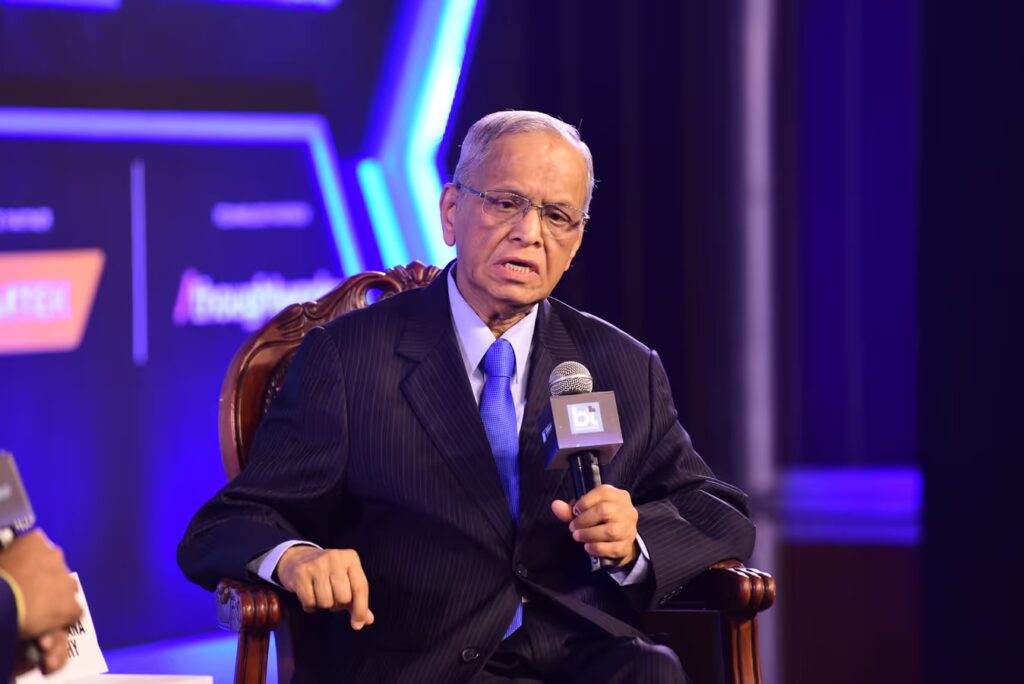
Narayana Murthy: "I Don’t Believe in Work-Life Balance, India Needs a 70-Hour Workweek
By integrating management principles and private-sector expertise, Murthy envisions a future where India’s public sector can rise to meet the challenges of the modern world and lay the foundation for sustained economic prosperity.
Infosys founder NR Narayana Murthy has called for a paradigm shift in India’s governance approach, advocating for a management-oriented mindset to replace the traditional administrative framework. Speaking at a summit in Mumbai, Murthy emphasized that adopting a management perspective is essential to achieving India’s ambitious goal of becoming a $50 trillion economy by 2047.
Murthy argued that while administration tends to focus on maintaining the status quo, management is driven by vision, ambition, and the pursuit of achieving what may seem impossible. He highlighted the need for qualities like speed, imagination, and excellence in public sector decision-making and policy implementation. According to Murthy, these attributes are critical to driving economic progress and fostering innovation.

To realize this transformation, Murthy proposed introducing professionals with formal management training into government roles. He suggested recruiting graduates from India’s premier management institutes and providing them with specialized training at institutions like the Lal Bahadur Shastri Academy in Mussoorie. This training would focus on critical management skills such as strategic thinking, decision-making under uncertainty, and project execution, preparing them to address complex challenges in governance.
Murthy also emphasized the importance of building subject-matter expertise within the public sector. He proposed assigning management-trained officials to specific sectors such as agriculture, defense, and infrastructure, allowing them to develop deep, long-term specialization. Drawing from practices in developed nations, he highlighted how such an approach could enhance efficiency and improve outcomes in governance.
In addition to these reforms, Murthy suggested leveraging private-sector expertise by forming a committee of accomplished intellectuals and industry leaders. This committee, chaired by an individual with a cabinet minister’s rank, would work closely with ministers and bureaucrats on major policy initiatives, fostering collaboration between the private sector and the government.
Murthy believes that a management-oriented governance model would bring several benefits, including cost efficiency, faster decision-making and enhanced confidence among citizens. He stressed that learning from competitors and adopting innovative practices could position India for unprecedented growth.
The Infosys founder’s vision underscores the urgent need for India to move beyond bureaucratic inertia and adopt a dynamic, solutions-driven approach to governance.