From Schools to Homeschooling: Why Indian Parents Are Making the Switch. Click to read more
From Schools to Homeschooling: Why Indian Parents Are Making the Switch. Click to read more
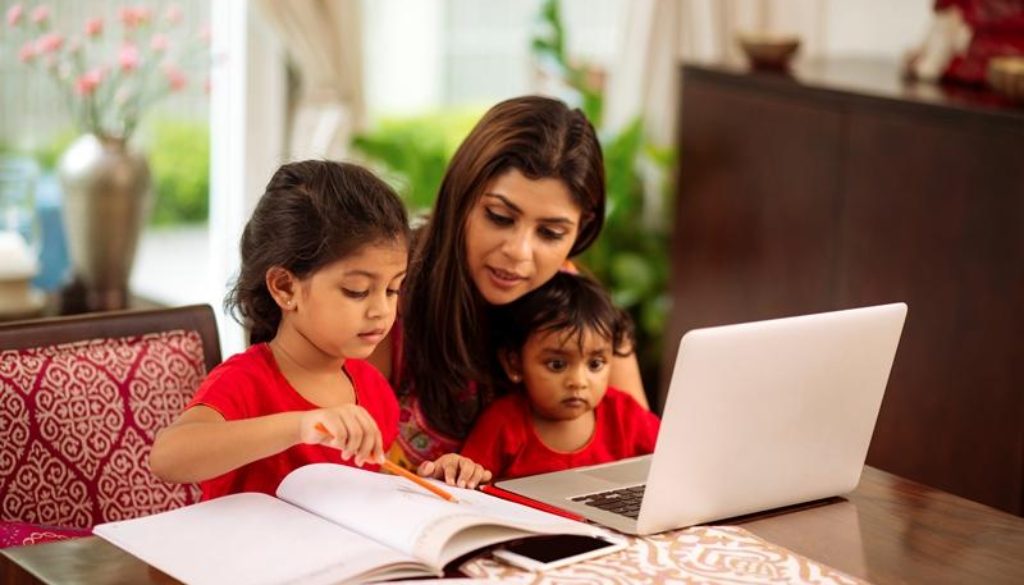
Imagine a world where the classroom isn’t confined to four walls, where the bell doesn’t dictate the schedule, and where learning isn’t dictated by a standardized curriculum. This is the reality for a growing number of families in India, who are choosing to embrace homeschooling, a trend dubbed “Beyond the Classroom.” This shift, a departure from the established norms of education, raises a fascinating question: What’s driving this move away from the traditional school system and towards home-based learning? The reasons are complex and multifaceted, reflecting a changing societal landscape, a growing awareness of alternative educational philosophies, and a desire for greater control over the learning experience.
One of the primary driving forces behind this trend is a growing dissatisfaction with the traditional school system. Many parents feel that the current system is overly focused on rote learning and standardized testing, neglecting the development of critical thinking, creativity, and emotional intelligence. They believe that homeschooling offers a more personalized approach to education, allowing children to learn at their own pace and pursue their individual interests. This shift in priorities reflects a growing emphasis on holistic development and a desire to nurture children’s unique talents and passions. A pregnancy and child sleep consultant and paediatric nutritionist from Gurugram, for instance, envisioned a different educational path for her first daughter. However, societal and work pressures led her to enroll her two-and-a-half-year-old daughter in a nearby daycare and pre-school. After just five days, she realized this wasn’t the right fit for her daughter.
“My partner and I watched as she changed into a completely different person in just five days. When she arrived at the school, the first thing she observed was children her age crying and feeling anxious about being apart from their families,” she shares.

“How can we expect a child, who can barely manage to pick up a chapati properly, to cope with such anxiety? Is this really how school should start? We didn’t think so,” she reflected.
A freelance writer and small garment business owner from Metiabruz, and her husband, faced a similar situation. They decided to homeschool their daughter, initially with some reservations. However, their doubts were dispelled during the school admission process, making their decision clear.
She remembers that when she tried to prepare her daughter for school admissions and interviews, she noticed her daughter becoming withdrawn. Before this, her daughter had been learning naturally and organically.
She says, “Her enthusiasm was fading, and at that moment, I decided she wouldn’t go to school. I hadn’t planned for the future – it was an impulsive decision.” She adds that, over time, things worked out for her daughter, and now, at nine years old, she is thriving.
A couple from Kolkata had a different experience. They knew from the beginning that unschooling was the only option for their children. The husband explains that his wife was initially hesitant, but after meeting other parents who were unschooling their children, she became convinced that it was the best choice for their family.
How does homeschooling facilitate learning for children?
You might be wondering how these children learn. The answer isn’t simple. Just like parenting, homeschooling, and unschooling vary from family to family, depending on what and how parents want their children to learn. For example, the Kolkata couple’s twins learn what they want, with no fixed curriculum.
“Who teaches a child to walk? They learn by themselves. So, why should we put them into rigid grades?” he says. Today, their 11-year-old twins learn English naturally through conversations with their family.
Their children learn in unique ways. He shares their “unschooling” approach in a popular video, explaining that his kids learn about history through traveling. His son even learned math skills by playing cricket and keeping score.
Their children are involved in a variety of activities outside of traditional academics. They learn Sufi music, paint, cook, and much more. They explain that her daughter picked up English naturally by listening to conversations, just like she did with Bengali, Hindi, and Urdu. She says she never formally taught her daughter to read. Instead, she surrounded her with books and took her to libraries. Her daughter eventually learned to read on her own. For math, she used a practical approach by taking her daughter shopping. Whether it was the supermarket or the local shop, real-life experiences became her daughter’s classroom. Recently, she also enrolled her daughter in an abacus class.
A mother from Siliguri has different priorities for her son. Since he is only four-and-a-half years old, she doesn’t believe English and math should be his main focus right now.
“At this stage, we are concentrating on his behavior and communication skills, how he speaks, his tone, and his choice of words,” she shares. She believes real-life experiences are the best teachers. “I take him with me wherever I go. He observes, asks questions, and I answer. That’s how he learns. For instance, last night, we had an earthquake and had to leave our building in the middle of the night. This morning, I told him about houses made of paper in Japan and showed him pictures on my phone. Tonight, I plan to teach him more about Japan,” she reveals.
Why Opt Unschooling?
Unschooling parents often prioritize flexibility and freedom over structured learning. They believe that children should have the autonomy to explore their passions and interests beyond the confines of traditional classroom subjects. For some, unschooling offers a more budget-friendly alternative to traditional schooling. Others believe that the formative early years, crucial for brain development, should be guided by parents rather than institutions. Unschooling parents often see learning as a lifelong process that happens naturally through experiences, interactions, and exploration, rather than solely within the confines of a classroom. They emphasize fostering a love of learning and allowing children to develop their unique talents and interests at their own pace.
A professional deeply invested in child development, the Montessori method is the most appealing. This approach promotes independent learning, hands-on activities, and teamwork. She points to various studies that emphasize how the first 4–5 years of a child’s life are pivotal in shaping their future development.
A 2019 study highlighted the profound impact of the environment on a child’s developing brain, particularly during the prenatal and early years. This finding is echoed by numerous other studies, emphasizing the crucial role of a child’s surroundings in shaping their early development.
For her, the decision to homeschool her son stemmed from a desire to break free from the pressures of traditional education. She believes that she is fully equipped to provide her child with a strong educational foundation, at least in the early years. She observes that many adults end up pursuing careers vastly different from their academic backgrounds, including herself. She studied Arts but works in the electrical industry, reflecting a disconnect between formal education and real-world skills. This experience has led her to believe that practical skills, perhaps learned from her father, might have been more valuable than years spent in formal education.
The pandemic seems to have accelerated the shift towards homeschooling for many families. The disruption to traditional schooling systems and the increased focus on family time may have prompted parents to re-evaluate their educational priorities, leading some to embrace homeschooling as a viable alternative.
Co-founders of a global online school specializing in structured homeschooling, believe the pandemic fundamentally shifted the landscape of education. Despite running traditional brick-and-mortar schools, they observed a significant increase in student productivity when education transitioned online during lockdowns. This observation led them to establish a school where learning is entirely virtual, eliminating the need for in-person attendance. It caters to a diverse range of parents, including Non-Resident Indians (NRIs) seeking an Indian education for their children, families with transferable jobs, and parents whose children prioritize extracurricular activities over traditional academics.
Currently, it boasts over 1,000 students from playschool to class 12, with a substantial number being Indian. The school prioritizes a child’s “happiness quotient,” instilling “morals and ethics” and ensuring “physical fitness” within a compressed daily schedule of just 2-3 hours. Despite the reduced timeframe, exams remain an integral part of the system.
While homeschooling may appear idyllic, it presents its own set of challenges. In today’s fast-paced world, families often face time and financial constraints, making it difficult to create a structured learning environment and dedicate sufficient time to a child’s education.
Children in less interactive surroundings, such as modern metropolitan cities with limited neighborly interaction, may not reap the full benefits of homeschooling.
An expert emphasizes that homeschooling can lead to social isolation for children. While traditional schools prioritize education, children also learn significantly from their peers, contributing to their emotional and social development. She acknowledges that homeschooling families attempt to mitigate this isolation by enrolling their children in extracurricular activities. However, she points out the difficulty in replicating the sustained social interaction and independent learning experiences that children gain from spending hours with their peers in a traditional school setting.
A spokesperson from a public school echoes this sentiment, acknowledging that while homeschooling offers flexibility and personalized learning, traditional schooling provides a structured environment, social interaction, and holistic development through extracurricular activities and peer learning.
“Schools foster teamwork, discipline, and real-world problem-solving skills, which are crucial for a child’s overall growth. Qualified educators bring subject expertise and diverse perspectives, ensuring a well-rounded education,” they observed.
Is homeschooling permitted in India?
In India, education has a rich history rooted in personalized learning. Before modern schools became commonplace, knowledge was passed down through a guru-shishya (teacher-student) relationship, emphasizing personal and spiritual development alongside academics. This tradition evolved into the gurukul system, where learning occurred in a communal setting, still prioritizing holistic growth over rigid classroom instruction.
Today, homeschooling is legally permitted in India. The Right to Education Act of 2009 guarantees free and compulsory education for children between the ages of 6 and 14, but it doesn’t specify that this education must occur within a traditional school. This allows parents to choose homeschooling without breaking any laws. While India lacks a dedicated body to regulate homeschooling, families can opt for distance learning programs offered by institutions like the National Institute of Open Schooling (NIOS) to obtain recognized qualifications.
The pandemic accelerated the adoption of online learning platforms like ePathshala, launched by the Ministry of Education, providing access to digital resources. As a result, homeschooling is gaining traction as a new and alternative approach to education in India. While it is more prevalent in Western countries, it’s becoming increasingly popular in India, reflecting a growing desire for personalized and flexible learning options.