Eye Care Tips This Diwali: How to Protect Your Eyes from Firecracker Smoke and Pollution
Eye Care Tips This Diwali: How to Protect Your Eyes from Firecracker Smoke and Pollution
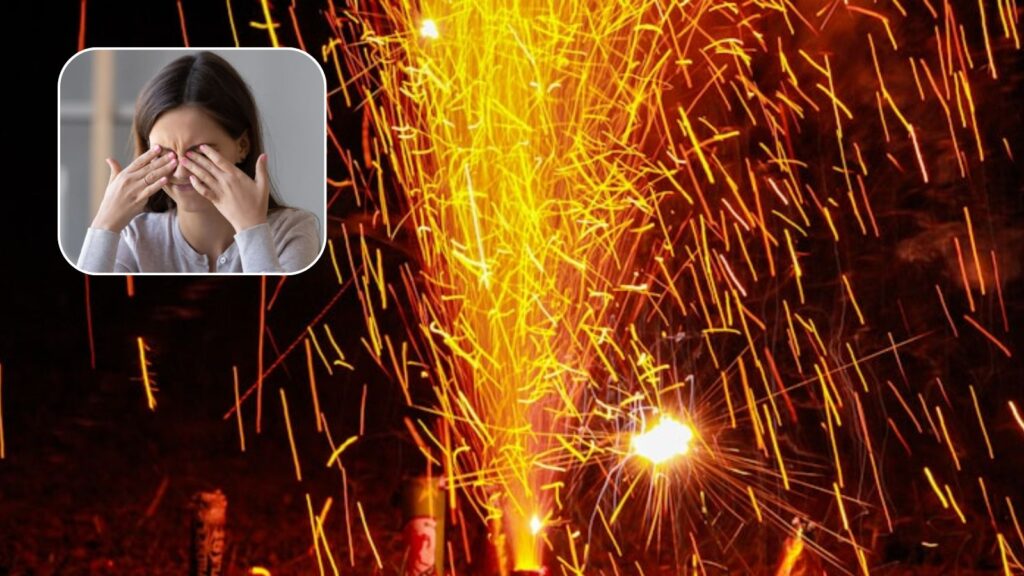
As Diwali approaches, experts are urging people to take extra care of their eye health amid the festival’s dazzling lights and firecracker displays. While the festival symbolizes joy and illumination, the smoke and chemicals from firecrackers can pose serious risks to eyesight.
Ophthalmologists explain that firecrackers release fine metal particles and pollutants like sulfur dioxide and nitrogen oxides, which can irritate the eyes, causing redness, watering, itching, and swelling. Individuals with pre-existing allergies or dry eyes may experience heightened discomfort.
Top Tips to Keep Your Eyes Safe During Diwali:

- Stay indoors during high pollution levels and wear sunglasses or protective glasses when stepping outside.
- Rinse eyes with cold water frequently to soothe irritation.
- Apply rose water-soaked cotton pads on closed eyelids for relief.
- Use cucumber or potato slices on the eyes to reduce swelling.
- Consider artificial tears if recommended by a doctor.
- Avoid rubbing your eyes, as this can damage the cornea.
- Special care for contact lens users, as chemical dust may stick to lenses and increase the risk of infection.
Parents are advised to supervise children handling firecrackers and ensure their eyes are protected. Doctor emphasizes that seniors and children are particularly vulnerable and should receive extra attention during the celebrations.
Environment-friendly practices, such as using low-smoke firecrackers or celebrating with lamps and decorative lights instead of fireworks, can reduce air pollution and protect both eyes and respiratory health.
Anyone experiencing severe eye pain, persistent redness, blurred vision, or swelling should consult an eye specialist immediately. With simple precautions and timely care, you can enjoy a safe and healthy Diwali while protecting your vision.
Disclaimer: The information provided in this article is for general educational purposes only and is not a substitute for professional medical advice, diagnosis, or treatment. Readers should consult a qualified ophthalmologist or healthcare professional if they experience any eye problems or have specific concerns regarding eye care during Diwali.