India’s First Private Train: Tejas Express Fare Comparison With Rajdhani, Shatabdi And Vande Bharat

India’s First Private Train: Tejas Express Fare Comparison With Rajdhani, Shatabdi And Vande Bharat
New Delhi: India’s first privately operated train, the Tejas Express, marked a major milestone in Indian Railways’ journey toward modernisation when it was launched in 2019. Operated entirely by the Indian Railway Catering and Tourism Corporation (IRCTC), the Tejas Express introduced a new era of premium, customer-focused travel.
Route and Launch Date
The New Delhi–Lucknow Tejas Express began its first commercial run on October 4, 2019, connecting the national capital with Uttar Pradesh’s capital city. The route is one of North India’s busiest corridors, and the train was designed to deliver faster, more comfortable, and punctual travel.

Fare Comparison: Tejas vs Rajdhani, Shatabdi, and Vande Bharat
Within just a month of its launch, IRCTC recorded an operational earning of approximately ₹7.73 lakh from the Tejas Express, signaling strong passenger demand. However, the Tejas remains costlier than other premium trains like Rajdhani, Shatabdi, and Vande Bharat Express.

Fare comparison for the New Delhi–Lucknow route:
- IRCTC Tejas Express: ₹1,679 (AC Chair Car), ₹2,457 (Executive Chair Car)
- Shatabdi Express: ₹1,255 (AC Chair Car), ₹1,955 (Executive Chair Car)
- Vande Bharat Express: ₹1,255 (AC Chair Car), ₹2,415 (Executive Chair Car)
- Rajdhani Express: ₹1,590 (3AC), ₹2,105 (2AC), ₹2,630 (1AC)

Inside the Tejas Express
The Tejas Express is equipped with modern facilities that make it one of India’s most advanced passenger trains. These include:
- Fully air-conditioned coaches
- Automatic doors
- Onboard infotainment and Wi-Fi connectivity
- CCTV surveillance
- Personal reading lights and snack trays
While dynamic pricing applies to Tejas, Rajdhani, and Shatabdi services—meaning fares may vary based on demand—Vande Bharat Express follows fixed pricing, offering fare stability to passengers.
Built for Speed and Safety
According to the Ministry of Railways, Tejas coaches are designed to run at speeds of up to 200 km/h, though they currently operate at a maximum of 160 km/h due to track limitations. Built at the Rail Coach Factory in Kapurthala, these coaches feature steel brake discs, sintered pads, and an electro-pneumatic assist brake system for enhanced safety and control.
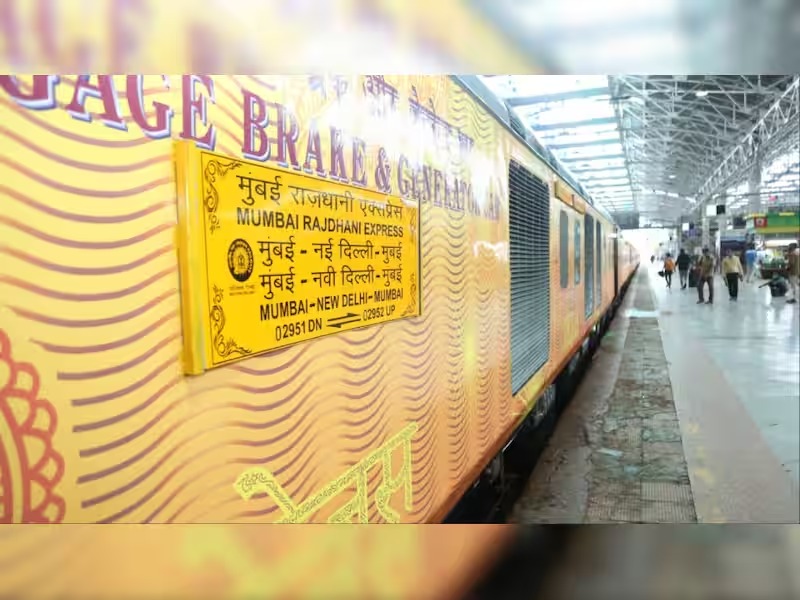
A New Standard in Indian Rail Travel
India’s first private train, the Tejas Express, continues to redefine passenger expectations with its focus on comfort, technology, and punctuality. Although fares are higher than other premium options, passengers often describe the experience as worth the price, symbolising a new chapter in India’s evolving rail network.
Disclaimer: The above information is based on available railway data and fare structures as of 2025. Prices and operational details are subject to change by IRCTC and Indian Railways.