The Special Connection Between School Buses And The Colour Yellow: The Science And Safety Behind It
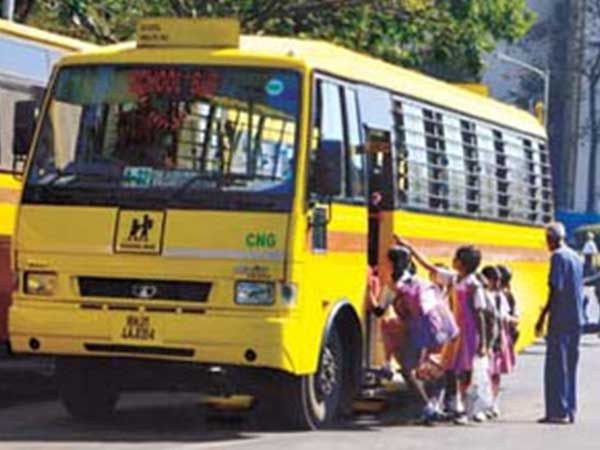
The Special Connection Between School Buses And The Colour Yellow: The Science And Safety Behind It
Why the world chooses yellow to protect children on the road
School buses have become an essential part of modern schooling, transporting thousands of children every day. Yet one detail remains almost universal across countries, most school buses are painted bright yellow. The choice is not aesthetic; it is deeply scientific and rooted in road safety.
Yellow is among the most visible colours to the human eye. In the VIBGYOR spectrum, it sits just below red and has a relatively high wavelength. While red grabs maximum attention, it is already associated with warnings, stoppage and danger. Yellow is the next most attention-catching colour bright, vivid and easy to distinguish even from a distance or within a crowd.
Another important factor is peripheral visibility. Human eyes detect yellow 1.24 times better than red in lateral vision. This means even if a driver is not looking directly ahead, a yellow school bus is more likely to be spotted in their side view. It remains visible in low-light or difficult conditions like rain, fog and early morning dew. This greatly reduces the chances of accidents, especially on highways where school buses commonly operate.

The colour also symbolises alertness, which is why the signage “School Bus” and cautionary instructions on the vehicle are also displayed in yellow. The objective is simple: drivers should immediately recognise that children are on board and slow down instinctively.
Beyond colour, school buses in India must follow strict safety guidelines, many of which were shaped by Supreme Court directives:
• “School Bus” must be clearly written on the front and back.
• Hired vehicles must display “On School Duty”.
• First-aid box, fire extinguisher and reliable door locks are mandatory.
• Windows must have horizontal safety grills.
• The school’s name and contact number must be clearly visible.
• An attendant must be present in the bus to assist children.
• Dedicated space for school bags must be provided under the seats.
• Speed governors restricting maximum speed to 40 kmph are compulsory.
• The body of school cabs must be highway yellow with a 150 mm green stripe around them, along with “SCHOOL CAB” written on all four sides.
• Drivers must have at least four years of LMV-Transport driving experience, wear a light blue uniform, and display an ID.
• No overcrowding: children under 12 cannot exceed 1.5 times the seating capacity, and those above 12 count as one person each.
• Drivers must carry a complete record of each child’s details, route plan and emergency information.
• For kindergarten children, if the designated guardian does not arrive at the pickup point, the child must be taken back to school safely.
The unmistakable yellow of school buses is therefore not just a colour, it is a carefully designed safety signal, ensuring maximum visibility, fast recognition and a safer commute for the youngest travellers on the road.