How Road Reflectors Glow? Know the Amazing Science Behind Cat’s Eyes Studs
How Road Reflectors Glow? Know the Amazing Science Behind Cat’s Eyes Studs
Those tiny yellow markers that light up your drive aren’t powered by wires or radium. They work because of clever optics—and in some places, a little solar help.
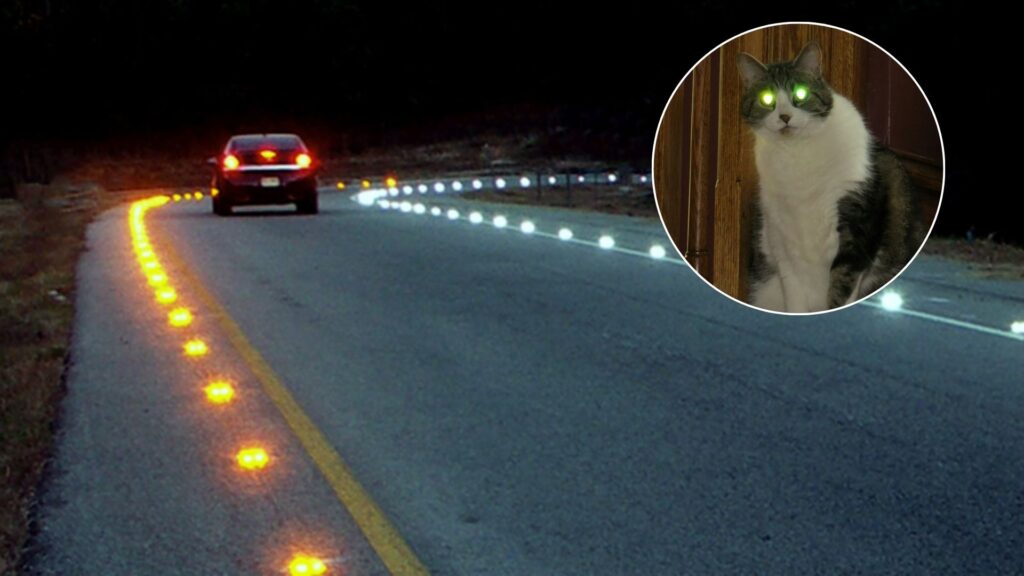
If you’ve ever driven on a dark highway and noticed glowing dots neatly guiding the lanes, you’ve seen road reflectors, often called cat’s eyes doing their job. They look illuminated, but most of them don’t produce light at all. Instead, they return your own headlights straight back to you, creating a bright, clear path in low visibility.
The secret is retroreflection. Unlike mirrors, which bounce light away at equal angles, retroreflective surfaces are designed to send light back toward its source. When your headlights strike a road stud, the light is redirected almost exactly back to your eyes. That’s why these markers appear to glow only when a vehicle approaches.
There are two main technologies behind this effect.

The most common is prismatic reflectors, also known as cube-corner prisms. Inside each stud are thousands of tiny, precisely molded triangular prisms. When light enters a prism, it reflects internally across three surfaces and exits in the same direction it came from. This process called total internal reflection is extremely efficient, which is why prismatic studs remain visible even from long distances and at sharp angles.
Older or simpler designs use glass beads. These tiny beads act like miniature lenses. Incoming light bends (refracts) as it enters a bead, hits a reflective backing, and then travels back along the same path. While glass beads are slightly less efficient than prisms, they still provide strong visibility and are widely used on road markings and signs.
Because these systems depend on headlights, traditional studs don’t glow on their own and they don’t need electricity, wiring, or radioactive materials. They also last longer and require less maintenance, making them ideal for highways, curves, and rural roads.
That said, many modern highways now use solar-powered road studs in critical stretches. These have small solar panels on top and LEDs inside. During the day, sunlight charges a tiny battery; at night, LEDs emit a steady or flashing light. Solar studs are especially helpful in fog, heavy rain, tunnels, and accident-prone zones where continuous visibility is crucial.
You’ll often notice different colors, each with a purpose. White usually marks lanes, yellow separates opposing traffic, red indicates road edges or no-entry sides, and green may highlight slip roads or exits. This color coding helps drivers make quick decisions without relying solely on signage.
In short, road reflectors are a brilliant example of simple science saving lives. Whether bouncing back your headlights through prisms and glass beads or glowing softly via stored sunlight, these small markers quietly make night driving safer, one reflected beam at a time.