Navi Mumbai Set to Outperform Pune as Mega Projects Promise 3.5 Million High-Value Jobs

Navi Mumbai Set to Outperform Pune as Mega Projects Promise 3.5 Million High-Value Jobs
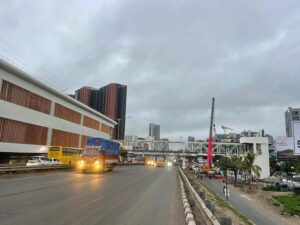
Maharashtra is gearing up for a major economic leap, with Navi Mumbai emerging as the state’s next big growth engine. Located close to the upcoming Navi Mumbai International Airport, the city is being developed into a massive integrated urban and industrial cluster that could soon surpass Pune’s long-standing development record. The plan includes five landmark projects—Edu-City, Innovation City, Sports City, Medi-City, and GCC City—together expected to create around 3.5 million well-paying jobs. Chief Minister Devendra Fadnavis said this initiative has the potential to bring transformative change to India’s economy.
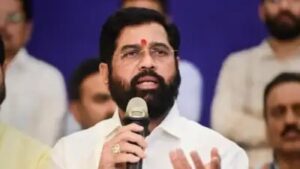
Addressing the media, the Chief Minister emphasized that Maharashtra has built its reputation on trust and delivery. By consistently honoring its commitments, the state has earned the confidence of global investors. He also acknowledged Prime Minister Narendra Modi’s role in building a strong national ecosystem for growth, noting that Maharashtra is ready to attract large-scale investments in the coming year.
Often described as India’s primary entry point for global investments, Maharashtra continues to stay ahead even as other states compete aggressively. According to Fadnavis, this competition ultimately benefits the country, and Maharashtra’s leadership position reflects its strong fundamentals.

Maharashtra at Davos: Engaging the Global Business Community
Chief Minister Devendra Fadnavis, along with Industries Minister Dr. Uday Samant and a senior delegation, has reached Davos to participate in the World Economic Forum (WEF) annual meeting. At the Maharashtra Pavilion, the delegation showcased the state’s industrial strengths and investment readiness to global stakeholders.
The state is targeting investments across 10 to 12 key sectors, ensuring balanced growth across all regions of Maharashtra. The Chief Minister also spoke about the emergence of a “third Mumbai,” pointing to clear signals of large-scale investments and rapid urban expansion. With a well-prepared pipeline of projects, Maharashtra is confident of drawing strong investor interest.
World Economic Forum: Platform for Converting Vision into Investment
The WEF annual meeting is a key global platform where governments and industries connect. Maharashtra has consistently used this forum to highlight its capabilities, and this year, investment expectations are even higher than last year.
The state has already implemented 60–65 agreements signed earlier, setting it apart from others. While Davos is known for its scenic surroundings, it is equally important as a global business hub. The Chief Minister encouraged entrepreneurs from Maharashtra to actively engage and leverage the opportunities available at this forum.
Fast-Tracking the Trillion-Dollar Economy Goal
Over the past decade, Maharashtra has recorded an average growth rate of over 10%. At this pace, it could become India’s first trillion-dollar economy by 2032, but the state aims to achieve this milestone sooner—by 2030.
Despite global economic uncertainties and geopolitical challenges, international agencies continue to view India as a bright spot. Maharashtra, in particular, has managed to sustain growth and attract significant investments even during turbulent global conditions.
Maharashtra Leads India in FDI Inflows
Maharashtra continues to dominate India’s foreign investment landscape. In the previous year, 39% of all FDI inflows into India were directed to Maharashtra, making it the top destination for global capital.
To support this, the state government has introduced 15–16 progressive policies aimed at creating a stable and investor-friendly environment. According to the Chief Minister, interest in Maharashtra remains strong; what truly matters is execution, and the state has delivered on that front.
MSMEs Remain the Economic Backbone
Micro, Small, and Medium Enterprises (MSMEs) play a critical role in employment generation and economic stability. Both the central and state governments are working actively to strengthen this sector.
Beyond funding, credibility has emerged as a key factor in today’s business climate. Maharashtra’s consistent record of fulfilling commitments has reinforced trust among investors and entrepreneurs alike.
High MoU Conversion Rates Strengthen Investor Confidence
Last year, Maharashtra signed MoUs worth ₹16 lakh crore. To ensure these agreements lead to actual investments, the state has put in place a robust tracking and monitoring mechanism.
While the national average MoU conversion rate is around 25–30%, Maharashtra has achieved 50–55%, and for agreements signed at Davos, the rate has reached 75–80%. Dedicated facilitation teams, faster approvals, and continuous investor engagement have played a key role in this success.
Focus on Startups, AI, and Next-Gen Technologies
Highlighting the rapid growth of India’s startup ecosystem, the Chief Minister noted that many startups are now turning into unicorns within 3–4 years. Maharashtra aims to lead in Artificial Intelligence, data-driven industries, and advanced technologies.
The state already hosts 60% of India’s data center capacity, earning it recognition as the country’s Data Center Capital. Plans are underway to further expand this capacity using green energy and reliable power infrastructure.
Vadhavan Port to Shape the Next Century of Trade
The upcoming Vadhavan Port is expected to be among the top 10 ports globally and will be three times larger than JNPT. Designed to handle the world’s largest cargo ships, it will significantly boost India’s maritime capabilities.
The first phase of the port is scheduled to become operational within three years, strengthening trade, logistics, and supply chains for the next 100 years.
Safe and Stable Environment for Industries
Emphasizing the importance of law and order, the Chief Minister reaffirmed Maharashtra’s zero-tolerance approach. He assured investors that the state offers a secure, predictable, and business-friendly environment for long-term investments.
Cities as Economic Growth Anchors
Urban areas contribute nearly 65% of India’s GDP, making city development a national priority. Under Prime Minister Narendra Modi’s leadership, initiatives such as the Smart Cities Mission, AMRUT, Swachh Bharat Abhiyan, and large-scale infrastructure and social sector investments have transformed urban governance and livability.
Strengthening Maharashtra’s Urban Future
Around 40–45% of Maharashtra’s population lives across its 29 municipal corporations. Enhancing urban infrastructure and quality of life in these cities is central to the state’s growth strategy and will directly impact economic performance.