This Simple Test Can Help Detect Adulterated Coconut Oil At Home
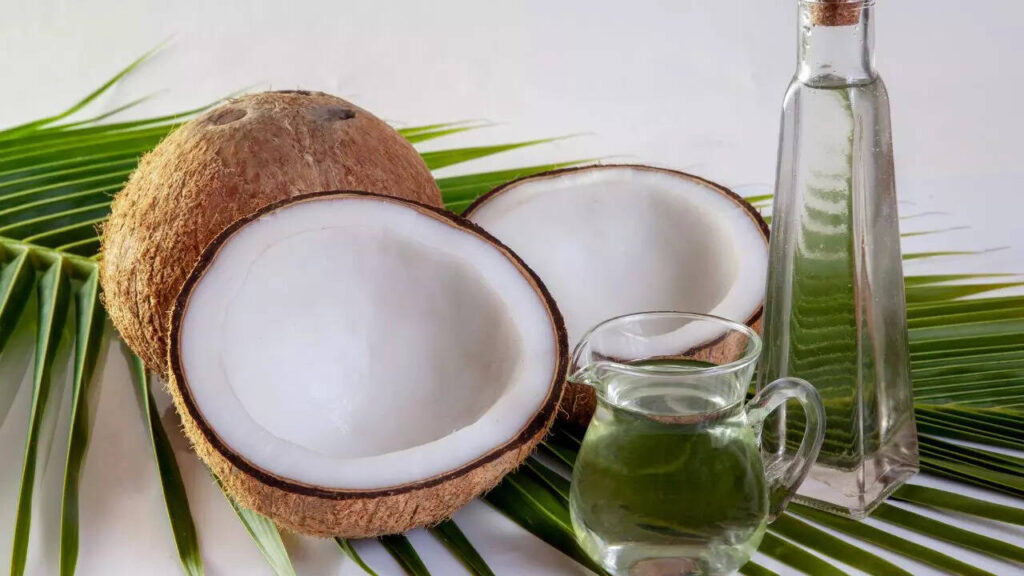
This Simple Test Can Help Detect Adulterated Coconut Oil At Home
FSSAI says the method is a quick preliminary check, but laboratory testing is needed for confirmation
Coconut oil has become an essential part of many Indian households, especially during winter. It is widely used for cooking, skincare and hair care, and is valued for its purity and health benefits. However, its high price and strong market demand have also made it one of the most commonly adulterated edible oils in the country. To help consumers stay alert, the Food Safety and Standards Authority of India (FSSAI) has shared a simple at-home method that can indicate whether coconut oil may be adulterated.
The test is based on one unique physical property of coconut oil. Pure coconut oil naturally solidifies at temperatures between 24 and 26 degrees Celsius. When kept in a cool environment, it becomes semi-solid or completely solid. Adulterated coconut oil, which is often mixed with cheaper vegetable oils, may behave differently because those oils have different freezing points.
According to the FSSAI, this difference can be used as a basic indicator of purity. The authority suggests a “freezing test” that anyone can perform at home with minimal effort.

To carry out the test, pour a small quantity of coconut oil into a clean container. Place the container in a refrigerator set between 5 and 10 degrees Celsius. Leave it undisturbed for about 60 to 90 minutes. After this time, observe the texture and appearance of the oil.
If the coconut oil is pure, it will solidify uniformly, forming a consistent semi-solid or solid mass. If the oil is adulterated, a separate layer may appear on top or within the container. This happens because different oils freeze at different temperatures. When mixed, they do not solidify evenly, creating visible separation.
This simple observation can help consumers identify suspicious products and avoid repeated use of possibly adulterated oil. It also raises awareness about the quality of food products being consumed daily.
The reason coconut oil is often adulterated lies in its market value. Coconut oil is more expensive than many other edible oils. Mixing it with cheaper vegetable oils allows manufacturers or suppliers to increase profits while keeping prices competitive. These cheaper oils can look similar in colour and texture, making adulteration difficult to detect without testing.
However, the FSSAI has clearly stated that the freezing test is only a preliminary indicator. It is not a definitive or foolproof method. Some adulterated oils may still solidify like pure coconut oil depending on the type and quantity of the adulterant used. In such cases, the oil may pass the freezing test despite being impure.
For this reason, confirmation of adulteration can only be done through scientific laboratory analysis. The FSSAI has prescribed standard testing protocols and chemical methods that can accurately determine the purity and quality of coconut oil.
The authority encourages consumers to use the freezing test as a first step to remain vigilant. If the oil shows signs of separation or unusual behaviour, it should be reported to local food safety officials for proper testing and action.
Consumer awareness plays a crucial role in controlling food adulteration. While simple home tests empower people to question product quality, they should always be supported by scientific verification. Together, awareness and proper regulation help ensure food safety and protect public health.
Disclaimer: This article is for general awareness only. The freezing test is a preliminary check and not a substitute for laboratory testing. For confirmed results, samples must be analysed by authorised food testing laboratories.