Why Don’t Indian Railway Tracks Rust? The Science Behind Shiny Rails
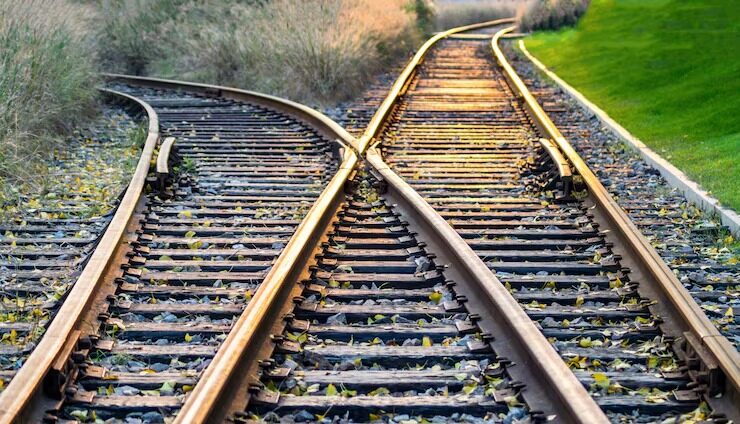
Why Don’t Indian Railway Tracks Rust? The Science Behind Shiny Rails
Every day, millions of tonnes of freight and passenger trains run across the vast network of Indian Railways. Despite being exposed to harsh weather conditions like rain, heat, and wind round the clock, railway tracks continue to appear shiny and largely rust-free. This often leads to curiosity about the science behind their durability.
Here’s a closer look at the key reasons.
Not Ordinary Iron: The Role of Special Alloy Steel
Railway tracks are not made from standard iron. Instead, they are manufactured using a special alloy known as C-Mn Rail Steel (Carbon-Manganese Steel), which typically contains manganese and carbon.

This composition slows down the process of Oxidation—the chemical reaction responsible for rust. Manganese improves both strength and resistance, allowing tracks to withstand environmental exposure for long periods.
Continuous Use Prevents Rust Formation
Railway tracks are in near-constant use. As trains pass over them:
- High pressure and friction remove moisture and dirt
- The surface gets naturally polished
- Water doesn’t stay long enough to trigger rust
This continuous “self-cleaning” effect plays a major role in keeping the rails shiny.
Regular Inspection and Maintenance
Indian Railways conducts routine inspections and maintenance to ensure track safety:
- Anti-rust coatings or oiling in low-traffic areas
- Immediate replacement of damaged sections
- Frequent monitoring of joints and less-used tracks
These measures help prevent corrosion where natural friction is less effective.
Conclusion
Railway tracks resist rust due to a combination of advanced alloy materials, constant friction from trains, and systematic maintenance practices. Together, these factors ensure long-lasting performance and safety across India’s extensive rail network.
Disclaimer
This article is intended for general informational and educational purposes only. While it explains the commonly understood scientific and engineering principles behind railway track durability, specific materials, compositions, and maintenance practices may vary based on region, technology updates, and operational requirements of Indian Railways. For official or technical details, readers are advised to refer to authorized railway sources or experts.