Interesting Facts: Why Forks Have 4 Prongs; The Surprising History Behind Everyday Cutlery
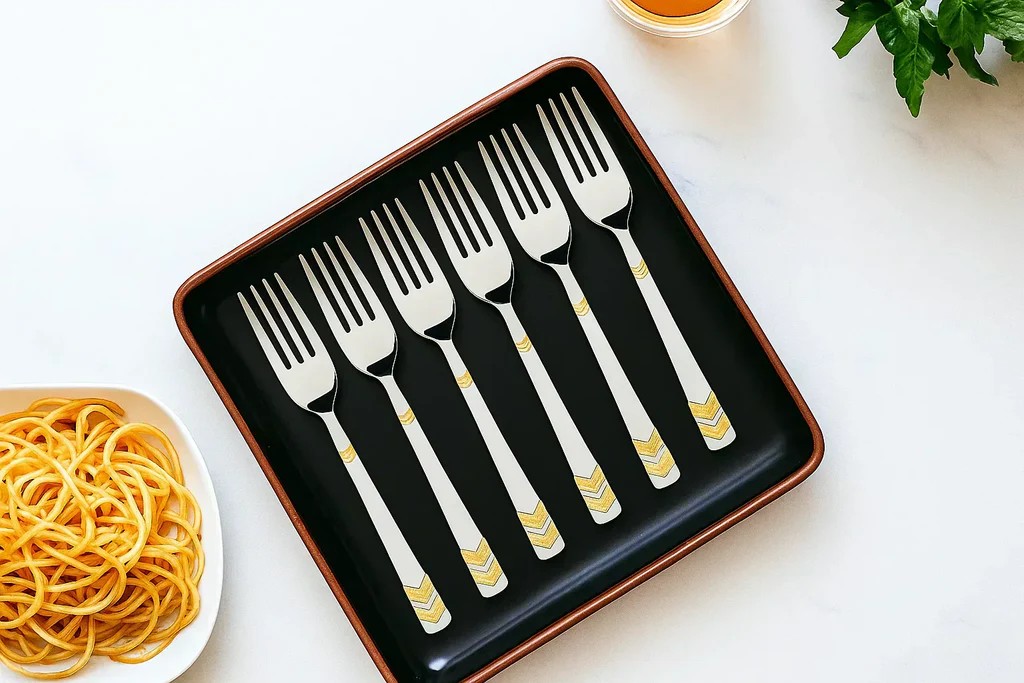
Interesting Facts: Why Forks Have 4 Prongs; The Surprising History Behind Everyday Cutlery
From being called a ‘devil’s tool’ to becoming a dining essential, the four-pronged fork has a fascinating journey shaped by history, design and practicality
Ever noticed that almost every fork you use has exactly four prongs? Whether you are twirling noodles or picking up rice, this common design is no accident. It is the result of centuries of evolution, changing food habits, and practical design improvements.
The history of the fork dates back to ancient civilisations like Egypt, Greece and Rome. However, these early fork-like tools were mostly used for cooking and serving food, not for eating. In medieval Europe, eating with hands or knives was considered normal, and people who used forks were often viewed with suspicion. In fact, forks were once even labelled as a “devil’s tool” due to their unusual appearance.
In the early stages, forks had only two prongs. While these worked well for piercing meat, they were not practical for other foods. Items like noodles, pasta or rice would easily slip off, making them inconvenient for everyday use.

As food habits evolved, especially with the rise of pasta in Italy, the need for better utensils grew. This led to the introduction of three-pronged forks. However, even these were not perfect, as food often got stuck or slipped.
A major turning point came in the 18th century when a four-pronged fork was introduced. This design offered better grip, balance and usability. It allowed people to easily twirl pasta, pick up different types of food, and eat more comfortably.
The four-prong design works well because of simple science and ergonomics. The slightly curved shape helps hold food securely, while maintaining a lightweight structure. It strikes the right balance—strong enough to support food, yet compact enough to fit comfortably in the mouth.
Design experiments with five or six prongs were also attempted, but they proved less practical. Such forks became too wide and heavy, making them difficult to use.
Today, the four-pronged fork is considered the ideal design. It is versatile enough to handle everything from meat to noodles and even grains like rice without letting them slip.
What seems like a simple everyday object is actually a perfect example of how history, culture and functionality come together to shape even the smallest details of our daily lives.