Maharashtra Dams Hold Just 25.5% Water; Pune Records Sharpest Drop From Last Year, Pune In Worst Shape
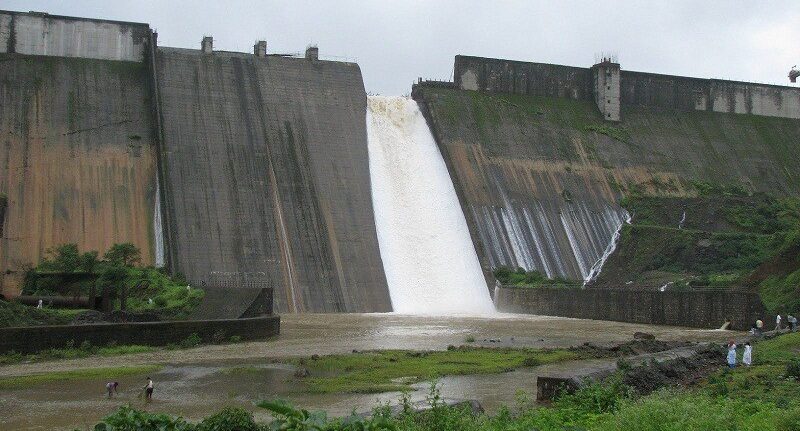
Maharashtra Dams Hold Just 25.5% Water; Pune Records Sharpest Drop From Last Year, Pune In Worst Shape
Vidhi Lalla
Pune, 11 June 2026: State reservoir levels have fallen significantly compared to 2025, with Pune division emerging as Maharashtra’s most water-stressed region ahead of the monsoon.
Maharashtra is entering the monsoon season with lower water reserves than last year, raising concerns about drinking water supply and agricultural needs across several districts. According to the latest Water Resources Department data, the state’s 3,028 large, medium and minor dams currently hold 10,421.90 million cubic metres (MCM) of usable water, equivalent to 25.51% live storage capacity.

The figure is considerably lower than the 30.53% storage recorded on the same date in 2025, highlighting the growing pressure on Maharashtra’s water resources before the arrival of widespread monsoon rainfall.

Among the state’s six divisions, Pune has reported the weakest position. Reservoirs in the division are currently at 15.54% capacity, compared to 26.82% during the corresponding period last year, marking a decline of more than 11 percentage points. The region’s 724 dams together hold 2,370.27 MCM of water.
Pune’s storage level is the lowest among all divisions in Maharashtra, making it the state’s most vulnerable region if monsoon rains are delayed further. Several major reservoirs supplying water to urban and rural areas, including Khadakwasla, Panshet, Varasgaon, Bhatghar, Dimbhe, Mulshi, Koyna and Warna, are operating with lower reserves than expected.
Other divisions have fared comparatively better. Amravati leads the state with 38.4% storage, followed by Nagpur at 36.98%. Konkan has reported 31.26%, while Chhatrapati Sambhajinagar and Nashik divisions stand at 28.17% and 26.66%, respectively.
The comparison with previous months also reflects a broader trend. By April this year, all divisions had already slipped below the 50% mark. Several towns across Maharashtra have faced extended water supply intervals. In some areas, residents receive water only once every 10 to 13 days, while many industrial and urban pockets have been operating under restricted supply schedules.
The Centre and Maharashtra government are making reforms under Jal Jeevan Mission 2.0 aimed at strengthening long-term rural water security. A reform-linked Memorandum of Understanding has been signed with Maharashtra to improve village-level water governance, source sustainability planning and digital monitoring of water resources.
The programme focuses on ensuring regular access to safe drinking water through household tap connections while strengthening community participation and maintenance of rural water infrastructure. According to government estimates and research cited by the Centre, household tap connectivity has reduced the burden of water collection for millions of women and improved access to safe drinking water in rural areas.
For now, concern remains on the sharp year-on-year decline in dam storage levels, particularly in Pune division. Water managers are closely watching the progress of the southwest monsoon, as sustained rainfall across catchment areas will be critical to replenishing reservoirs and easing pressure on supplies during the coming months.
Disclaimer: Reservoir storage levels are subject to change based on rainfall, inflows and official updates from the Water Resources Department.