Monsoon Fridge Setting: Change One Setting and Cut Your Electricity Bill This Rainy Season
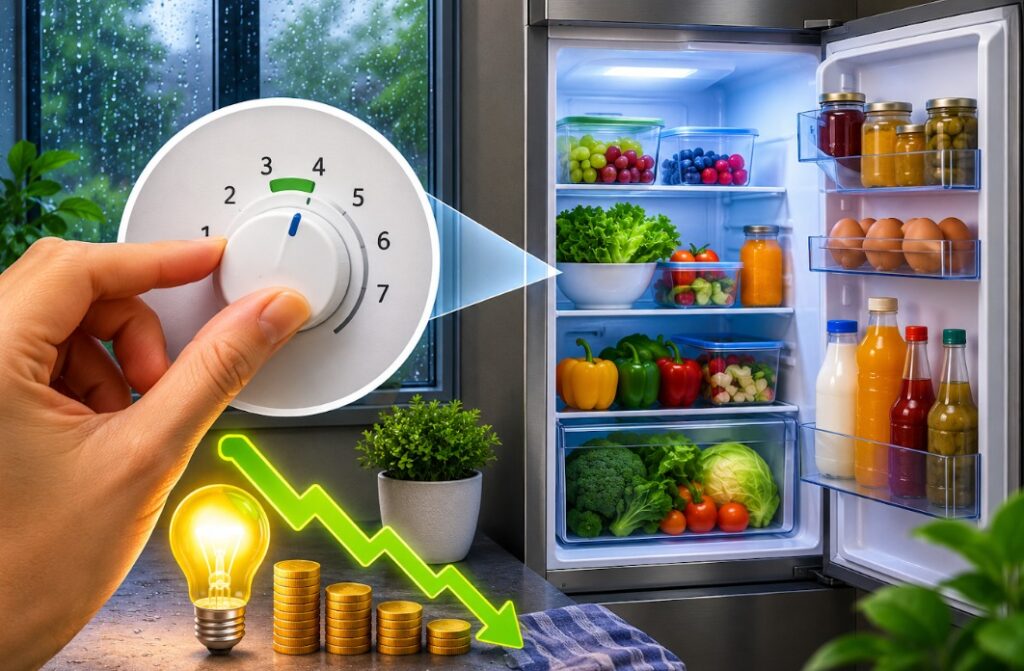
Monsoon Fridge Setting: Change One Setting and Cut Your Electricity Bill This Rainy Season
22 June, 2026: As the monsoon arrives and temperatures drop, many households continue using the same refrigerator settings they used during summer. This can lead to unnecessary power consumption and higher electricity bills. Experts suggest that making a simple adjustment to your fridge’s cooling setting during the rainy season can help reduce energy usage while keeping food fresh.
Why Your Fridge Uses More Power During Monsoon
Although temperatures are lower in the rainy season, humidity levels rise significantly, often reaching 70–90 per cent. Every time the refrigerator door is opened, moist air enters the appliance.


If the fridge is still running on a high cooling setting, the excess moisture can lead to frost formation on the inner walls and cooling coils. This layer of frost acts as insulation, forcing the compressor to work harder and for longer periods to maintain the desired temperature. As a result, electricity consumption can increase considerably.
The Ideal Refrigerator Setting for Monsoon
Most refrigerators have a manual temperature control ranging from 1 to 5 or 1 to 7.
A general guideline is:
- Winter: Setting 1–2 (low cooling)
- Monsoon: Setting 3–4 (medium cooling)
- Summer: Setting 5–7 (high cooling)
For digital refrigerators, experts recommend maintaining the refrigerator compartment between 3°C and 5°C, while keeping the freezer at -18°C.
Lowering the cooling level during the monsoon reduces the load on the compressor and helps save electricity without affecting food quality.
Five More Tips to Reduce Electricity Consumption
1. Defrost regularly
If you use a single-door refrigerator, defrost it at least twice a week. Removing excess ice helps the compressor run more efficiently.
2. Keep the fridge away from walls
Maintain a gap of about 5–10 cm between the refrigerator and the wall. This allows proper airflow around the condenser coils and improves cooling efficiency.
3. Check the door seal
A damaged or loose rubber gasket allows humid air to enter the fridge. Test the seal with a piece of paper; if it slips out easily, the gasket may need replacement.
4. Avoid overloading or leaving it empty
A refrigerator works best when there is enough space for air circulation. Overloading affects cooling performance, while an almost empty fridge struggles to maintain a stable temperature.
5. Do not store hot food immediately
Allow cooked food, milk, or other hot items to cool to room temperature before placing them inside the refrigerator. This reduces the strain on the compressor.
Making seasonal adjustments to household appliances can improve efficiency and reduce electricity costs. By switching your refrigerator to a medium cooling setting during the monsoon and following a few simple maintenance practices, you can keep your food fresh while lowering your monthly power bill.