1BHK vs 2BHK Maintenance Battle May Finally End! Maharashtra Plans Major Society Rule Change
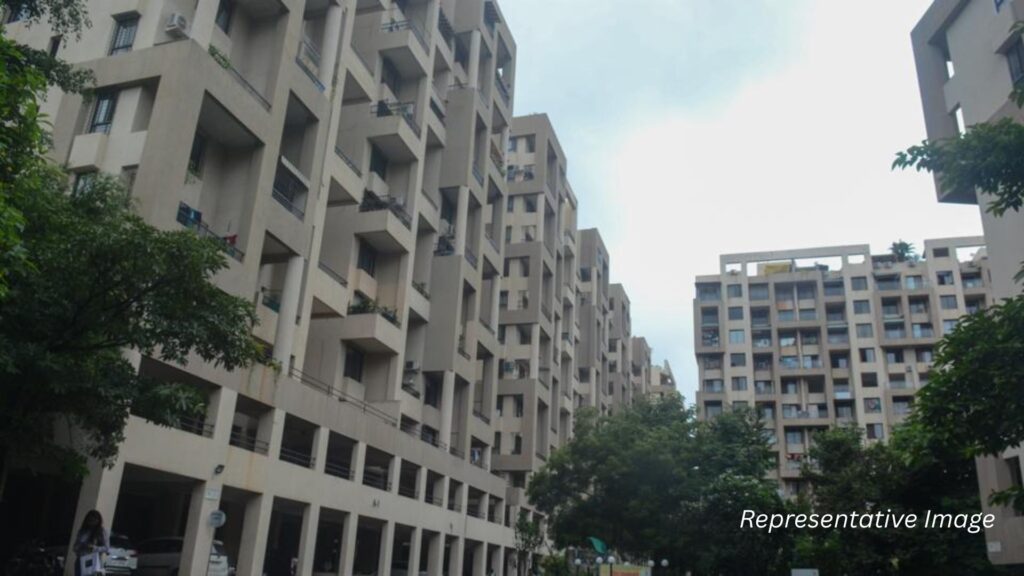
1BHK vs 2BHK Maintenance Battle May Finally End! Maharashtra Plans Major Society Rule Change
Uniform service charges, area-based repair funds and clearer maintenance rules are expected to bring relief to over 1.5 lakh cooperative housing societies across the state.
For years, one of the biggest causes of conflict in Maharashtra’s cooperative housing societies has been a simple question: Should maintenance charges be the same for every flat owner, or should they depend on the size of the flat?
From one-BHK owners claiming they should not pay as much as larger flats to owners of bigger apartments arguing that common facilities are used equally by everyone, the issue has often led to heated society meetings, legal notices and even court cases.

To bring greater clarity and reduce such disputes, the Maharashtra government is preparing to notify a new set of rules governing maintenance charges in cooperative housing societies. The proposed framework, which will apply to more than 1.5 lakh registered housing societies across the state, clearly separates expenses that should be shared equally from those that should be linked to the size of the flat.

The proposed rules strengthen the existing Model Bye-laws while introducing a clearer legal framework under a separate chapter of the Maharashtra Cooperative Housing Society Rules. Once translated and published in the Official Gazette, they are expected to become applicable across the state.
Equal charges for common services
Under the proposed rules, all residents will pay an equal share for services that are common to every member, regardless of the size of their apartment.
These include service charges, salaries of society employees, common electricity bills, lift maintenance, audit fees, legal expenses, stationery and administrative costs, meeting expenses and membership fees.
This means that the owner of a 500 sq ft flat and the owner of a 1,500 sq ft flat will pay the same amount for these common services because every resident benefits equally from them.
A senior cooperative housing expert from Baner said, “The proposed system recognises that, the administrative services, security, lifts and common facilities are shared equally by all residents and therefore should not vary according to apartment size.”
Housing management professional from Wanowrie believes, “The change is likely to reduce long-standing disagreements during annual maintenance calculations and make budgeting more transparent for society managing committees.”
Charges linked to flat size
The government has also clarified that certain expenses should continue to be calculated according to the carpet area, built-up area or value of the property.
These include:
• Repair Fund
• Sinking Fund
• Insurance premium
• Lease rent
• Non-agricultural tax
Experts say this approach is considered more equitable because larger properties generally have a greater financial stake in the long-term upkeep and structural maintenance of the building.
A cooperative housing consultant from Aundh explained that, “Repair and sinking funds are directly connected to the value and size of the property. Linking these charges to carpet area ensures that contributions remain proportionate to ownership.”
Water charges to depend on connections
Another important proposal relates to water charges.
Instead of following a uniform formula, societies will calculate water charges based on the number of tap connections provided to each flat wherever applicable. This is expected to make billing more practical and reduce complaints over unequal water usage.
Parking charges to remain with societies
Unlike maintenance charges, parking fees will not have a fixed statewide formula.
The proposed rules allow each housing society to decide parking charges through its General Body Meeting, giving members the flexibility to frame rules suited to local requirements.
Experts say this provision respects the fact that parking demand, available space and vehicle ownership differ widely from one housing society to another.
Late payment may attract 12 per cent interest
The draft rules also provide societies with stronger financial discipline.
If a member delays payment of maintenance charges beyond the prescribed period, the society may levy up to 12 per cent annual interest on the outstanding amount, subject to applicable provisions.
Housing finance professionals believe this could improve cash flow for societies and reduce delays in paying staff salaries, electricity bills and maintenance contractors.
Why disputes have continued for years
Maintenance disputes have remained common because residents often interpret society bye-laws differently.
Supporters of area-based maintenance argue that owners of larger apartments should contribute more because they own a bigger share of the building.
Others argue that facilities such as security guards, lifts, CCTV cameras, clubhouses, gardens and common lighting are used equally by everyone and therefore should be charged equally.
In many societies, the issue becomes even more complicated because occupancy does not always match apartment size. A one-BHK flat may house a larger family than a spacious two-BHK or three-BHK apartment occupied by only two people.
Legal experts note that clear statutory rules will reduce ambiguity, minimise arbitrary interpretations and help societies resolve disputes without lengthy litigation.
Greater transparency for housing societies
Experts believe the government’s proposed framework is less about increasing or reducing maintenance charges and more about ensuring that every category of expense follows a transparent and uniform method of calculation.
Housing governance specialists say societies that follow clear accounting practices generally experience fewer conflicts, stronger financial management and greater trust between residents and managing committees.
With more than 1.5 lakh cooperative housing societies operating across Maharashtra, the proposed rules are expected to provide long-awaited clarity on one of the most frequently disputed issues in community living.
Once notified, the new framework could significantly reduce disagreements over maintenance calculations while making society finances more transparent, predictable and easier for every resident to understand.