New Rules For A Smooth Travel Experience: Government Tightens 60-km Toll Rule on National Highways
New Rules For A Smooth Travel Experience: Government Tightens 60-km Toll Rule on National Highways
The Centre has reinforced the 60-km distance rule between toll plazas on new national highways and is gradually moving towards GPS-based toll collection to reduce congestion, improve transparency and make highway travel more efficient.
By Vidhi Lalla
Pune: Motorists travelling on India’s national highways could soon experience smoother journeys and lower toll-related inconvenience as the Central Government strengthens existing rules governing the placement of toll plazas. The move aims to reduce repeated toll payments on short-distance trips while paving the way for a modern GPS-based toll collection system.

Under the National Highways Fee Rules, 2008, toll plazas on the same national highway and in the same direction are generally required to be at least 60 kilometres apart. While this rule already exists, the government has now directed authorities to strictly enforce it. If a new toll plaza is proposed within 60 km of an existing one, officials must record specific reasons before granting approval. Exceptions may still be allowed in special cases such as bridges, tunnels, bypasses or difficult terrain.

The decision comes after repeated complaints from commuters who had to pay toll charges at intervals of just 30 to 40 kilometres on several highway stretches. Frequent toll plazas not only increased travel costs but also contributed to traffic congestion and longer waiting times.
The government believes that stricter implementation of the 60-km rule will help improve traffic flow, reduce unnecessary toll collections and make highway travel more convenient, particularly for daily commuters and commercial transport operators.
Another major reform under consideration is the phased introduction of the Global Navigation Satellite System (GNSS)-based toll collection system. Unlike the existing FASTag system, where toll is collected at designated plazas, the GNSS-based model will calculate charges based on the actual distance travelled on a highway.
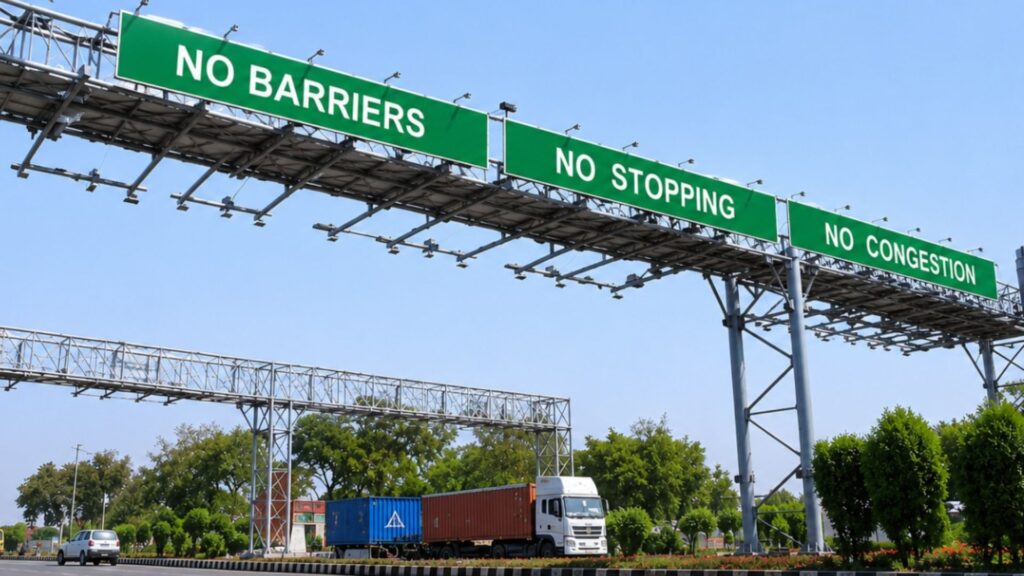
Once implemented nationwide, motorists will pay only for the kilometres they use, making toll collection more transparent and equitable. The technology is also expected to reduce congestion at toll plazas by enabling barrier-free travel.
For now, the FASTag system will continue to operate across the country while the government gradually expands GPS-based tolling infrastructure. Officials believe the transition will modernise India’s highway network and improve the overall travel experience.
If implemented effectively, the strengthened toll policy and future GPS-based system could reduce travel time, lower fuel consumption caused by long queues and simplify toll payments for millions of highway users.
FAQs
1. What is the new 60-km toll rule?
The government has reiterated that toll plazas on the same national highway and in the same direction should generally be at least 60 km apart. Any exception must now be properly justified and documented.
2. Will existing toll plazas located within 60 km be removed?
No such nationwide decision has been announced. The stricter rule mainly applies to approvals for new toll plazas, although future reviews may be carried out where required.
3. What is GNSS or GPS-based tolling?
GNSS-based tolling uses satellite technology to calculate toll charges based on the actual distance travelled instead of collecting toll at physical plazas.
4. Will FASTag continue after GPS-based tolling is introduced?
Yes. FASTag will continue during the transition period until the GNSS-based system is implemented more widely across the country.
5. How will motorists benefit from these changes?
The reforms are expected to reduce repeated toll payments, ease congestion at toll plazas, shorten travel time, improve transparency and eventually ensure users pay only for the distance they travel.