Motorists Can Choose Pure Petrol at Higher Cost If They Don’t Want E20 Fuel: Nitin Gadkari
Motorists Can Choose Pure Petrol at Higher Cost If They Don't Want E20 Fuel: Nitin Gadkari
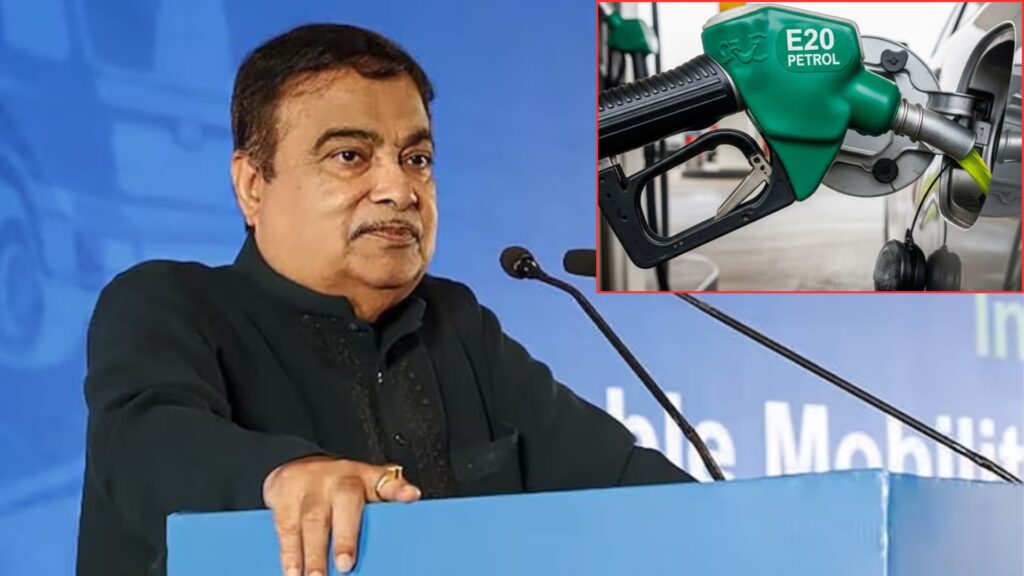
Union Minister for Road Transport and Highways Nitin Gadkari has said that motorists who prefer not to use ethanol-blended petrol will have the option of purchasing 100 per cent petrol, but at a higher price. His remarks come amid growing debate over the Centre’s ethanol-blending programme and concerns about its impact on vehicle performance.
In an interview with The Times of India, Gadkari dismissed allegations that E20 fuel damages vehicle engines, calling such claims “misinformation.” He asserted that the government has not received any complaints regarding engine damage caused by E20 petrol.
Pure Petrol Will Cost More
Responding to questions on whether E10 petrol could continue to be sold alongside E20, Gadkari said India has already achieved 20 per cent ethanol blending and E20 fuel is now available at petrol pumps across the country.

“People who do not want ethanol-blended fuel can opt for 100 per cent petrol, but they will have to pay a higher price,” he said.
When asked whether fuel stations should provide multiple dispensers offering different ethanol-blending levels, Gadkari said the issue falls under the jurisdiction of the Petroleum Ministry.
He also pointed out that some fuel stations already supply E85 (85 per cent ethanol-blended petrol) for flex-fuel vehicles (FFVs). According to the minister, several automobile manufacturers are preparing to launch FFVs, and E85 is cheaper than E20, giving consumers another fuel option.
‘No Complaints About Engine Damage’
Rejecting criticism of the government’s ethanol policy, Gadkari said all vehicles designed for E10 fuel are compatible with E20 petrol.
“There is misinformation about E20 fuel damaging engines. Maruti Suzuki has publicly stated that E20 does not harm vehicles. Manufacturers provide warranties, and we have not received a single complaint despite inviting people to report any issues,” he said.
Minor Impact on Mileage
Addressing concerns over fuel efficiency, Gadkari acknowledged that ethanol has a lower calorific value than petrol, which may result in a slight reduction in mileage.
“In city driving conditions such as Delhi or Mumbai, the difference is negligible. A minor drop in mileage may be noticed while driving at high speeds on highways because ethanol has lower energy content than petrol,” he explained.
Rejects Allegations of Conflict of Interest
The minister also rejected allegations that his family has benefited from the ethanol-blending programme.
He said his family’s sugar factory existed long before ethanol blending became a national policy and is currently managed by his sons. Gadkari stressed that ethanol pricing is determined by the Union Cabinet under the Petroleum Ministry, leaving him with no influence over the process.
He further stated that ethanol contributes only around 10 per cent of his family’s business and that their factories account for less than 0.5 per cent of India’s ethanol production.
Reducing Oil Imports, Supporting Farmers
Highlighting the broader objectives of the ethanol programme, Gadkari said increased ethanol production helps reduce India’s dependence on imported crude oil while providing additional income opportunities for farmers.
He noted that the government is encouraging ethanol production from multiple feedstocks, including maize, rice, paddy stubble and bamboo—not just sugarcane.
According to Gadkari, maize-based ethanol has benefited farmers in Bihar and Uttar Pradesh, while paddy stubble is being used for ethanol production at Panipat to help reduce air pollution in Punjab and Haryana. Bamboo-based ethanol production is also being promoted in Assam.
He added that countries such as Brazil have successfully used ethanol-blended fuel for decades without harming vehicle engines, while Indonesia and Thailand are also expanding the use of biofuels.
Debate Over E20 Fuel Continues
The Centre’s push to increase ethanol blending has recently drawn criticism from some motorists and experts, who have raised concerns about engine compatibility, mileage, water usage and the impact on older vehicles.
The Ministry of Petroleum and Natural Gas has, however, rejected these claims, issuing a detailed clarification stating that the E20 programme is supported by scientific studies, regulatory safeguards and international experience. The ministry maintains that E20 petrol is safe for compatible vehicles and plays a key role in reducing emissions, lowering crude oil imports and improving India’s energy security.