NFC Scam Alert: How Contactless Card Fraud Works and Ways to Stay Safe
NFC Scam Alert: How Contactless Card Fraud Works and Ways to Stay Safe
27 July, 2026: As digital and contactless payments become increasingly common, cybercriminals are also finding new ways to exploit payment technology. One such emerging concern is NFC-related fraud, where scammers may attempt to misuse contactless payment features on debit and credit cards.
NFC, or Near Field Communication, is the technology that allows users to make contactless payments by bringing an NFC-enabled card or device close to a compatible payment terminal. While the feature makes transactions quick and convenient, users need to remain cautious about potential fraud and unauthorised transactions.

What is an NFC scam?
Many modern debit and credit cards come with NFC functionality, commonly known as the tap-and-pay feature. It allows certain transactions to be completed by tapping the card on a point-of-sale (POS) terminal instead of inserting or swiping it.

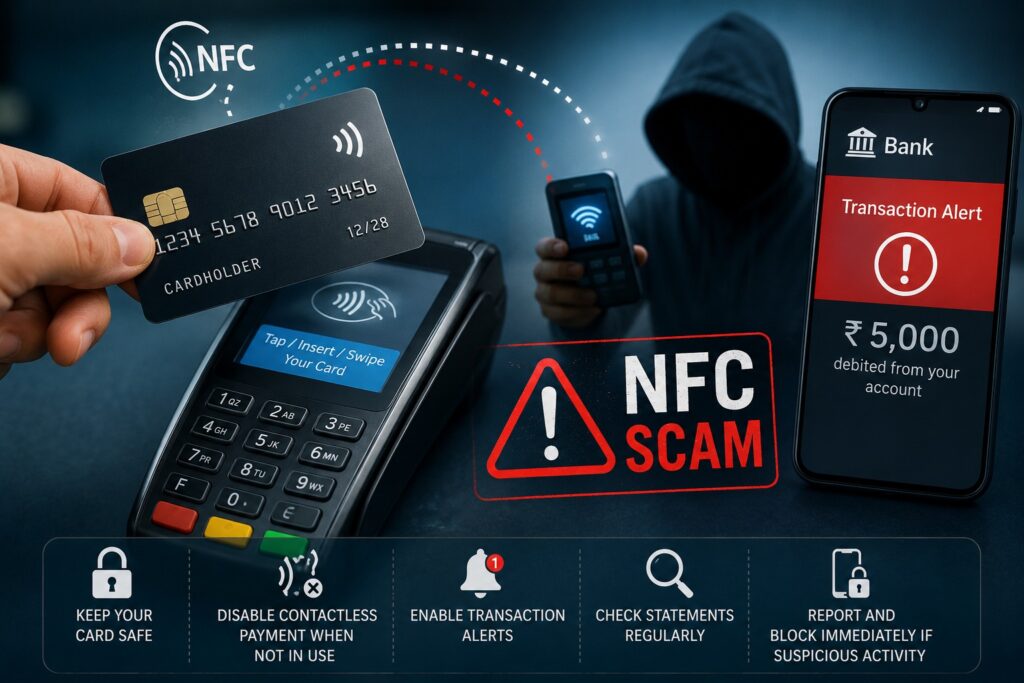
Fraudsters may try to exploit contactless payment systems using NFC-enabled devices or payment terminals. The risk can be greater if a card is lost or stolen, as transactions within applicable contactless limits may not always require a PIN.
However, simply standing near someone with an NFC-enabled phone does not automatically give a scammer unrestricted access to their bank account. Contactless cards are designed to work only over very short distances, and payment systems incorporate multiple security controls.
How can users reduce the risk?
Cardholders should regularly check bank statements and transaction notifications so that suspicious activity can be identified quickly. Any unfamiliar transaction should immediately be reported to the bank, and the affected card should be blocked.
Users can also check their banking app for options to disable contactless payments or set transaction limits when they do not regularly use the feature. Keeping cards securely stored and avoiding handing them to unknown individuals can further reduce the risk.
Customers should also remember that banks and legitimate financial institutions do not ask them to disclose sensitive credentials such as OTP, PIN, CVV or internet banking passwords through unsolicited calls or messages.
Lost your card? Act immediately
If a debit or credit card is lost, users should not wait for suspicious transactions to appear. The card should be temporarily locked or permanently blocked through the bank’s official app, website or customer-care service as soon as possible.
With contactless payments becoming part of everyday transactions, awareness remains an important defence against financial fraud. Users should enable transaction alerts, review their accounts regularly and promptly report suspicious activity to their bank.