Bengaluru Techie Highlights Security Risks After AI-Generated PAN and Aadhaar Cards Go Viral
Bengaluru Techie Highlights Security Risks After AI-Generated PAN and Aadhaar Cards Go Viral
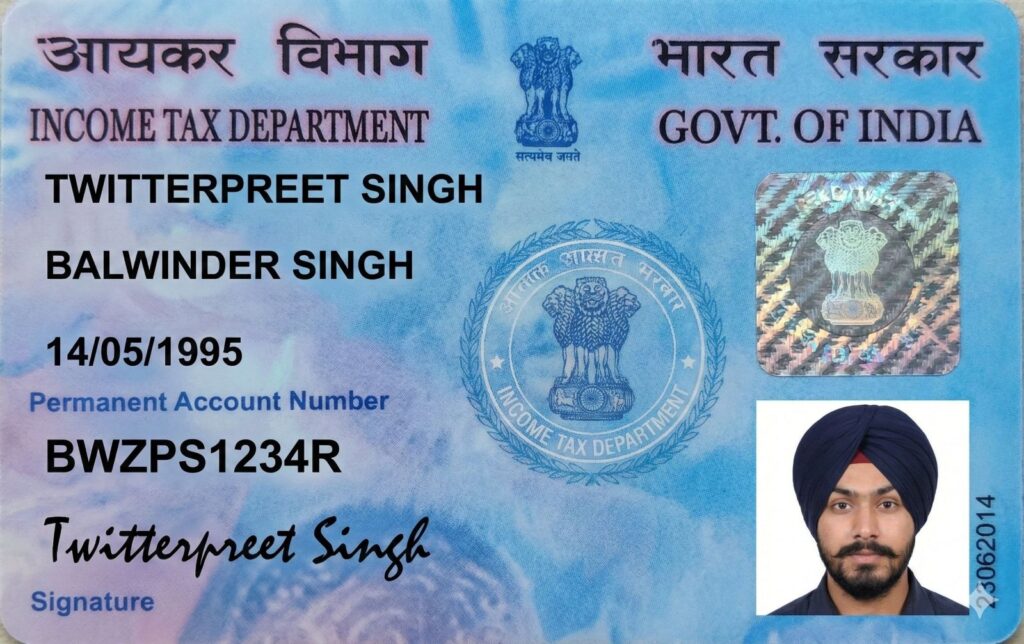
The capabilities of AI have taken another surprising turn as a Bengaluru-based tech enthusiast demonstrated how Google’s Nano Banana can generate hyper-realistic PAN and Aadhaar cards. Harveen Singh Chadha shared images of AI-created identity cards, playfully naming the fictional holder “Twitterpreet Singh.”
While the cards appear authentic at first glance, closer inspection reveals inconsistencies, and both images carry the Gemini AI watermark.
When asked about his experiment, Chadha told HT.com, “I experiment a lot with model capabilities. Earlier models from Google used to heavily nerf celebrity faces or intentionally introduce errors when you tried tasks like these. But with the launch of Nano Banana Pro, things have changed. The model is noticeably more intelligent, refuses less and makes far fewer mistakes especially with the structure and layout.”

He added, “It still isn’t perfect with fonts or fine-grained text, but the jump in accuracy made me curious about how far it could go. That’s what led me to test it on PAN and Aadhaar formats.”
The post sparked mixed reactions on social media. Some users expressed concern over potential security threats, while others felt it wasn’t a major issue. One user pointed out, “Gemini adds hidden fingerprints called SynthID, which can be verified through that. It is also available in the Gemini APP.” With the latest Gemini 3 update, Google has introduced a feature that allows users to upload an image and check if it was generated using Gemini. Chadha responded, “No one is gonna scan every proof through the Gemini app.”
nanobanana is good but that is also a problem. it can create fake identity cards with extremely high precision
— Harveen Singh Chadha (@HarveenChadha) November 24, 2025
the legacy image verification systems are doomed to fail
sharing examples of pan and aadhar card of an imaginary person pic.twitter.com/Yx5vISfweK
Others noted the practical implications, with one commenting, “Scanning the QR on the Aadhaar and actually verifying it will start becoming the norm soon because of this. And the new Aadhaar app also makes it easy for private hotels and places to verify an Aadhaar themselves.”
Some users added a humorous perspective: “A clear picture on an Aadhaar card makes it a fake immediately.” Another remarked, “This is going to be a serious security threat. But this is a damage that happens with any technological shift.”
Chadha reflected on the range of opinions, saying, “Some people agree it’s scary and feel this level of AI accuracy is concerning. Some say SynthID exists but verifying SynthID properly is still a learning curve and not trivial for most people. Also watermarks at the side of the image can be cropped. Others argue this was always possible with Photoshop which is true but tools like Nano Banana drastically lower the entry barrier and make it easier for anyone.”
Chadha’s experiment is a reminder of how quickly AI tools are evolving and their potential implications for security systems. While this experiment was conducted purely out of curiosity and awareness, it sheds light on the growing need for robust verification methods in the age of AI-generated content.