ED Attaches ₹1,885 Crore Assets Of Anil Ambani Group In Major Money Laundering Probe

ED Attaches ₹1,885 Crore Assets Of Anil Ambani Group In Major Money Laundering Probe
Fresh action takes total attached properties in Reliance Group-linked cases to nearly Rs.12,000 crore
The Enforcement Directorate (ED) has provisionally attached assets worth around ₹1,885 crore belonging to the Anil Ambani Group in connection with its ongoing money laundering investigation related to the Yes Bank loan fraud and Reliance Group finance companies. This marks one of the largest recent actions in the long-running probe into alleged financial irregularities involving multiple Reliance Group entities.
According to the agency, four separate provisional attachment orders have been issued under the Prevention of Money Laundering Act (PMLA). The attached assets include bank deposits, company shares, outstanding receivables and immovable properties. These also cover stakes in companies linked to key infrastructure businesses such as BSES Yamuna Power, BSES Rajdhani Power and Mumbai Metro One Private Limited.
The ED has also attached a bank balance of ₹148 crore and receivables of ₹143 crore held in the name of Value Corp Finance and Securities Limited. In addition, the agency has taken action against the personal assets of two senior employees of the Anil Ambani Group. These include a residential property registered in the name of Angarai Sethuraman and shares as well as mutual fund investments held in the name of Puneet Garg.

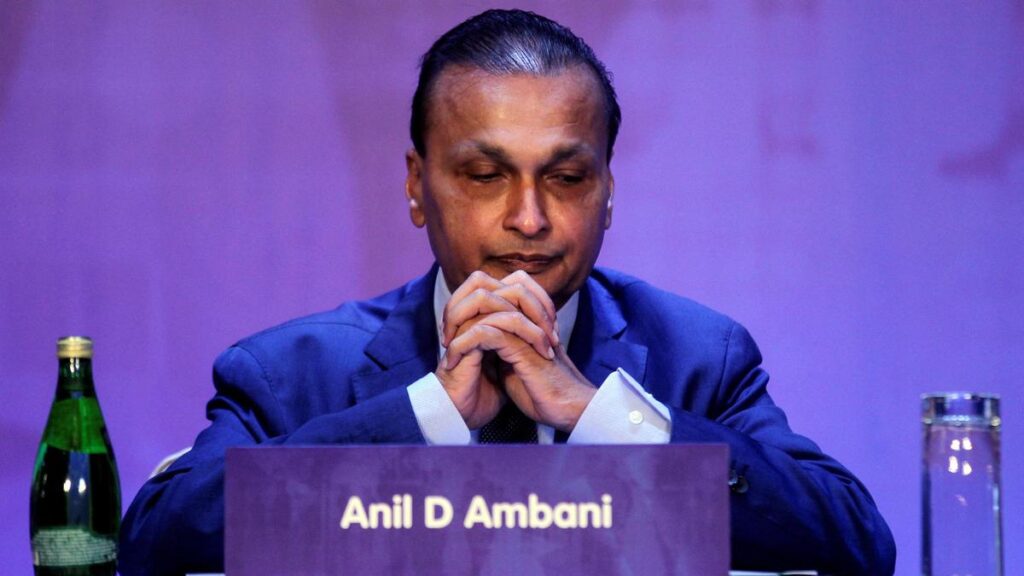
With this latest attachment, the total value of properties seized or provisionally attached in cases linked to Reliance Communications, Reliance Home Finance and Reliance Commercial Finance has now reached approximately ₹12,000 crore. The ED stated that earlier attachments in these cases had already crossed ₹10,117 crore.
The investigation has revealed a complex pattern of financial transactions in which loans taken from one bank were allegedly used to repay loans from another bank. The agency claims that large sums of money were diverted among group companies, close associates and mutual funds instead of being used for their intended business purposes.
As per the findings, between 2017 and 2019, Yes Bank invested around ₹2,965 crore in Reliance Home Finance Limited (RHFL) and approximately ₹2,045 crore in Reliance Commercial Finance Limited (RCFL). By December 2019, both investments had turned into non-performing assets (NPAs). At that time, nearly ₹1,353.50 crore remained outstanding in RHFL and about ₹1,984 crore in RCFL.
The ED alleges that the funds routed through Yes Bank were originally sourced from Reliance Nippon Mutual Fund. Under market regulations, a mutual fund is not permitted to directly invest in finance companies belonging to the same corporate group. To bypass this restriction, the money was allegedly channelled through Yes Bank before being transferred to Anil Ambani Group companies through what investigators describe as a circuitous route.
The probe further suggests that a significant portion of the funds was used for “evergreening” of loans. In this process, fresh loans are taken to repay older loans, giving an appearance of financial stability while increasing overall debt exposure. The agency claims around ₹13,600 crore was used for loan evergreening, ₹12,600 crore was transferred to related companies, and nearly ₹1,800 crore was invested in fixed deposits and mutual funds.
The ED has also stated that some of the funds were sent abroad and that bill discounting facilities were allegedly misused to move money through multiple layers. These transactions are now under detailed scrutiny as part of the money laundering investigation.
The current action has been taken based on a First Information Report (FIR) registered by the Central Bureau of Investigation (CBI). Following the CBI’s case, the ED launched a parallel financial probe to trace proceeds of crime and identify assets created through allegedly illegal financial practices.
Investigators have revealed that between 2010 and 2012, Reliance Communications and its group companies had taken large loans from both domestic and international banks, with total outstanding borrowings exceeding ₹40,185 crore. So far, nine banks have declared these accounts as fraudulent.
The ED maintains that its investigation is still ongoing and further attachments cannot be ruled out as more financial trails and assets are examined. Officials said the focus remains on identifying how public money was allegedly misused, diverted and layered through multiple entities and investments.