Khambatki Tunnel Project Enters Final Phase, Set to Open for Traffic in June 2026
Khambatki Tunnel Project Enters Final Phase, Set to Open for Traffic in June 2026
Pune, January 26, 2026: The long-awaited Khambatki tunnel project on the Pune–Satara National Highway is nearing completion and is scheduled to be opened to the public in June 2026, following successful trial runs conducted by the National Highways Authority of India (NHAI).
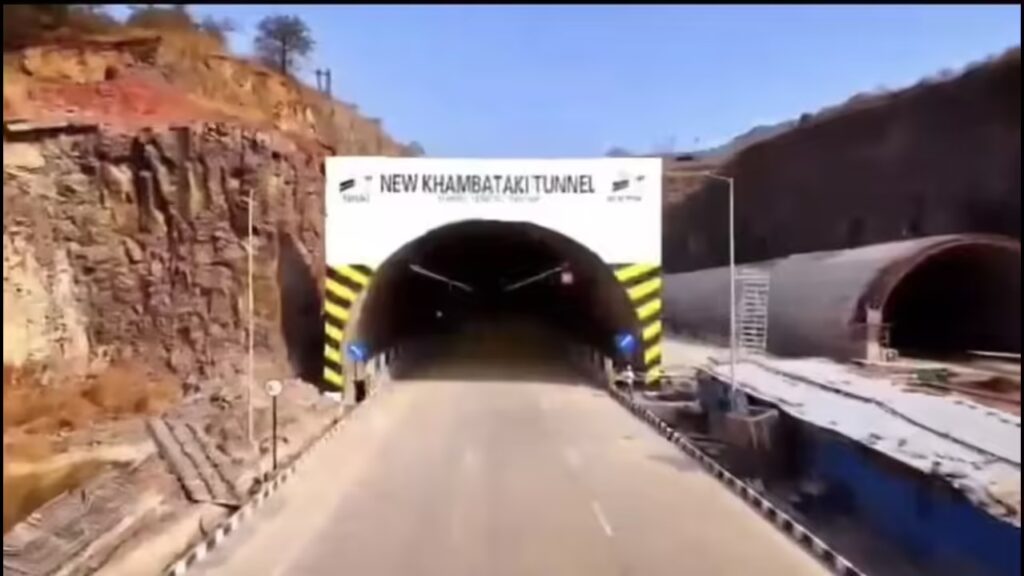
According to NHAI officials, a week-long trial was recently carried out on one of the two tunnels in the Satara-to-Pune direction, during which light vehicles were allowed to pass. The trial confirmed that traffic management and safety systems functioned efficiently, with no major technical shortcomings observed. Encouraged by the results, NHAI has decided to open both tunnels and all allied infrastructure for full-scale regular traffic from June.
NHAI Pune Project Director Sanjay Kadam said the project would significantly improve both safety and mobility on the busy Pune–Satara corridor. “The Khambatki tunnel, along with the viaduct and underpasses, represents modern highway engineering. It ensures faster travel without compromising safety and will help eliminate the risks associated with the accident-prone ghat section,” he said.

Frequent commuters on the route have welcomed the development. Many noted that driving through the Khambatki ghat, especially during monsoons or at night, has long been challenging. With the tunnels operational, travel time through the stretch is expected to reduce drastically.
Transport operators have also expressed optimism, pointing out that the tunnels will reduce fuel consumption, vehicle wear and tear, and accident risks, particularly for heavy vehicles.
Designed to cater to traffic needs for the next 25 years, the project has a capacity of nearly 1.5 lakh passenger car units per day. It includes two separate tunnels of approximately 1.3 km each, a 1.2-km-long viaduct across the valley, and underpasses at Khandala and Velhe for local connectivity.
Equipped with advanced safety features such as CCTV surveillance, control rooms, emergency exits, ventilation systems, and high-intensity lighting, the ₹493-crore project is expected to cut travel time from 40–45 minutes to just about seven minutes, offering faster, safer, and uninterrupted connectivity between Pune and Satara.