Mumbai Police Use Calls, Home Visits and WhatsApp Location Sharing to Deter Student Protesters
Mumbai Police Use Calls, Home Visits and WhatsApp Location Sharing to Deter Student Protesters
Police say the measures are preventive, while legal experts and activists question whether the methods raise concerns over privacy and freedom of movement.
Mumbai Police have adopted a combination of phone calls, home visits and requests for WhatsApp live location sharing to discourage young protesters from participating in demonstrations linked to the Cockroach Janta Party (CJP) agitation over alleged examination irregularities.
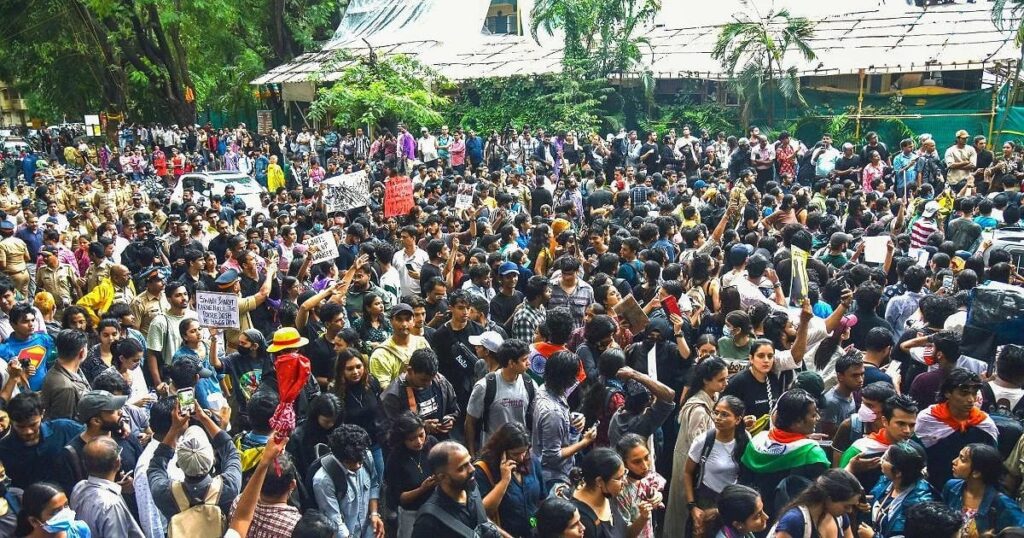
The measures are primarily being directed at individuals who have already been named in First Information Reports (FIRs) or served legal notices in connection with recent protests held across Mumbai, including at Shivaji Park, Chembur and Azad Maidan.

Several protesters said they received calls from local police stations asking them to remain at home. Some also shared screenshots on social media showing requests from police officers asking them to continuously share their WhatsApp live location as proof that they were not attending fresh demonstrations.
One such exchange reportedly involved a protester receiving messages from a senior officer at the Versova police station asking her to stay home and keep her live location active. Police officials later confirmed that an FIR had been registered against the protester but clarified that she had not been detained.
Apart from digital communication, police teams also visited the homes of several student protesters and their families. During these visits, officers informed them about pending investigations and advised them not to participate in further protests. Police personnel were also deployed at major railway stations and metro hubs to identify and intercept individuals believed to be travelling towards protest venues.
A 20-year-old protester said he received a phone call from the Shivaji Park police station asking him to remain at home because officers intended to visit him as part of an ongoing investigation.
“It was clear that it was their ploy to ensure that we do not leave our houses and join other protests,” he said.
A representative of Mumbai Against Suppression of Students (MASS) claimed that many students had already received notices following demonstrations earlier in the week.
“While some received calls on Wednesday morning warning them against joining any further protests, saying they were already named in an FIR, others had police officials visit their homes with the same warning,” the representative said.
Police have registered several FIRs against protesters under provisions of the Bharatiya Nyaya Sanhita (BNS) relating to unlawful assembly and disobedience, along with sections of the Maharashtra Police Act dealing with unauthorised assemblies and obstruction of public ways. Notices have also reportedly been issued under provisions of the Bharatiya Nagarik Suraksha Sanhita (BNSS) directing those named in the cases to cooperate with the investigation.
Senior police officials have defended the measures, describing them as preventive steps intended to discourage young people from acquiring criminal records that could affect future opportunities such as passport applications, higher education admissions and employment.
However, legal experts and civil rights groups have questioned whether requesting continuous live location sharing, monitoring messaging platforms and conducting repeated home visits fall within established preventive policing practices. They argue that such actions may raise concerns regarding privacy rights and freedom of movement guaranteed under the Constitution.
Mumbai has witnessed demonstrations for three consecutive days in solidarity with the ongoing CJP-led student movement in Delhi. Protesters have been demanding accountability over alleged irregularities in competitive examinations, including NEET-UG 2026, broader education reforms and action against those responsible for the alleged paper leak. The sit-in protest at Jantar Mantar in New Delhi continues as discussions between protest representatives and the government remain ongoing.