Poha vs Upma: Which Traditional Indian Breakfast Is Better for Health and Weight Loss?

Poha vs Upma: Which Traditional Indian Breakfast Is Better for Health and Weight Loss?
Starting the day with the right breakfast plays a key role in keeping energy levels steady and supporting good health. In Indian households, poha and upma are two go-to choices that often spark debates about which one is healthier. Both are tasty and packed with nutrients, but how do they really measure up against each other?
Let’s take a closer look to find out which dish has the edge.
Poha: The Light and Iron-Rich Breakfast

Poha, or flattened rice, is a staple breakfast that is quick to prepare and easy to digest. Made from flattened, parboiled rice flakes, it can be dressed up with onions, curry leaves, green chilies, peanuts, and fresh coriander. What makes poha stand out is its nutritional simplicity. It is low in calories compared to many other grains, with one serving usually carrying around 130–150 calories, depending on what is added to it.
Another major benefit of poha is its iron content, which plays a key role in maintaining energy levels. Since it is gentle on the stomach, it is often recommended for people looking for a light, easy-to-digest meal. Its versatility also makes it a favorite, whether eaten plain, with vegetables, or even sprinkled with a squeeze of lemon, it offers a refreshing start to the day.
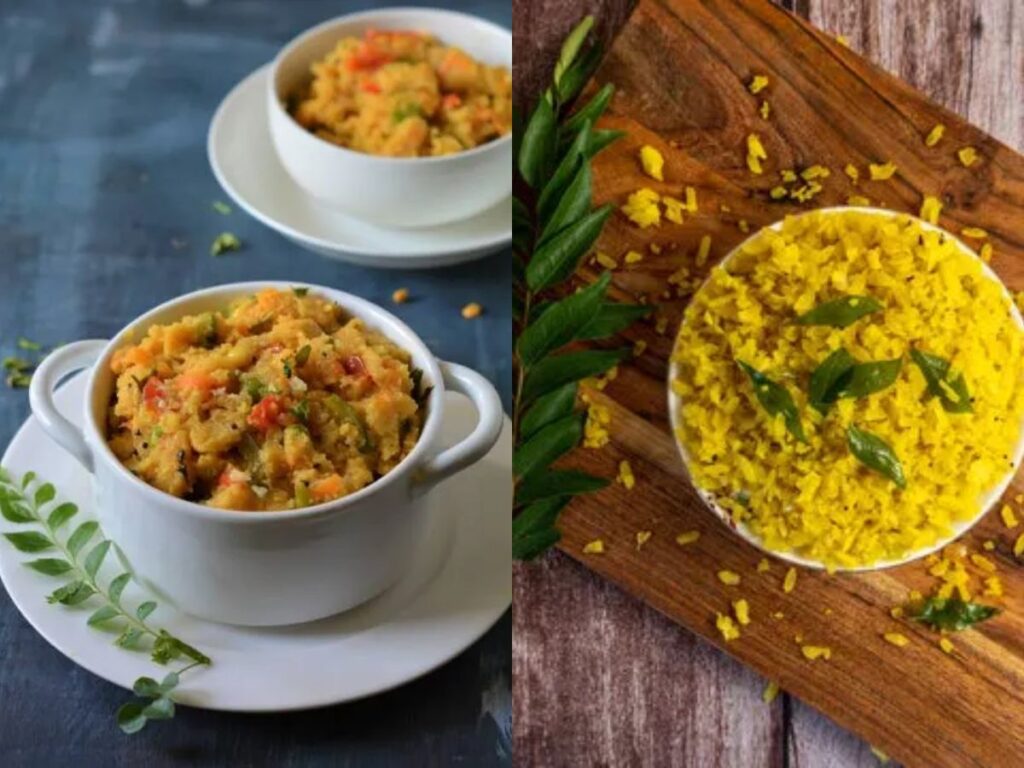
Upma: The South Indian Protein Powerhouse
Upma, on the other hand, is a South Indian favorite made by dry-roasting semolina (sooji) and cooking it with water, spices, and often a medley of vegetables. Unlike poha, upma has a richer texture and a slightly heavier bite. The addition of veggies not only enhances the taste but also increases the fiber content, which helps in digestion and keeps hunger away for longer.
One of upma’s biggest strengths is its protein value. Semolina is naturally rich in protein, which supports muscle repair and growth while also keeping you feeling full. It also provides important B vitamins such as thiamine (B1) and riboflavin (B2), which play a role in energy production. This makes upma a strong contender for those who want a more filling and nutrient-dense breakfast.
Which One Is Better for Weight Loss?
The answer depends on individual needs. For someone counting calories or preferring a light breakfast, poha often wins the spot. Its low-calorie content and soft texture make it ideal for people with sensitive stomachs or those who want a quick, fuss-free dish.
For those focusing on higher protein and vitamin intake, upma becomes the stronger choice. The semolina base gives it an edge in terms of nutrition, especially for vegetarians and vegans who rely on plant-based protein sources. However, since semolina is made from wheat, people who are gluten-intolerant may need to avoid it. In such cases, poha is the safer alternative, as it is naturally gluten-free.
Both poha and upma have their unique health benefits, and neither can be ruled out as unhealthy. Poha is lighter, gluten-free, and low in calories, while upma brings more protein, fiber, and vitamins to the table. What really matters is portion control and how the dishes are prepared. Adding too much oil, fried toppings, or excess sugar in tea alongside the breakfast can undo the benefits.