Pune: New Plant Species ‘Canscora Agni’ Discovered On Sus Hill, Highlighting Importance Of Savanna Ecosystems
Pune: New Plant Species ‘Canscora Agni’ Discovered On Sus Hill, Highlighting Importance Of Savanna Ecosystems
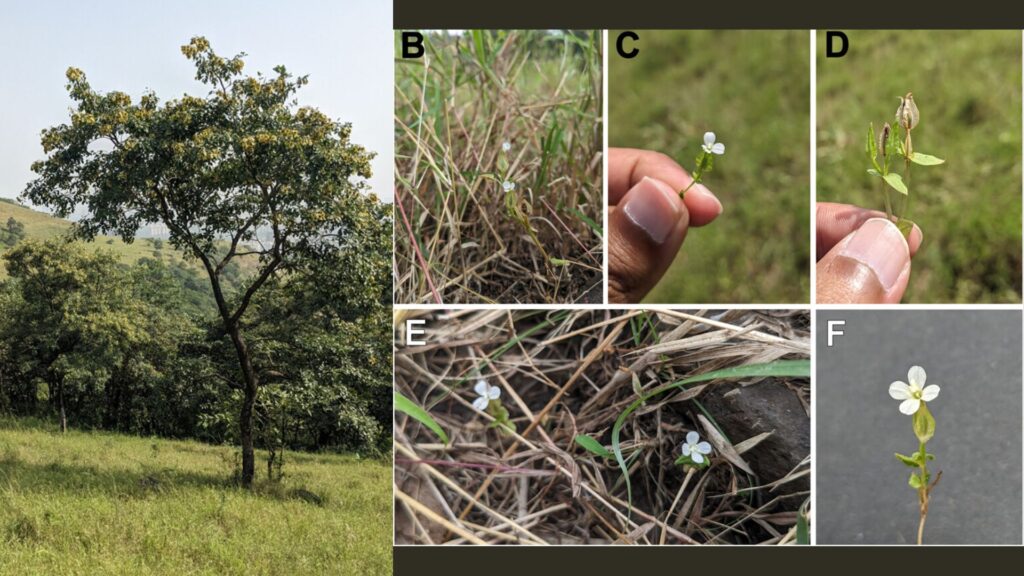
Pune, July 18, 2026: Researchers from the Indian Institute of Science Education and Research (IISER) Pune and the Savanna Science Foundation have discovered a new plant species on Sus Hill in Pune district, naming it Canscora agni. The discovery underscores the ecological significance of western India’s fire-dependent savanna grasslands and the need for their conservation.
https://nsojournals.onlinelibrary.wiley.com/doi/full/10.1002/njb.05213
The tiny flowering plant was first spotted during vegetation surveys of old-growth savannas by researchers Dr. Ashish N. Nerlekar and Dr. Sharad Suresh Kambale. Initially believed to be the known species Canscora alata, detailed field studies and taxonomic analysis conducted over nearly a decade confirmed that it is a previously undocumented species.


The findings have now been published in a scientific study describing Canscora agni as a distinct species based on several unique morphological characteristics.
Unlike its closest relative, which can grow up to 60 centimetres tall, Canscora agni is a dwarf herb that reaches only about 10 centimetres in height. It has fewer and smaller leaves, distinctive winged stems, glandular hairs along the leaf margins, a shorter ovary and uniquely veined floral structures that clearly distinguish it from related species.
The researchers chose the name “agni”, meaning “fire” in several Indian languages, including Marathi, to emphasise the ecological role of naturally occurring fires in maintaining India’s ancient savanna ecosystems.
According to the study, periodic natural fires prevent woody vegetation from overtaking grasslands, allowing native grasses and specialised plants such as Canscora agni to survive. The researchers noted that these fires are often misunderstood as entirely destructive, whereas they play a crucial role in sustaining biodiversity in savanna habitats.
The newly discovered species was found growing among fire-tolerant grasses on Sus Hill, one of the few remaining old-growth savanna landscapes in Pune district.
However, the scientists have warned that Canscora agni faces an uncertain future. Since the species has been documented from only a single location, they have recommended that it be classified as Critically Endangered under conservation guidelines.
The study states that widespread fire suppression policies, large-scale tree plantation drives in natural grasslands and habitat alteration are threatening the open savanna ecosystems on which the species depends.
The researchers have called for greater recognition of India’s ancient savannas as unique ecosystems requiring dedicated conservation measures, arguing that preserving natural fire regimes is essential for protecting rare and endemic plant species such as Canscora agni.