Pune Police Turn To AI To Tackle Traffic Chaos; 500 Smart Cameras To Monitor City Roads
Pune Police Turn To AI To Tackle Traffic Chaos; 500 Smart Cameras To Monitor City Roads
Pune, June 8, 2026: In a major push to tackle the city’s worsening traffic congestion, Pune Police have announced a three-pronged strategy combining advanced technology, expert guidance, and citizen participation. As part of the initiative, around 500 Artificial Intelligence (AI)-enabled cameras will soon be installed across the city, while a Mumbai-style integrated traffic management system is being planned to streamline traffic movement.
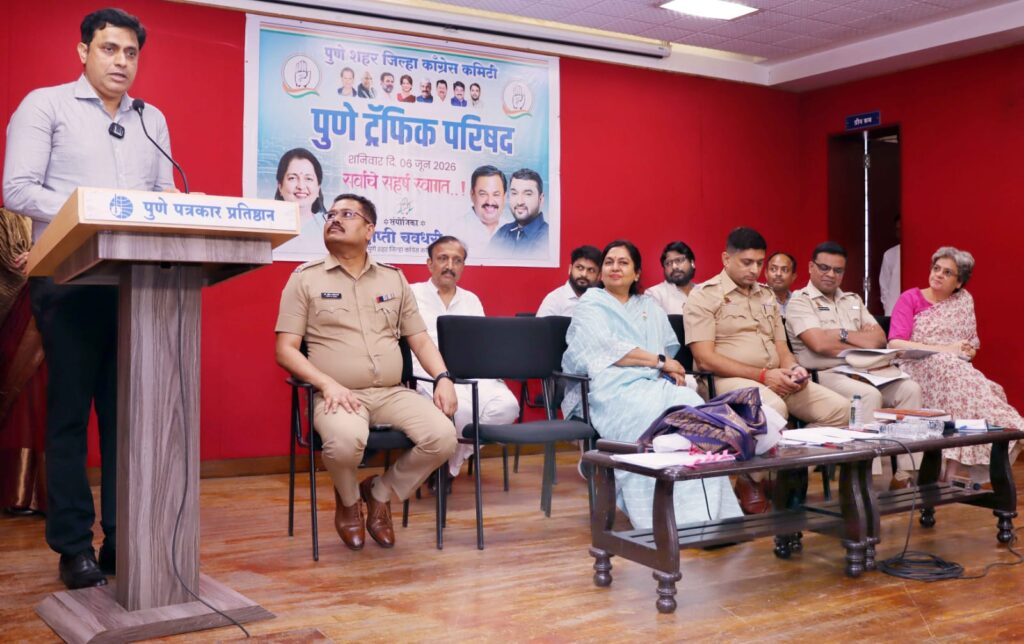
The announcement was made by Additional Commissioner of Police (Traffic) Manoj Patil during the Pune Traffic Conference organized by the West Division of the City District Congress Committee. The event brought together officials from the traffic police, transport department, PMPML, Pune Metro, healthcare experts, transport researchers, and civic representatives to discuss solutions for Pune’s growing traffic challenges.
Patil said traffic congestion in Pune has evolved beyond a transportation issue and is now affecting citizens’ health, productivity, and mental well-being. He noted that an average Pune resident loses nearly two years of their life stuck in traffic over a lifetime. To address the problem, the city plans to deploy AI-based surveillance cameras capable of automatically detecting traffic violations and issuing penalties without human intervention.

The Pune Traffic Police have also proposed an ambitious Intelligent Traffic Management System (ITMS) project, a detailed report of which has already been submitted to the state government for approval. The system aims to provide centralized and automated traffic control across the city, similar to the advanced traffic management network currently operating in Mumbai.
Officials highlighted the growing use of the Traffic Viewer App, which allows authorities and citizens to monitor real-time traffic conditions. Patil said short-term traffic engineering measures on major roads such as J.M. Road and F.C. Road have already helped improve traffic flow despite infrastructure limitations.
He pointed out that Pune’s geographical expansion from 86 sq km in 1995 to 382 sq km today has placed tremendous pressure on the city’s transport infrastructure. However, the upcoming 100-km metro network, combined with technology-driven traffic monitoring systems, is expected to significantly improve mobility in the coming years.
Patil also stressed that technology alone cannot solve the problem. He urged residents to follow traffic rules and support efforts to reduce congestion. Among the suggestions discussed were introducing Pay-and-Park systems on a wider scale and encouraging IT and corporate companies to observe at least one “Public Transport Day” every week to reduce the number of private vehicles on roads.
Speaking at the conference, West Division Congress President Deepti Chaudhari emphasized the need for better public engagement, stronger road safety measures, and improved infrastructure around metro stations. She said adequate parking facilities, feeder services, and better-planned bus stops are essential to make public transport more attractive.
Deputy Commissioner of Police (Traffic) Sandeep Bhajibhakare said authorities are closely studying Pune’s traffic patterns and preparing targeted interventions. He supported the expansion of Pay-and-Park facilities and said efforts are underway to improve traffic management on the lines of Mumbai’s model.
Healthcare experts at the event warned about the growing impact of traffic congestion on public health. Cardiologist Dr Rahul Sawant noted that traffic delays can hinder emergency medical care, while long hours spent in congestion contribute to stress, hypertension, and other health issues.
Officials from PMPML and Pune Metro also outlined plans to strengthen public transportation. PMPML Joint Managing Director Alice Pore said efforts are being made to improve bus punctuality, introduce smaller buses on narrow roads, and expand infrastructure for public transport. Meanwhile, Pune Metro officials said discussions are underway with the civic administration to create additional two-wheeler parking facilities near metro stations and improve last-mile connectivity.
Transport expert and journalist Mangesh Kolapkar highlighted that Pune’s traffic woes stem from a combination of narrow roads, a vehicle population exceeding 4.4 million, inadequate public transport integration, and increasing air pollution. He stressed the need for a comprehensive mobility plan backed by coordinated efforts from government agencies, elected representatives, and citizens.
Participants at the conference agreed that while technology and infrastructure upgrades will play a crucial role, sustained public cooperation and a stronger shift toward public transportation will be key to solving Pune’s long-standing traffic crisis.