Watch Viral Video: “Stop Sending Children to Private Schools”: Chartered Accountant’s Viral Breakdown Reveals the Crushing Cost of Education for Middle-Class Families
Watch Viral Video: "Stop Sending Children to Private Schools": Chartered Accountant’s Viral Breakdown Reveals the Crushing Cost of Education for Middle-Class Families
Education in India is no longer a privilege, it’s becoming an economic trap, says CA Meenal Goyal.
Chartered Accountant and educator Meenal Goyal has sparked a national conversation after her LinkedIn post and video exposed the financial burden private schools are placing on India’s middle-class families. In her viral message, Goyal argued that rising school fees are pushing parents to the brink forcing them into financial compromises for the sake of education.
Here is another fun fact: A private school in my locality demands 15 lakhs donation for school admission and yet the admission is not guaranteed!
— CA Meenal Goel (@meenal_goel1995) April 8, 2025
Private Education: A Middle-Class Struggle
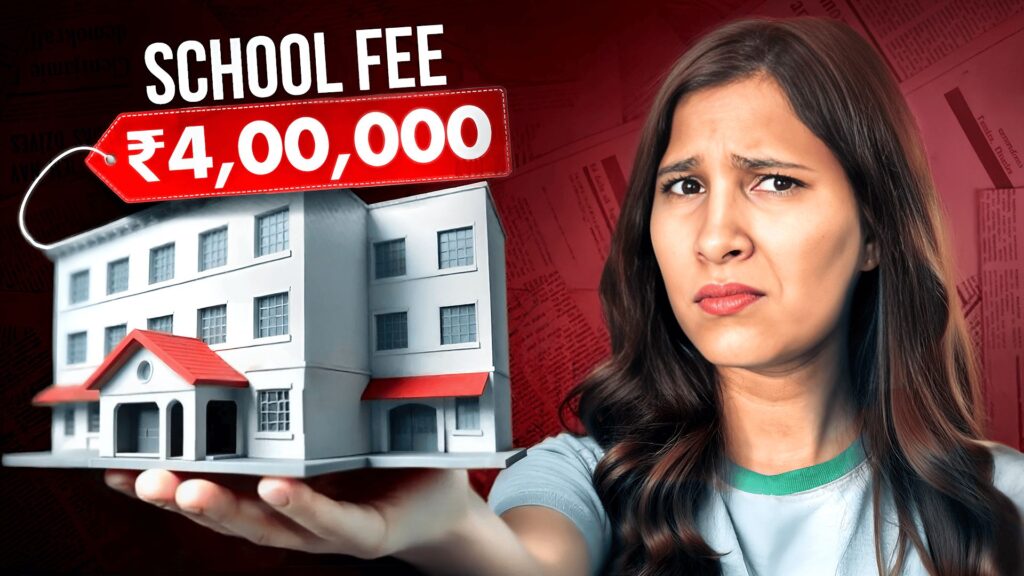
According to Goyal, mid-tier private schools in India charge fees starting from ₹1 lakh per year, while elite institutions easily go up to ₹4 lakh annually. She broke down the typical expenses involved for a single child:
- Admission Fees: ₹35,000
- Tuition Fees: ₹1.4 lakh
- Annual Fees: ₹38,000
- Transport: ₹44,000 to ₹73,000
- Books and Uniforms: ₹20,000 to ₹30,000
That amounts to ₹2.5–3 lakh per child per year—an enormous sum when India’s average annual income stands at ₹4.4 lakh.

“In a country where we debate medical inflation,” Goyal wrote, “we ignore the silent weapon of educational inflation that’s crippling middle-class households.”
The Hidden Industry Behind Schooling
Goyal also highlighted how private schools manipulate nonprofit regulations to extract profits. She revealed how many school owners rent properties to their own institutions through shell companies, charge inflated rents, and shift that burden onto parents—all while avoiding taxes and accumulating wealth.
To make matters worse, fintech companies are now offering EMIs for school fees, turning basic education into another form of long-term debt, like home loans.
No Real Alternatives?
Public schools, Goyal points out, are not viable alternatives in most parts of the country due to severe infrastructural and staffing gaps. Her data is sobering:
- 8 lakh teaching posts are currently vacant across the country
- In Uttar Pradesh, over 5,000 schools have only one teacher
- 1 lakh schools have no electricity,
- 46,000 have no toilets,
- 39,000 have no access to drinking water
Citing a Delhi government survey, she also mentioned that 70% of Class 6 students in government schools were unable to read even a single paragraph.
Meanwhile, India spends only 4.6% of its GDP on education, significantly below the recommended 6%.
A Wake-Up Call
Goyal’s message urges middle-class families to rethink the current obsession with private education, which she says is “neither sustainable nor justified” given the financial exploitation and poor return on investment in many cases.
“It’s time to stop glorifying private schooling and start demanding real reforms in public education. Else, we’re sacrificing our future to pay for a myth.”
Her post has resonated with thousands of parents and professionals online, many of whom echoed the urgent need for policy-level changes and better public education infrastructure.
The question her post leaves behind is stark: Are we educating our children, or indebting ourselves for an illusion of quality?