Woman Shocked After Giant Centipede Crawls Out of Cauliflower, Viral Video Sparks Concern
Woman Shocked After Giant Centipede Crawls Out of Cauliflower, Viral Video Sparks Concern
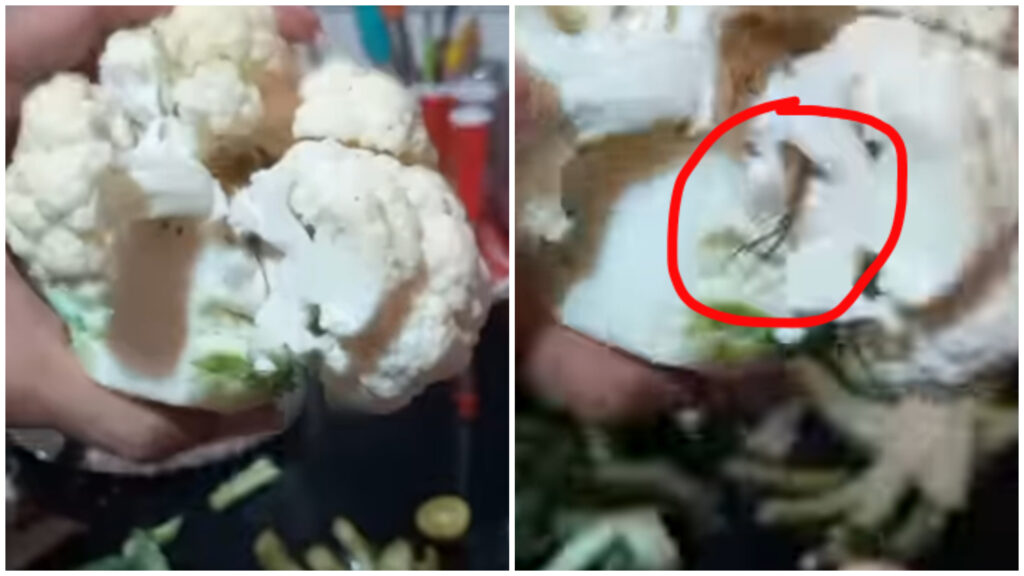
What started as a routine meal prep turned into a chilling discovery for one woman who found a massive centipede hidden inside a cauliflower. The unsettling moment, filmed and shared on social media, quickly went viral—raising fresh concerns over food safety during the monsoon season.
In the widely shared clip, the woman can be seen cleaning cauliflower when she spots the centipede tucked deep within the florets. Alarmed, she discards the vegetable and warns viewers:
“If you cook cauliflower, please be careful. You never know what might be inside. Earlier, I used to find small worms, but this time I found a huge centipede. We didn’t cook it—we threw it away. That’s why I made this video. There could be tiny insects hiding inside.”
Posted on Instagram from the account @anitagruhinikitchen, the video has already crossed 300,000 views. Its caption warns viewers:

“Now look at this hundred-legged creature—prepare to be shocked!”
The clip sparked hundreds of comments from concerned viewers. One user identified the insect, writing, “That’s a centipede!” while another commented, “This is really shocking.” Another home cook shared a similar experience, saying, “Once while cleaning fenugreek (methi), I found a big centipede too.”
Experts note that such infestations become more common during the monsoon due to high humidity and often unsanitary market conditions. They advise thoroughly washing and inspecting vegetables—especially dense produce like cauliflower, broccoli, and leafy greens—to reduce the risk of consuming hidden pests.
Beyond being a viral shocker, the video serves as an important reminder: consuming contaminated vegetables can cause stomach infections and other health issues, particularly during seasons when immunity tends to be lower.
Whether you shop at supermarkets or local markets, the takeaway is clear: always wash, check, and double-check your produce. Sometimes, what’s hidden inside could be far more alarming than a bit of dirt.