66 Years, 6 Months, 6 Days: Ajit Pawar’s Sudden Exit Leaves Maharashtra in Shock
66 Years, 6 Months, 6 Days: Ajit Pawar’s Sudden Exit Leaves Maharashtra in Shock
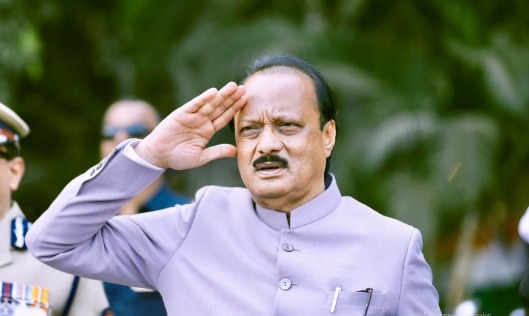
Maharashtra woke up to heartbreaking news on 28 January 2026. Ajit Pawar, senior leader, former Deputy Chief Minister, and one of the most influential administrators in the state’s political history, passed away in a tragic plane crash. The suddenness of the incident sent shockwaves across the state, leaving citizens, political circles, and party workers struggling to come to terms with the loss. Known widely as the man who treated time as a discipline rather than a habit, Pawar’s life ended as unexpectedly as it was impactful.
Ajit Pawar was not just another political figure. For decades, he symbolized order, punctuality, and decisiveness in Maharashtra’s governance. Whether it was government meetings, administrative reviews, political tours, or high-pressure decision-making, he was known to function with clockwork precision. Ironically, the leader who always insisted that “time keeps systems alive” met with an untimely end—one that no one saw coming.
After his passing, a striking numerical coincidence surrounding his age began circulating widely, leaving many unsettled. Ajit Pawar was born on 22 July 1959, and his life came to an end on 28 January 2026. This means he lived for exactly 66 years, 6 months, and 6 days. For many, this coincidence felt more than just a calculation—it stirred emotions, introspection, and quiet disbelief. While science may call it chance and faith may see deeper meaning, the moment has undeniably left behind unanswered questions.

Throughout his political career, Pawar carried the reputation of being firm, direct, and sometimes intimidating. Yet those who worked closely with him tell a very different story. Behind the stern exterior was a deeply sensitive individual who quietly supported countless party workers. Many careers were shaped under his guidance, often without public acknowledgment. He believed work should speak louder than publicity—a philosophy that has become increasingly rare in modern politics.
From top bureaucrats to grassroots workers, Pawar conveyed one consistent message: respect time, and the system will function. Delays, confusion, and casualness had no place in his approach to governance. His insistence on discipline earned him respect not only among supporters but also across political divides. Even opponents who disagreed with his ideology rarely questioned his efficiency or commitment to public service.
At the time of his death, Ajit Pawar remained actively involved in politics. He was managing major responsibilities, shaping future strategies, and planning ahead. His sudden departure has therefore created a profound void in Maharashtra’s public life—one that will not be easy to fill. Condolences have poured in from all quarters, reflecting the scale of the loss and the respect he commanded.
Ajit Pawar may no longer be physically present, but his legacy endures. His sharp decision-making, fearless honesty, administrative discipline, and unwavering respect for time will continue to influence Maharashtra’s political culture. The man known as the “punctual Dada” has taken his final exit, yet the imprint of his work will remain permanently etched in the state’s collective memory—silent, strong, and timeless.