Shubman Gill Reigns Supreme at Edgbaston: A Historic 269 That Rewrites Indian Test Records
Shubman Gill Reigns Supreme at Edgbaston: A Historic 269 That Rewrites Indian Test Records
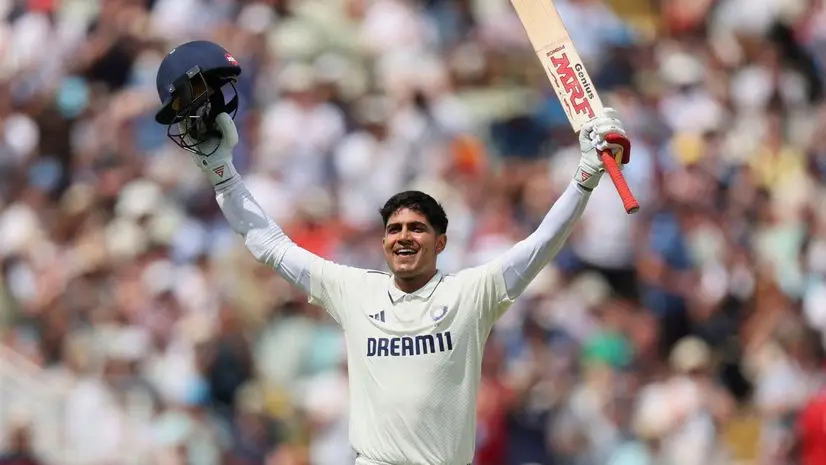
In a performance destined to be etched into Indian cricket folklore, Shubman Gill stunned England and the cricketing world alike with a breathtaking 269-run knock at Edgbaston during the second Test of the five-match series. Leading India as captain, Gill’s monumental innings not only silenced critics but also broke a series of long-standing records held by none other than Virat Kohli, one of India’s greatest-ever batters.
Facing immense pressure and scrutiny after a lean patch in Test cricket—particularly in England, where his average stood at a mere 14.66 before this match—Gill answered his doubters with the bat in the most emphatic fashion. Coming into the match after a classy 147 at Headingley, he walked out at Edgbaston with the weight of expectation and a point to prove. Over the course of 387 deliveries, Gill compiled a majestic 269, peppering the boundary rope with 30 elegant fours and launching 3 sixes in a knock that left England’s bowlers out of answers and out of breath.
This special innings shattered four significant records previously owned by Virat Kohli. Firstly, Gill now holds the record for the highest individual Test score by an Indian captain in England, surpassing Kohli’s gritty 149 in Birmingham back in 2018. Secondly, his 269 also rewrites Indian Test history books as the highest score ever by an Indian captain in Test cricket, overtaking Kohli’s unbeaten 254 against South Africa in Pune in 2019.

Gill also achieved the highest score by an Indian captain against England in Tests, eclipsing Kohli’s 235 at the Wankhede Stadium in 2016. Lastly, Edgbaston itself witnessed history, as Gill’s knock became the highest score by an Indian batter at the iconic Birmingham venue, surpassing Kohli’s previous best of 149 from seven years ago.
But Gill didn’t just outdo Kohli. He smashed several other notable records en route to his double hundred. The 25-year-old is now the highest-scoring Indian batter in a Test match outside Asia, beating Sachin Tendulkar’s memorable 241 not out at the Sydney Cricket Ground in 2004. Among all Indian batters playing overseas Tests, only Virender Sehwag (309 in Multan) and Rahul Dravid (270 in Rawalpindi) have ever gone past his score.
Edgbaston also joined elite Indian Test history in England, as Gill became just the third Indian to score a double century on English soil, following legends Sunil Gavaskar (221 at The Oval in 1979) and Rahul Dravid (217 at The Oval in 2002). Furthermore, he became the second-youngest captain in Test history, after Graeme Smith, to score more than 250 runs in a single innings.
One of the most remarkable aspects of Gill’s innings was the control and composure he displayed throughout his marathon knock. According to ESPNcricinfo’s metrics, his control percentage was an astonishing 93.28%, making it one of the most technically assured centuries in England since 2006. Only two others—Ian Bell (96.45% in 2011) and Jamie Smith (94.6% in 2023)—have recorded better control percentages during a Test hundred in England in that time.
The innings came at a critical juncture in the series and helped India seize the momentum. Despite the lower-middle order’s failure in the first Test, Gill’s brilliance at Edgbaston ensured India posted a commanding total. He was ably supported by partnerships with Rishabh Pant and Ravindra Jadeja, guiding the team through testing phases and anchoring the innings with maturity beyond his years.
With India now firmly in control, the spotlight shifts to the bowlers to capitalize on the platform Gill has laid. The absence of Jasprit Bumrah presents a challenge, but the onus is now on the rest of the bowling unit to drive home the advantage.
As for Gill, having already rewritten the record books, he now eyes another milestone—joining the elite club of Indians who have scored 300 in a Test match. Should he achieve it, he would become the first Indian captain and only the third Indian overall to reach that mark.