5 Mind-Blowing Parrotfish Facts You Didn’t Know – Including Their Bizarre Sleeping Habit
5 Mind-Blowing Parrotfish Facts You Didn’t Know – Including Their Bizarre Sleeping Habit
Parrotfish are one of the most eye-catching marine creatures, known for their bright colors and unique features. Found in large numbers on the Great Barrier Reef, they are close relatives of the wrasse. There are more than 30 types of parrotfish living on the reef, often seen in mixed schools with other species. While some, like the tiny cleaner wrasse, are hard to spot, parrotfish are hard to miss, some grow as long as 1.2 meters.
From the bumphead with its protruding hump to the stoplight with an amber “traffic light” dot on its tail and the scribbleface shining in orange, green, and purple, each type has its own charm.
They Build Mucus Sleeping Bags
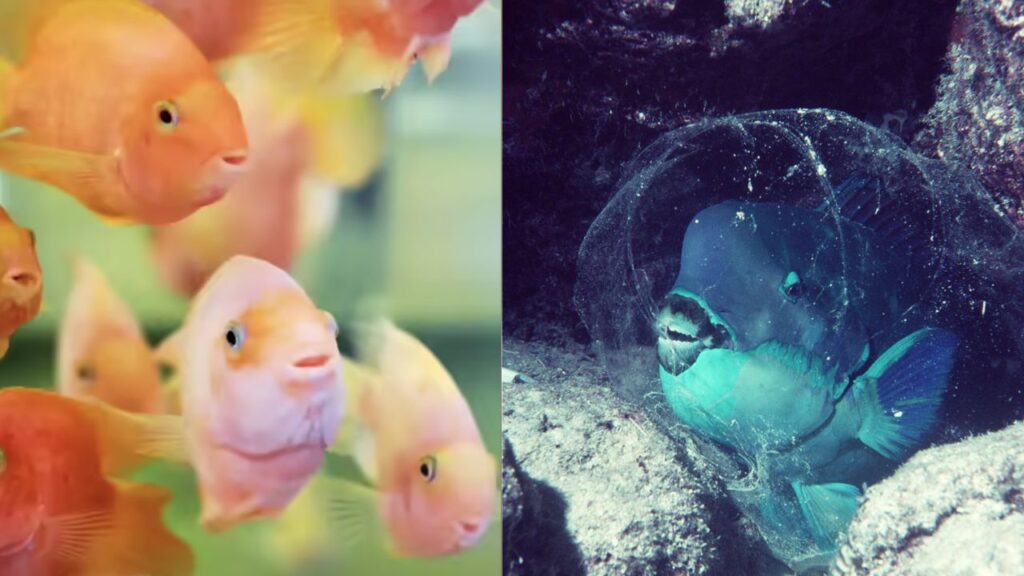
Before sleeping, some parrotfish create a transparent cocoon of mucus around their bodies. This shields them from parasites and hides their smell from predators like moray eels and sharks.

They Eat, and Produce, a Lot
Parrotfish can take about 20 bites of coral per minute. Their waste is fine sand, the remains of digested coral skeletons. A single parrotfish can create up to 90 kilograms of sand a year, helping form sandy beaches and reef islands.
Their Teeth Are Stronger than Metals
The teeth of parrotfish are fused to their jawbone and have a crystalline structure stronger than gold, copper, or silver. Divers can even hear the crunch as they chew on coral in search of algae and tiny organisms.
They Can Change Gender and Color
Parrotfish start life as females and can later turn into males, a process called “protogynous hermaphroditism.” Their color changes completely during this transformation. Large, brightly colored males often protect a group of smaller females.
They Dance Under the Full Moon
During a full moon, hundreds of bumphead parrotfish gather to mate. Males clash heads to mark their space and perform for passing females before releasing eggs and sperm into the water for fertilization.
From India’s Lakshadweep to Australia’s Great Barrier Reef, parrotfish are vital for keeping coral reefs healthy. Their role as algae-eaters makes them important guardians of marine life, showing that protecting them is key to preserving ocean ecosystems.