Why Do We Immerse Lord Ganesha’s Idol? The Mythological Reason Behind Ganesh Visarjan
Why Do We Immerse Lord Ganesha's Idol? The Mythological Reason Behind Ganesh Visarjan
Every year, millions across India and beyond come together to celebrate Ganesha Chaturthi with great fervor. But have you ever wondered why, after ten days of worship, the beloved deity is immersed in water and sent away?
Let’s explore the powerful story and symbolism behind this ancient tradition.
The origins of Lord Ganesha lie in a fascinating legend that revolves around love, obedience, and cosmic duty. According to ancient texts, Goddess Parvati, the consort of Lord Shiva, created Ganesha not as a divine being, but as a human child—crafted from earth or sandalwood paste, depending on the version. She breathed life into him and asked him to guard the entrance while she bathed.
Unaware of who the boy was, Lord Shiva returned and was denied entry into his own abode. Infuriated, and after a long and intense confrontation, Shiva beheaded the child in battle.

When Parvati discovered what had happened, her grief was immeasurable. To console her and rectify the mistake, Shiva ordered his followers to bring back the head of the first living being they encountered. It turned out to be an elephant with a single tusk, who willingly gave up its life. Shiva placed the elephant’s head on the child’s body, bringing him back to life.
Thus, Ganesha was reborn, now bearing the elephant head we all recognize. Shiva declared him the leader of the Ganas (his celestial attendants), which is why he is also known as Ganapati.
Why Ganesh Chaturthi Is Celebrated?
Ganesh Chaturthi marks the day of Ganesha’s rebirth and is celebrated as a time of invoking new beginnings, removing obstacles, and seeking blessings for prosperity and wisdom. Households and communities install beautiful idols of Ganesha in homes and public pandals, treating him as a revered guest for a duration ranging from one and a half to ten days.
Devotees offer prayers, food, and music, believing that Lord Ganesha brings abundance and clears the path for all righteous endeavors during his stay.
The Meaning Behind Ganesh Visarjan
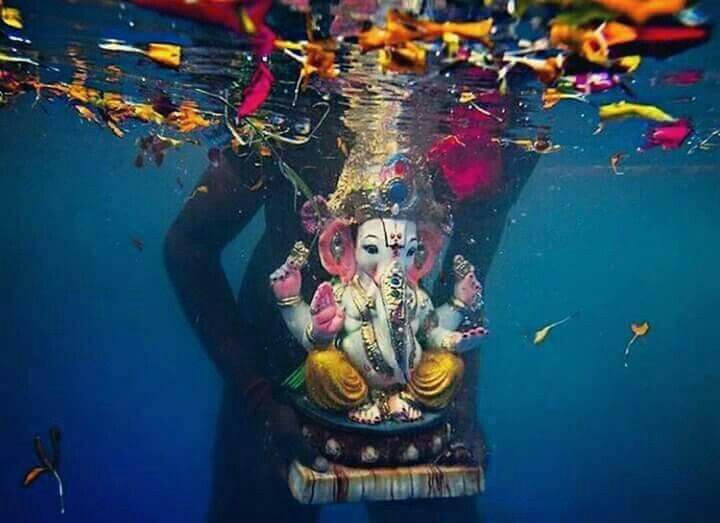
But what makes this festival truly unique is the ritual at the end—Ganesh Visarjan, or the immersion of the idol in a water body.
This act carries deep spiritual meaning. Just as Ganesha was originally created from natural elements like clay and returned to the Earth, his idol—usually made from similar materials—is also returned to nature. The visarjan symbolizes the cycle of creation and dissolution, reminding us that nothing is permanent, not even divine manifestations. There’s also a belief that the divine energy Ganesha radiates during the 10-day period becomes too potent for the human realm to contain for long. Thus, after receiving his blessings, he must return to his celestial home.
Rather than discarding or destroying the idol—which would be considered disrespectful—the immersion allows the form to gracefully dissolve, completing its spiritual journey. The growing use of non-biodegradable materials in idol-making and the presence of harmful chemicals in paints have become major environmental concerns. When these idols are immersed in rivers, lakes, or oceans, they pollute the water and harm aquatic life and delicate ecosystems.
To protect both tradition and nature, many communities have started embracing eco-friendly Ganesha idols made from natural clay, organic dyes, and even seeds that sprout into plants after immersion. It’s a beautiful way to honor the festival’s spirit while giving back to the Earth—completing a powerful cycle of life, renewal, and respect for nature. Ganesh Visarjan is more than a farewell; it’s a gentle lesson in impermanence, devotion, and the harmony between humanity and nature. It teaches us to honor the divine, celebrate with joy, and then let go—knowing that endings are just new beginnings in disguise.
Disclaimer: This article is based on stories from Hindu mythology and traditional beliefs. Interpretations may vary across regions and cultures.