World’s Largest Wasp: A Giant Insect With a Sting That Can Be Deadly to Humans
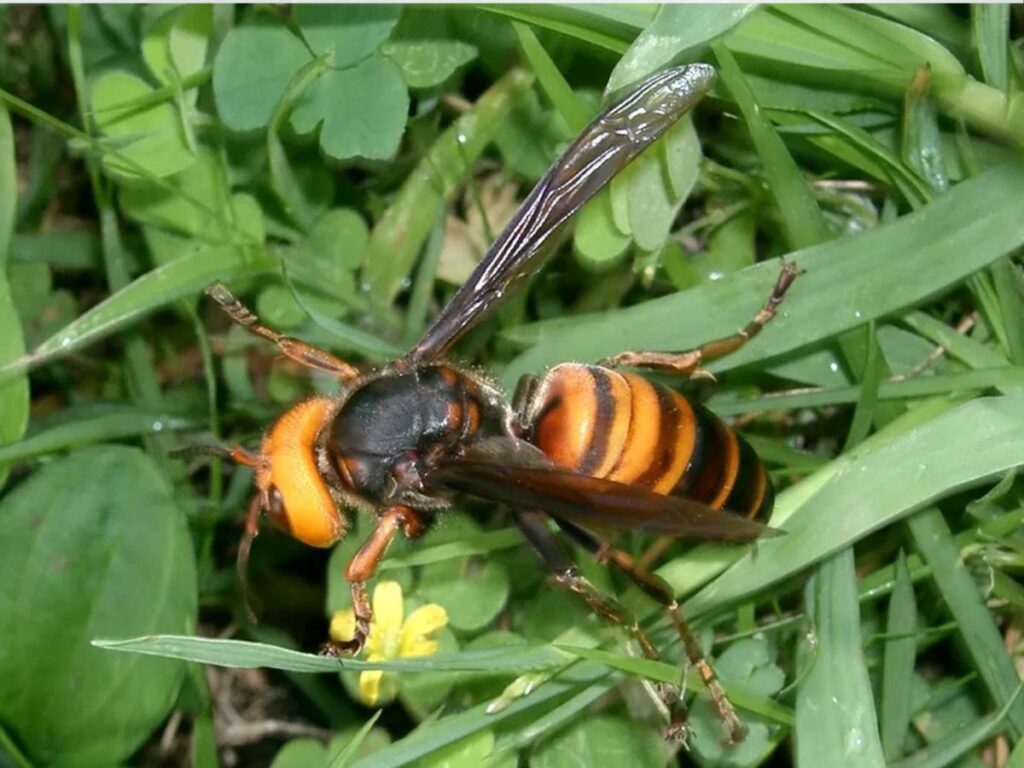
It has been called the “murder hornet,” featured in headlines across the globe, and sparked fear wherever it appears. Scientifically known as Vespa mandarinia, the Asian giant hornet is the largest wasp in the world, native to Japan, China, South Korea, Thailand, and parts of Russia. Its sheer size, painful sting, and ability to wipe out honeybee colonies have made it one of the most feared insects. But behind the scary nickname lies a creature with a fascinating biology and an important ecological role.
A Giant Among Insects
The Asian giant hornet is in a league of its own when it comes to size. According to entomologists, its body can grow up to five centimeters long, with a wingspan stretching nearly 7.5 centimeters. Its stinger measures about six millimeters and is powerful enough to pierce through thick clothing. The venom is potent, capable of killing tissue and, in rare cases, leading to organ failure. Victims often describe the pain of its sting as being stabbed by a hot needle.

Why “Murder Hornet”?
The insect earned its grim nickname in Japan, but the sting isn’t the only reason. The hornet’s mandibles—large, sharp jaws—are what make it truly deadly. Using these, Asian giant hornets can decapitate honeybees by the dozens. In coordinated attacks, a group of hornets can wipe out an entire beehive in just a few hours, feasting on bee larvae and leaving devastation behind. Scientists warn that if these hornets spread into new regions, they could destroy local bee populations and threaten pollination of crops and wild plants.
How They Live and Hunt
Researchers studying Vespa mandarinia describe it as a eusocial species, which means it lives in colonies with a complex social structure. These hornets build their nests underground, often in rodent burrows, tree hollows, or even urban structures. Their attacks on beehives usually happen toward the end of summer and unfold in three stages.
The first is the hunting phase, when individual hornets capture bees in flight and feed them to their larvae. Then comes the slaughter phase, where dozens of hornets storm a hive, killing every bee in sight. Finally, in the occupation phase, the hornets take over the hive, guarding it fiercely and feeding on its resources. In this stage, they even spend nights inside the conquered hive instead of returning to their own nest.
Not to Be Confused with Other Hornets
It’s easy to mix up the Asian giant hornet with other large wasps, but experts say it’s important to tell them apart. A smaller cousin, the Asian hornet (Vespa velutina), also known as the yellow-legged hornet, has spread across Europe since arriving in France in 2004. While less dangerous to humans, it is still an invasive species and a threat to native bees. The true giant, however, is Vespa mandarinia.
Another wasp often mentioned in comparison is Megalara garuda, also called the “King of Wasps,” discovered in Indonesia in 2012. Males of this species have enormous mandibles almost as long as their front legs. But unlike the Asian giant hornet, there’s no evidence that its sting harms humans.
How Dangerous Are They?
Despite the hype, Asian giant hornets are not aggressive toward humans unless provoked. They won’t chase people for no reason. However, disturbing a nest can be dangerous, as the hornets will defend it aggressively. Safety experts advise hikers and travelers in native regions to stay alert for low buzzing sounds near tree roots, avoid swatting at them, and back away slowly if a hornet appears to act aggressively.
The Asian giant hornet is both fascinating and frightening. It is a giant insect with a sting that demands respect, but it isn’t out to hunt humans. Its real threat lies in its ability to devastate honeybee colonies, which play a vital role in pollination and agriculture. As scientists continue to track its spread and study its behavior, the “murder hornet” remains a reminder of how even a single species can stir global concern.