World’s First University: How A 9th-Century Centre Of Learning Shaped Global Education

World’s First University: How A 9th-Century Centre Of Learning Shaped Global Education
The story of al-Qarawiyyin shows how organised higher learning began long before modern universities took shape.
The idea of a university often brings to mind grand campuses in Europe or modern research institutes. But the world’s first true university began many centuries earlier, in a very different part of the world.
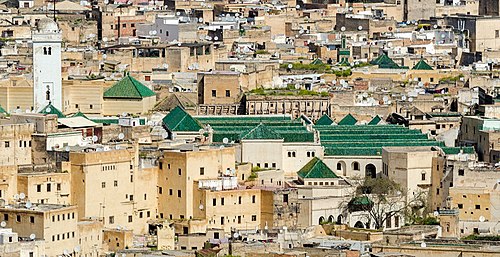
To understand its place in history, we have to look at what makes something a “university”, a place with a community of scholars, structured teaching, advanced study, and long, continuous operation. When viewed through this lens, historians and global bodies widely recognise the University of al-Qarawiyyin in Morocco as the earliest surviving example.

Founded in 859 CE in the city of Fez, al-Qarawiyyin was established by Fatima al-Fihri, a woman known for her education, wealth, and deep commitment to public learning. What began as a mosque and a place for community gathering slowly expanded into a space where scholars from different regions met, taught, debated and preserved knowledge.

Over time, students could study subjects such as law, astronomy, grammar, mathematics, and philosophy. This steady growth built the foundation of a structured academic institution long before formal universities evolved in Europe.
Al-Qarawiyyin University in Fez, Morocco is the oldest existing university in the world. It was founded in 859 AD. pic.twitter.com/M4tPFR32ba
— Africa Facts Zone (@AfricaFactsZone) February 16, 2021
What sets al-Qarawiyyin apart is its unbroken history. While many ancient centres—Nalanda in India or Takshashila in present-day Pakistan, played a major role in shaping earlier learning traditions, they did not continue into modern times. Al-Qarawiyyin, however, has remained active for more than 1,160 years. Its constant scholarly activity, teaching methods, and intellectual community are the main reasons organisations like UNESCO and global record bodies recognise it as the world’s oldest continuously operating university.
The university’s influence spread far beyond North Africa. Its scholars contributed to scientific and philosophical discussions across the Mediterranean. Its library, one of the oldest still functioning, houses manuscripts on medicine, astronomy, mathematics, law, and literature, reflecting centuries of research and translation. Knowledge from this centre travelled into Europe through trade, travel, and intellectual exchanges, influencing later medieval education.

In the modern era, al-Qarawiyyin entered a new chapter. In 1963, it became part of Morocco’s national university system. Today, it offers modern courses while preserving its traditional strengths in Islamic studies. The blend of ancient methods with contemporary learning gives it a special place among global institutions.
Most importantly, the story of al-Qarawiyyin highlights that the roots of university education go beyond Europe and that women played a crucial role in shaping this tradition. Fatima al-Fihri’s vision created a space that has survived for over a millennium, a rare achievement in world history.
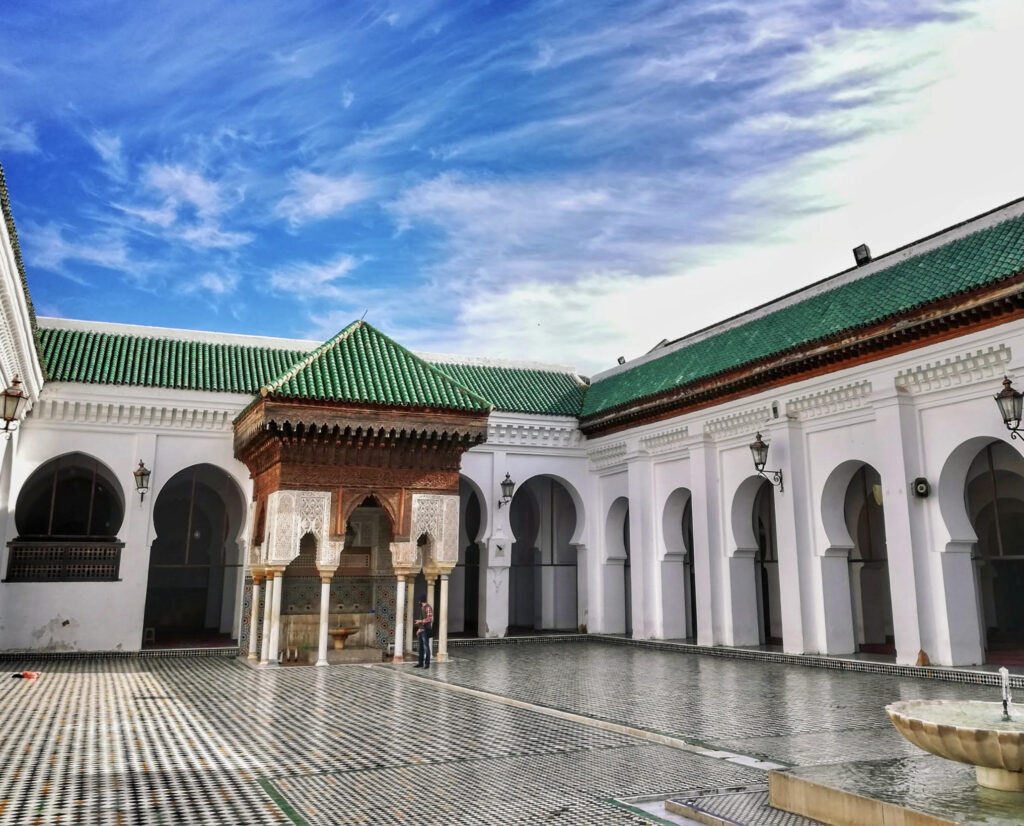
With its long legacy, uninterrupted teaching, and deep cultural impact, al-Qarawiyyin remains a powerful reminder of how early centres of learning helped shape the structure of universities as we know them today.