Who Welcomes 2026 First — and Who Says Hello Last?
Who Welcomes 2026 First — and Who Says Hello Last?
As the countdown to New Year’s Eve 2026 begins, it’s easy to imagine the entire world celebrating at the same moment. In reality, the arrival of the New Year is more like a slow-moving wave that sweeps across the planet over many hours. Because of time zones, borders, and a few unusual geographic quirks, midnight doesn’t strike everywhere at once. While fireworks light up the sky in one corner of the world, another region may still be finishing December 30 — and somewhere else is still waiting patiently for December 31 to end.
So, which place welcomes 2026 first? And which spot on Earth is the last to cross into the new year? Let’s travel across the globe and follow the clock.
The honor of greeting 2026 before anywhere else belongs to Kiribati, a Pacific island nation made up of 33 coral atolls and islands spread across a vast area of ocean.

Within Kiribati, Kiritimati (Christmas Island) is the very first place on Earth to enter the New Year. Located just west of the International Date Line, Kiritimati operates on UTC+14, the most advanced time zone in the world. When clocks strike midnight on January 1, 2026 in Kiritimati, much of the planet is still two calendar days behind — many places are only just beginning December 30. This makes Christmas Island the world’s earliest witness to every New Year.
Soon after, the celebrations spread south to New Zealand. While not technically the first, cities like Auckland are among the earliest major urban centers to welcome 2026, famously marked by dazzling fireworks around the Sky Tower.
A few hours later, Australia steps into the new year, followed by a steady march of midnight across Asia. As time moves westward, New Year’s celebrations light up countries across East Asia, Southeast Asia, and South Asia.
Major nations such as Japan, South Korea, China, and India soon ring in 2026, bringing with them massive celebrations, cultural traditions, and spectacular displays of fireworks.
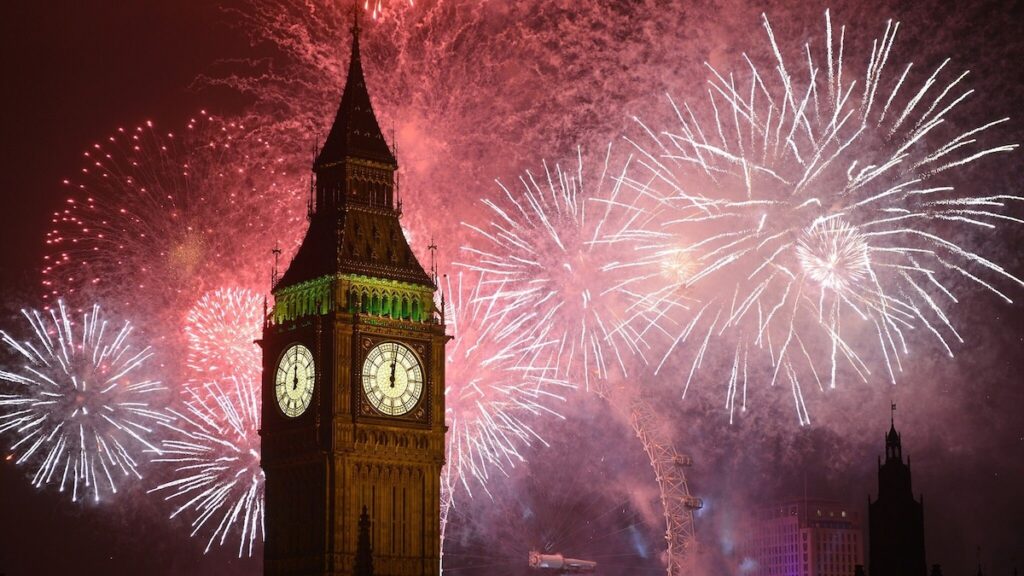
Not long after, Europe welcomes the New Year. Iconic celebrations unfold in cities like London and Paris, as millions count down to midnight together. From there, the wave continues into Africa, where major cities also cross into 2026.
By the time Europe has fully entered the new year, much of the world is already living in 2026. The focus then shifts across the Atlantic to North and South America.
Cities in the Americas begin their countdowns, including one of the most famous New Year’s events on the planet — New York City’s Times Square celebration. South America follows closely behind, with many countries sharing similar or nearby time zones to the eastern United States.
At this point, nearly two-thirds of the global population has already welcomed the New Year, while the final regions slowly approach midnight.
The final spots on Earth to say hello to 2026 are Baker Island and Howland Island, located in the UTC-12 time zone. These islands are uninhabited and owned by the United States, and they sit at the very edge of the global time system. Because of their location, they don’t reach January 1, 2026 until almost 26 hours after Kiritimati has already begun celebrating. They are, quite literally, the last places on Earth where the New Year arrives.
Although humanity shares the same moment in history, time itself unfolds differently depending on where you stand on the globe. New Year’s Eve doesn’t happen in a single instant — it rolls across oceans and continents, hour by hour. From the first fireworks in the Pacific to the final quiet moments on remote islands, the arrival of a new year is a global journey rather than a single event.
And whether you’re among the first to celebrate or one of the last, New Year’s remains one of the few occasions that truly connects the entire world — reminding us that, eventually, everyone arrives at January 1 together.