Pune–Satara Highway Gets Three-Lane Service Roads to Ease Congestion
Pune–Satara Highway Gets Three-Lane Service Roads to Ease Congestion
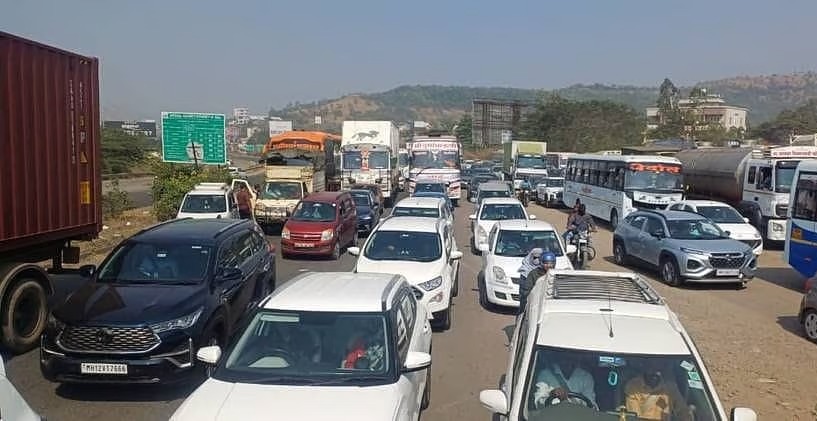
After years of battling traffic snarls and safety concerns, motorists travelling on the Pune–Satara highway are finally experiencing smoother and more predictable journeys. One of western Maharashtra’s busiest road corridors has undergone a major facelift, with the National Highways Authority of India (NHAI) completing an extensive improvement project focused on easing congestion and enhancing road safety.
The work was carried out in partnership with a private infrastructure firm and covered both the main carriageway and adjoining service roads. While the main highway received a fresh surface, the biggest change has been the widening of service roads from two lanes to three at several critical locations. Out of the highway’s total 120-kilometre length with service roads, around 40 kilometres have now been expanded, primarily in stretches where the road condition had worsened and sufficient land was available.
With the widening complete, service roads now measure approximately 10.5 metres in width. This additional space has already started making a visible difference. Peak-hour traffic is flowing more smoothly, and local vehicles such as two-wheelers and three-wheelers are increasingly using the service roads instead of spilling onto the main highway. By separating slow-moving local traffic from faster long-distance vehicles, the upgrade is expected to significantly reduce bottlenecks as well as accident risks.

Officials associated with the project explained that the main focus was to tackle long-standing congestion points and accident-prone zones along the route. By resurfacing damaged stretches and adding an extra lane on service roads, the overall capacity of the corridor has improved. Wider roads, they noted, naturally allow for better lane discipline, safer overtaking, and a more comfortable driving experience for both light and heavy vehicles.
Regular users of the highway have welcomed the changes. One daily commuter travelling between Pune and the Shirwal region shared that earlier, service roads would often become clogged, forcing smaller vehicles onto the main highway and creating chaos. Since the expansion, however, traffic has been noticeably more organized, especially during morning and evening rush hours.
Another major benefit of the project is the systematic diversion of two-wheeler and other local traffic onto the service roads. This shift has eased pressure on the main carriageway and reduced the chances of collisions between vehicles moving at very different speeds. Motorists now report steadier traffic flow and fewer sudden slowdowns, even during traditionally busy periods.
Looking ahead, there is more infrastructure relief on the horizon. NHAI has also given the green signal to the Detailed Project Report (DPR) for a proposed new expressway connecting Pune and Mumbai. Once completed, this upcoming route is expected to significantly reduce congestion on the existing Mumbai–Pune Expressway and cut travel time by as much as an hour and a half.