Pune Water Crisis Deepens: Tanker Rates Surge By Upto 60%, Long Waiting Lists Add To Residents’ Woes
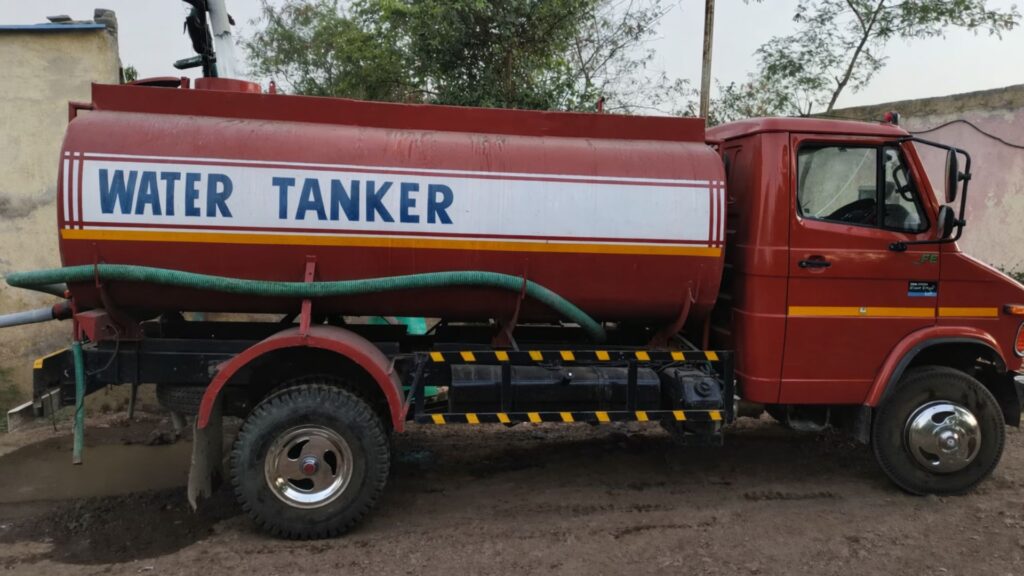
Pune Water Crisis Deepens: Tanker Rates Surge By Upto 60%, Long Waiting Lists Add To Residents’ Woes
Pune, June 23, 2026: The delayed arrival of the monsoon has intensified Pune’s water crisis, leading to a sharp rise in private water tanker charges across several parts of the city. With groundwater levels falling rapidly and borewells and wells drying up, residents are facing both water scarcity and a significant increase in household expenses.
During a survey conducted by Pune Pulse in the Undri and Mohammadwadi areas, several housing societies reported a sharp increase in private water tanker charges amid the ongoing water shortage. Residents said tanker rates had already risen from ₹600 to ₹800 earlier, with operators attributing the increase to additional expenses such as the installation of 360-degree cameras, hiring cleaners and employing co-drivers. Most of them are still not following the mandate.

With the monsoon yet to arrive and water availability declining due to reduced storage levels in the dams supplying the city, tanker operators have reportedly imposed another steep hike. A chairman of a housing society in Mohammadwadi alleged that private tanker suppliers are demanding as much as ₹1,200 per tanker, up from the earlier ₹600 rate. He further claimed that societies are being pressured to commit to purchasing a minimum of two tankers per day under year-long arrangements.

Residents expressed frustration over the escalating costs, pointing out that they are being forced to spend substantial amounts on tanker water despite regularly paying municipal water taxes. The society representative also stated that the housing complex is still awaiting a Pune Municipal Corporation (PMC) water connection, alleging that delays in the process are due to a lack of cooperation from the builder.
A secretary of NIBM Annexe Society in Mohammadwadi told Pune Pulse that residents had high expectations after the much-publicised activation of the overhead water tanks. However, despite the announcements, many societies have reportedly not received any water supply from the tanks so far.
The secretary said housing societies in the area continue to depend heavily on expensive private water tankers and are hoping for a reliable municipal water supply to ease the growing financial burden caused by rising tanker costs.
Over the past few days, private tanker operators have increased their rates by 30 to 60 percent, citing dwindling water sources and rising operational costs. Housing societies and individual consumers who rely on tanker water are finding it increasingly difficult to manage the additional financial burden.
To cope with the shortage, the Pune Municipal Corporation (PMC) has introduced alternate-day water supply in some areas. However, this measure has further increased dependence on private tankers, pushing demand and prices even higher.
Tanker Rates Rise Across Pune
The increase in tanker charges has been reported from multiple localities:
Undri and Mohammadwadi
- Previous rate: ₹600 to ₹800 per tanker
- Current rate: Around ₹1,000 to ₹ 1200 per tanker
Baner and Bavdhan
- Previous rate: ₹ 800 to 1,000 per tanker
- Current rate: Around ₹1,200 per tanker
Why Have Tanker Prices Increased?
According to tanker operators and water suppliers, local wells and borewells that previously served as water sources have either dried up or are yielding significantly less water. As a result, tankers are now required to travel much longer distances to procure water.
Operators say the increased travel time and higher diesel consumption have substantially raised operating costs, forcing them to revise prices in order to remain financially viable.
The situation is particularly severe in the Dhayari-Wadgaon Khurd belt. Sources in the area said that wells which earlier supplied enough water to fill 10 to 12 tankers daily are now able to serve only around five tankers a day. Long queues of 10 to 15 tankers are reportedly forming at water-filling points as operators compete for limited supplies.
Demand for Free PMC Tankers Soars
The shortage has also led to a surge in demand for PMC’s free water tanker service. In Dhayari alone, more than 150 residents are reportedly on the waiting list for municipal tanker supply.
Citizens seeking assistance from PMC are being asked to wait two to three days before a tanker can be allocated, highlighting the growing pressure on civic resources.
Reservoir Levels Continue to Decline
Water reserves in the dams supplying Pune have also dropped significantly. The city primarily depends on water from the Panshet, Varasgaon and Khadakwasla reservoirs. Meanwhile, Temghar Dam has already run dry.
Officials indicate that the combined usable water stock across the dam system has now fallen to approximately 4 TMC, raising concerns about the city’s water security if rainfall remains delayed.
PMC Working on Measures to Regulate Tanker Rates
PMC Commissioner Nawal Kishore Ram said the civic administration is working on a Standard Operating Procedure (SOP) aimed at regulating private tanker charges and preventing exploitation of consumers during the ongoing shortage.
He stated that efforts are underway to address the issue and provide relief to citizens affected by the water crisis.
Despite these measures, uncertainty over the arrival of substantial rainfall continues to worry residents, with many fearing that tanker prices could climb even further if the dry conditions persist in the coming weeks.