Why Earth’s Blue Oceans Are Changing Colour And Why Scientists Are Alarmed
Why Earth’s Blue Oceans Are Changing Colour And Why Scientists Are Alarmed
Satellite data shows subtle but widespread shifts in ocean colour, signalling deep changes in marine ecosystems driven by climate change
For decades, the image of Earth as the “Blue Marble” symbolised stability, vast blue oceans stretching unchanged across millennia. But scientists now warn that this familiar blue is quietly shifting. New research shows that the colour of Earth’s oceans is changing in ways that reflect profound disruptions in marine ecosystems, largely driven by climate change.
The change is not dramatic enough for the human eye to notice from a beach or ship. Instead, it has been detected through long-term satellite observations that analyse how sunlight reflects off the ocean surface. These subtle colour variations act as an early-warning system, revealing changes in microscopic marine life that form the foundation of the ocean food web.
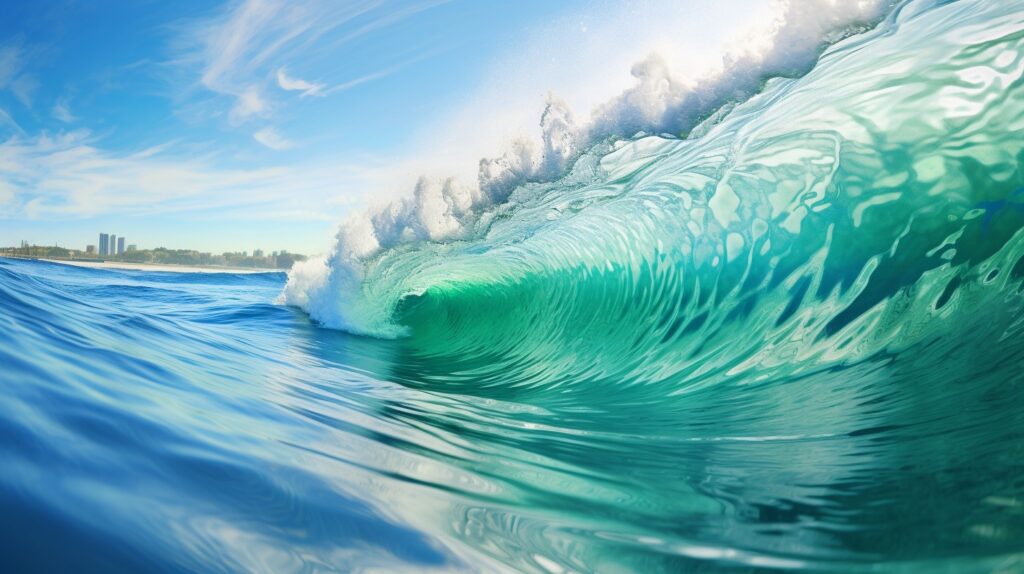
According to satellite data analysed over the past two decades, more than half of the world’s oceans about 56%, have experienced measurable colour changes. Some regions are becoming greener, especially in tropical and equatorial zones, while others are turning deeper blue. Scientists say these shifts go well beyond normal year-to-year fluctuations.

The key driver behind these colour changes is phytoplankton, tiny photosynthetic organisms that contain chlorophyll, the pigment responsible for green hues. In ocean waters, greener colours indicate higher concentrations of phytoplankton, while deep blue waters suggest lower biological activity.
Recent climate reports have shown extreme regional variations. In parts of the North Atlantic and Norwegian Sea, chlorophyll levels surged dramatically during 2023, while other regions, such as waters west of the Iberian Peninsula, recorded sharp declines. The Mediterranean Sea also showed unusually high chlorophyll concentrations during summer months.
These patterns are closely linked to rising ocean temperatures. As seas warm, they alter nutrient circulation, sunlight penetration, and stratification all factors that determine where phytoplankton can thrive. Scientists emphasise that the concern is not about colour itself, but what it represents: a reshuffling of ocean ecosystems on a global scale.
Phytoplankton sit at the base of the marine food chain. Any major change in their distribution directly affects zooplankton, fish populations, and eventually larger marine animals including those that support human fisheries. Researchers predict that as warming continues, phytoplankton populations will gradually migrate towards cooler, higher latitudes at a pace of roughly 35 kilometres per decade.
This shift could reduce biodiversity in tropical oceans while increasing it in temperate and subpolar regions. Such changes threaten the balance of marine food webs and could disrupt fisheries that millions depend on for livelihood and food security.
What makes this discovery particularly significant is its global scale. Scientists report that these colour changes are visible across all major ocean basins — the Pacific, Atlantic, and Indian oceans alike, indicating a planetary-level response to climate stress.
Experts stress that these changes are unfolding gradually, not overnight. Emerald coves will not suddenly replace blue seas. But the trend, if left unchecked, could intensify as ocean temperatures continue to rise.
In essence, the fading blue of Earth’s oceans is not a cosmetic shift. It is a signal, one that reflects how climate change is quietly re-engineering life beneath the waves, long before its effects become obvious on land.
Disclaimer: This article is for general informational purposes only and is based on published scientific research. It does not constitute professional environmental or scientific advice.