Chinese Woman’s Folk Remedy Goes Wrong After Swallowing Raw Fish Gallbladder, Ends Up in ICU
Chinese Woman’s Folk Remedy Goes Wrong After Swallowing Raw Fish Gallbladder, Ends Up in ICU
Trust in a traditional home cure nearly turned fatal for a middle-aged woman in eastern China when an attempt to ease a stubborn headache led to sudden organ failure and an emergency hospital admission. The woman, identified by her surname Liu, is a 50-year-old resident of Jiangsu province. According to details shared by the South China Morning Post, Liu relied on a long-held folk belief claiming that consuming a raw fish gallbladder can “cool the body,” remove toxins and ease migraine pain.
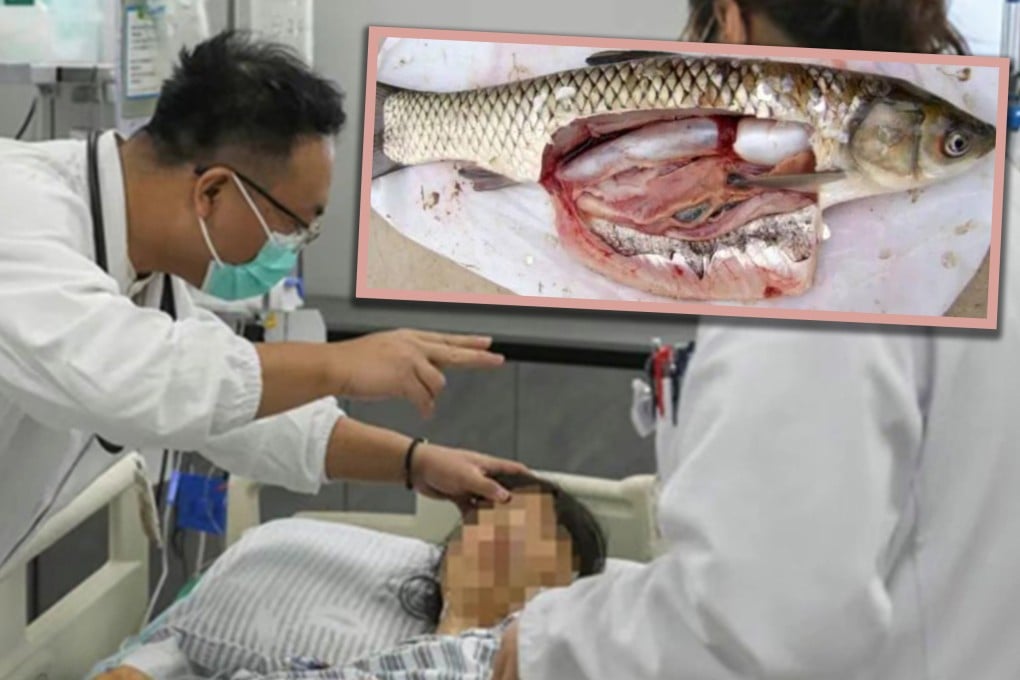
Hoping for relief, Liu visited a local market on the morning of December 14 and bought a grass carp weighing about 2.5 kilograms. After taking the fish home, she carefully removed its gallbladder and swallowed it uncooked, fully expecting her headache to subside.
Instead of relief, her condition rapidly worsened.

Within two hours, Liu began suffering from severe vomiting, diarrhoea and intense abdominal pain. As her symptoms escalated quickly, her family rushed her to the hospital for urgent care. Doctors soon confirmed that she had suffered fish gallbladder poisoning, which had triggered acute liver failure. Due to the life-threatening nature of her condition, Liu was transferred to the intensive care unit at the Affiliated Hospital of Jiangsu University.
Medical teams immediately began aggressive treatment. She underwent plasma exchange therapy along with continuous renal replacement therapy — a specialised blood purification method commonly used when vital organs such as the liver and kidneys begin to fail.
After five days under close observation in intensive care, Liu’s health showed marked improvement. She was later discharged from the hospital. The hospital officially disclosed details of the case on January 7, according to the SCMP report.
Doctors involved in her treatment issued a serious warning following the incident. Hu Zhenkui, one of the attending physicians, stressed that fish gallbladder toxins are “far more dangerous than many people realise, even exceeding the toxicity of arsenic.” He explained that ingesting only a small amount can cause poisoning, while gallbladders from larger fish — particularly those weighing over five kilograms — can be deadly.
Hu further noted that the toxic substances can inflict severe damage on both the liver and kidneys, potentially leading to sudden organ failure. In the most critical cases, patients may experience shock, brain haemorrhage or even death.
He also dismissed the widespread belief that cooking or soaking fish gallbladders in alcohol makes them safe. According to Hu, “the poison remains active regardless of preparation, despite claims that these methods increase medicinal benefits.”
Liu’s case is far from rare. Hospitals across China continue to treat patients who fall ill after consuming raw fish gallbladders. Many are convinced the organ can improve eyesight, cleanse the liver or remove internal heat. Some even believe the strong bitterness is evidence of healing power. Medical professionals strongly disagree. Doctors urge the public to abandon such risky superstitions and seek proper medical advice instead of relying on unproven and potentially deadly folk remedies.
What Liu survived serves as a stark reminder: not every traditional belief is harmless, and when it comes to health, modern medical care can be the difference between recovery and tragedy.