Mumbai–Navi Mumbai Airport Metro Gets Cabinet Nod, 35 Km Line to Transform Airport Connectivity; Reduce Travel Time
Mumbai–Navi Mumbai Airport Metro Gets Cabinet Nod, 35 Km Line to Transform Airport Connectivity; Reduce Travel Time
Rs.22,862 crore project to link both airports directly, cut travel time, and handle over 10 lakh daily passengers by 2031
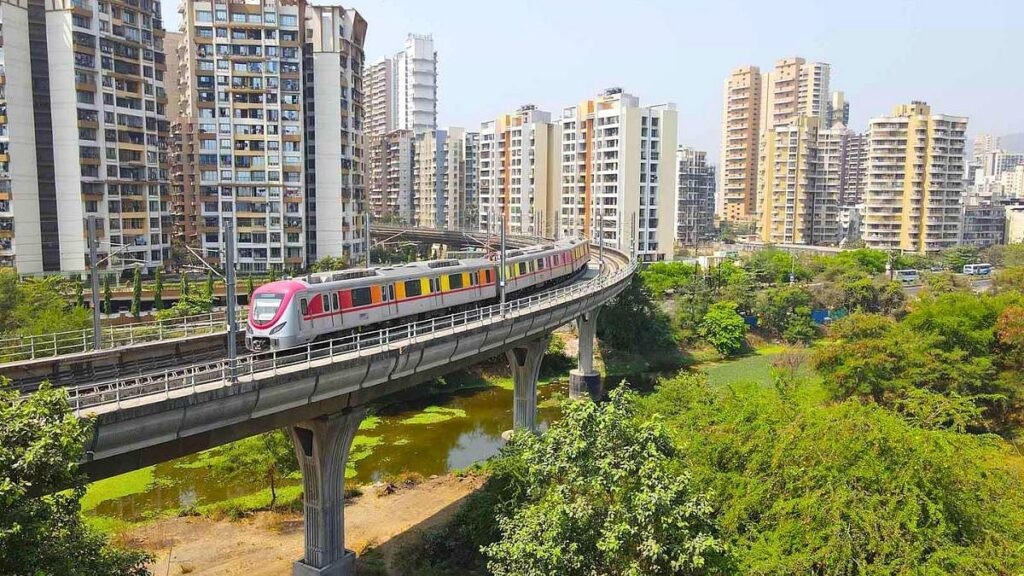
The Maharashtra cabinet has approved a new metro corridor that will directly connect Mumbai’s Chhatrapati Shivaji Maharaj International Airport with the upcoming Navi Mumbai International Airport. The project, known as Metro Line Eight, is being seen as a major step towards improving airport connectivity and reducing travel time between the two aviation hubs.
Chief Minister Devendra Fadnavis announced that the 35-kilometre-long metro line will have 20 stations and include a 9-kilometre underground stretch. While the official timeline of the project is five years, Fadnavis said he has insisted that it should be completed within three and a half years to meet rising transport demands.
The cost of the project has been revised to ₹22,862 crore, which is significantly higher than the earlier estimate of ₹18,000 crore. According to the Chief Minister’s Office, the increase reflects updated construction, infrastructure, and connectivity requirements.

The project will be executed under a Public-Private Partnership (PPP) model. Both the Central and Maharashtra governments will provide 20 percent each as viability gap funding. The remaining 60 percent of the investment will be brought in by a private partner who will build, operate, and later transfer the project, following a model similar to Mumbai Metro Line 1.
The responsibility for implementing the project has been given to CIDCO, which will work in association with a private consortium. This marks a shift from the earlier plan that involved both CIDCO and the Mumbai Metropolitan Region Development Authority (MMRDA). CIDCO submitted the Detailed Project Report (DPR) in November after receiving approvals from the urban development and finance departments.
मुंबई व नवी मुंबई विमानतळ मेट्रोने जोडणार, गडचिरोलीत नवेगाव मोर ते सुरजागडदरम्यान चार पदरी महामार्गास मान्यता
— CMO Maharashtra (@CMOMaharashtra) January 27, 2026
मुख्यमंत्री देवेंद्र फडणवीस यांच्या अध्यक्षतेखाली आज मुंबई येथे मंत्रिमंडळ पायाभूत सुविधा समितीची बैठक पार पडली.
छत्रपती शिवाजी महाराज आंतरराष्ट्रीय विमानतळ ते नवी…
The metro corridor will stretch approximately 34.89 km, with six underground stations and fourteen elevated stations. It is designed to provide seamless connectivity between key transport and commercial hubs across Mumbai and Navi Mumbai.
The 20 proposed stations along Metro Line Eight are:
Chhatrapati Shivaji Maharaj International Airport Terminal 2, Phoenix Mall, SG Barve Marg, Kurla, Lokmanya Tilak Terminus (LTT), Garodia Nagar, Baiganwadi, Mankhurd, Vashi, Sanpada, Juinagar, LP Junction, Nerul 1, Nerul 2, Seawoods, Apollo Hospital, Sagar Sangam, Targhar, Navi Mumbai International Airport West, and Navi Mumbai International Airport Terminal 2.
Major interchange points will include LTT, Vashi, Nerul, and several metro junctions, making it easier for passengers coming from suburban rail networks, bus terminals, and other metro lines. The corridor will connect with at least six other metro routes and multiple transport systems, creating a strong multi-modal transport network.
"35 km metro to link Mumbai and Navi Mumbai airports; Project to cost ₹18,000 crore."
— News Arena India (@NewsArenaIndia) January 27, 2026
– Maharashtra CM Devendra Fadnavis pic.twitter.com/5JYF4bjhfq
By 2031, the daily ridership on this metro line is expected to cross 10 lakh passengers, with projections estimating around 10.3 lakh commuters every day. This highlights the scale and importance of the project for the Mumbai Metropolitan Region.
At present, travelling between Mumbai airport and Navi Mumbai airport by road can take anywhere between 70 to 90 minutes depending on traffic conditions. The new metro line is expected to reduce this significantly and offer a faster, predictable, and more reliable option for:
- Air passengers
- Airline crew
- Cargo operators
- Outstation travellers using LTT
- Daily commuters
The corridor is expected to become a backbone for airport-to-airport connectivity, a rare feature in Indian urban transport systems. It will also support the growth of Navi Mumbai International Airport by providing direct and high-capacity public transport access.
The Chief Minister said, “The metro route is estimated to be built in five years, but I have insisted that it should be built in three and a half years,” showing the urgency being placed on timely completion.
With both airports directly connected by metro for the first time, this project is likely to reshape air travel movement in the region. It will reduce pressure on roads, improve passenger experience, and boost the overall efficiency of Mumbai’s transport infrastructure.
The approval of this corridor marks one of the most ambitious metro connectivity projects in Maharashtra, bringing Mumbai closer to becoming a fully integrated, airport-linked metro city.