Nipah Virus Alert: Why Fever And Headache Should Not Be Taken Lightly
Nipah Virus Alert: Why Fever And Headache Should Not Be Taken Lightly
High fatality rate, low transmissibility, and rising surveillance across Asia put health agencies on guard
The Nipah virus has once again come under global attention after confirmed cases were reported in West Bengal, prompting heightened surveillance not only in India but across several Asian countries. While health authorities have clarified that Nipah is not highly contagious like Covid-19, its extremely high fatality rate makes early detection and caution critical.
According to the National Centre for Disease Control (NCDC), only two confirmed cases of Nipah Virus Disease have been reported in West Bengal from December last year to date. Following these confirmations, the Government of India, in coordination with the West Bengal government, implemented strict public health protocols. A total of 196 contacts linked to these cases were identified, traced, monitored, and tested. All of them remained asymptomatic and tested negative, easing immediate concerns of community spread.
However, health experts continue to stress vigilance because Nipah virus has one of the highest case fatality rates among viral infections, ranging from 40 to 75 percent. This makes it far deadlier than Covid-19 in terms of mortality, even though its spread is much more limited.

Nipah virus is a zoonotic disease, meaning it spreads from animals to humans. It is primarily transmitted through fruit-eating bats and pigs. Humans can become infected by consuming food contaminated by bat saliva or urine, or through close contact with an infected person’s bodily fluids. Human-to-human transmission has been reported, especially in households and healthcare settings where prolonged and close contact occurs.
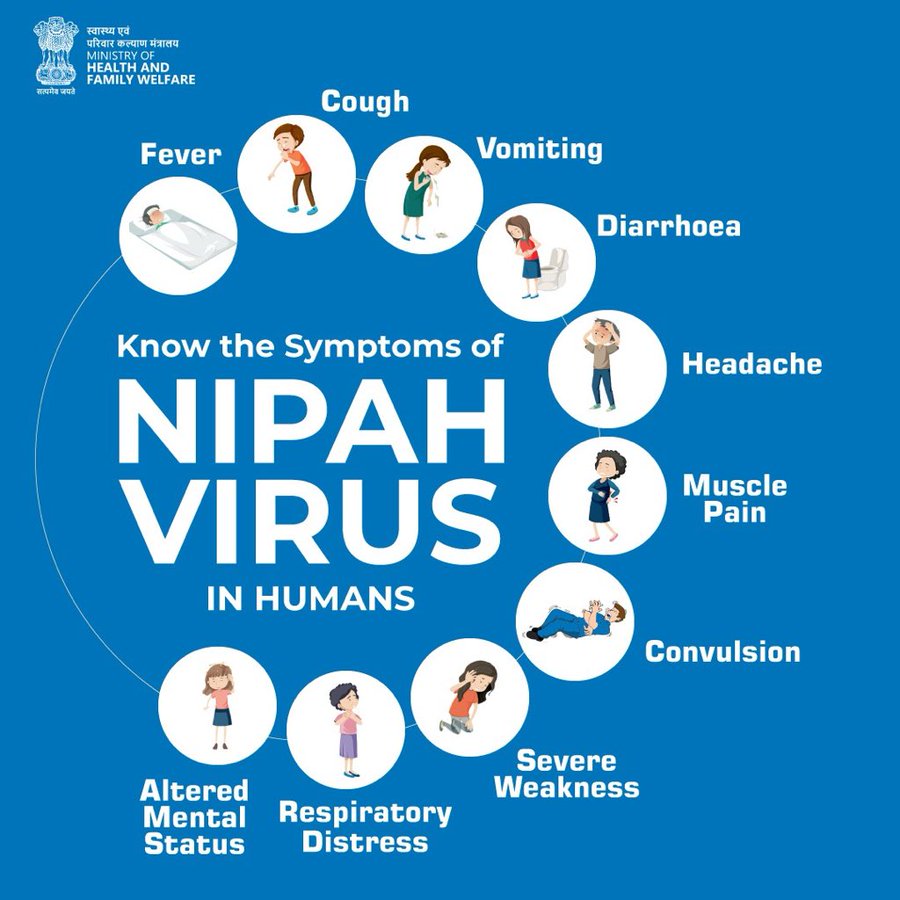
Symptoms of Nipah Virus in humans can range from fever and headache to respiratory distress and neurological complications.
— Ministry of Health (@MoHFW_INDIA) January 20, 2026
Early recognition of these symptoms and timely medical care are critical to reducing severity and preventing complications.#NipahVirus #HealthAwareness… pic.twitter.com/odW9baGomD
Unlike Covid-19, Nipah is not considered an airborne virus. Transmission usually happens through respiratory droplets and direct contact with bodily fluids, which is why outbreaks tend to remain limited and localized. The World Health Organisation has advised that contact and droplet precautions should be strictly followed, especially in healthcare environments, with airborne precautions used only in specific high-risk situations.
The incubation period of Nipah virus typically ranges from five to fourteen days, although in rare cases it can extend up to 21 days. During this period, infected individuals may not show symptoms but can still pose a risk of transmission through close contact.
Early symptoms should never be ignored. These include fever, headache, muscle pain, vomiting, and sore throat. Many people tend to treat fever and headache as minor issues, but in the case of Nipah, they can be the first warning signs of a potentially fatal infection. As the disease progresses, patients may develop severe respiratory distress, pneumonia, drowsiness, confusion, coma, or encephalitis, which is a dangerous inflammation of the brain.
Currently, there is no approved treatment or vaccine for Nipah virus. Medical care is mainly supportive, focusing on managing symptoms and preventing complications. This is one of the main reasons why prevention and early isolation remain the strongest tools against the virus.
Health agencies across Asia have responded swiftly to the situation. Several countries have resumed airport screening and border surveillance, particularly for passengers arriving from West Bengal and nearby regions. Thailand has introduced screening at major airports including Suvarnabhumi, Don Muang, and Phuket, with temperature checks and health document verification in place since January 25, 2026. Authorities there have stated that passenger cooperation has been encouraging.
Nepal has also implemented strict health screening at Tribhuvan International Airport and along its land borders with India. Taiwan and other neighbouring countries have introduced thermal scanning and health declarations for travelers from affected regions. These measures aim to detect potential cases early and prevent cross-border spread.
Despite these alerts, health officials have clarified that large-scale lockdowns or city closures are not necessary at this stage due to the limited number of cases and the low transmissibility of the virus. However, they emphasise that complacency could be dangerous, given Nipah’s severe clinical outcomes.
The World Health Organisation has listed Nipah virus as a priority disease with the potential to cause serious public health emergencies. Its inclusion in this category reflects the urgent need for research, surveillance, and preparedness, even during periods of low case numbers.
For the general public, the key message is simple: fever and headache should not be ignored, especially if there is a history of travel to affected regions or contact with a suspected patient. Early medical consultation can make a crucial difference, both for patient survival and for preventing further transmission.
While Nipah may not spread fast, its impact is devastating when it strikes. This makes awareness, caution, and responsible health behaviour essential in controlling any potential outbreak.
Disclaimer: This article is for general information only and should not be considered medical advice. Readers experiencing symptoms such as fever, headache, or respiratory distress should seek immediate medical consultation and follow official health guidelines.