AI Shayari Sensation Fools Millions, Viral Video With 28 Million Views Turns Out to Be Copied
AI Shayari Sensation Fools Millions, Viral Video With 28 Million Views Turns Out to Be Copied
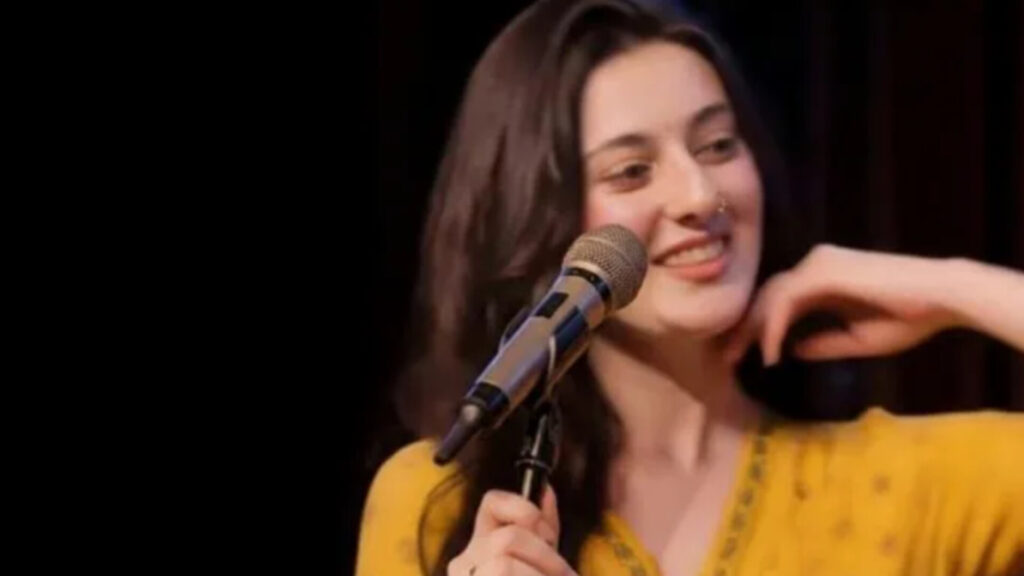
You know AI is slowly taking over our screens, and sometimes we end up mistaking artificial faces for real people. That’s exactly what happened in a recent viral incident where millions of viewers were left stunned after discovering that the woman delivering a powerful shayari on Instagram wasn’t a real person at all. In the widely circulated video, a woman dressed in a yellow kurta confidently walks onto a stage, greets the audience with a smile, and recites a sharp couplet in Urdu: “Khaandani raees rakhte hain mijaaz naram apna, khaandani raees rakhte hain mijaaz naram apna… tumhara lehja bata raha hai ki tumhari daulat nayi nayi hai.”
(Translation: “Those who come from old wealth carry themselves with grace. Your tone makes it clear that your riches are newly acquired.”)
The performance ends with loud applause, and viewers online were equally impressed. The Instagram profile that shared the video introduced the speaker as Tanvi Joshi, describing her as a “Punjabi girl.” Within just 24 hours, the clip amassed a staggering 28 million views.

Social media users flooded the comments section, praising the depth and elegance of the verse. Some even debated pronunciation, insisting that “mijaaz” should correctly be pronounced as “mizaj.” The video seemed like yet another example of poetic content striking the right chord with digital audiences.
However, what millions of viewers didn’t realize was that the woman in the video does not exist. Tanvi Joshi is an AI-generated model. The hyper-realistic face, flawless skin, and subtle inconsistencies—like her voice sounding slightly different across videos—were clues that many initially overlooked. The viral clip was not just digitally created in appearance; the audio itself was also borrowed.
The shayari was originally recited by Marziya Shanu Pathan, a corporator from the Thane Municipal Corporation. Just six days before the AI video exploded online, Pathan had performed the same couplet at a public event and uploaded it to her own Instagram account. Her original video received fewer than nine lakh views—a fraction of the 28 million views the AI version gained.
It was Pathan herself who exposed the truth. Commenting under the viral post, she wrote, “Aye thats my voiceeeeeee,” alerting viewers that the audio had been lifted from her original performance. Her remark quickly drew attention, and many users began realizing that they had been applauding a digital fabrication.
AI-generated faces and voices are becoming so refined that distinguishing them from real individuals is increasingly difficult. While such technology can be impressive, it also raises serious questions about consent, ownership, and authenticity. Who owns the words? Who deserves the recognition? And how easily can someone’s identity be replicated without permission?