Using Your Phone in the Bathroom? Doctors Say You Might Regret It
Using Your Phone in the Bathroom? Doctors Say You Might Regret It
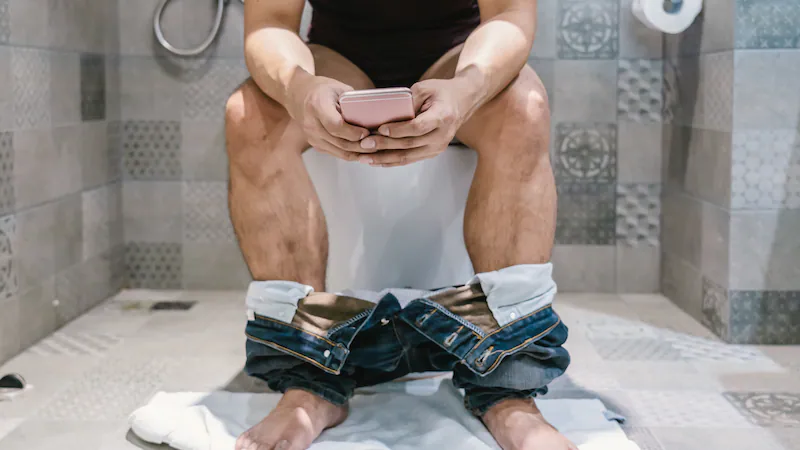
For many people, the bathroom has quietly become a private escape — a place to scroll through headlines, catch up on social media, or simply enjoy a few uninterrupted minutes alone. What was once a quick, routine visit has gradually turned into extended screen time. Now, new research suggests that this modern habit may be taking a toll on digestive health.
According to a study published in PLOS One, regularly using a smartphone while sitting on the toilet may significantly increase the risk of developing hemorrhoids. The research sheds light on how prolonged sitting — especially when combined with distracted scrolling — can contribute to this uncomfortable condition.
Hemorrhoids are swollen veins located in the lower rectum or around the anus. They develop when pressure builds up in that area, leading to symptoms such as itching, discomfort, pain, and sometimes bleeding.

The study surveyed 125 adults aged 45 and older who were undergoing routine colonoscopy screenings. Participants answered detailed questions about their bathroom habits, including whether they used smartphones while on the toilet. Researchers also gathered information about other known hemorrhoid risk factors, such as straining during bowel movements, fiber intake, and exercise habits. The presence of hemorrhoids was confirmed through endoscopic examination.
Among those surveyed, 66% reported regularly bringing their smartphones into the bathroom. These individuals were found to spend considerably more time seated on the toilet than those who did not use their phones there. Around 54% said they used their devices to read news, while approximately 44% spent the time browsing social media.
The findings revealed a notable connection: regular smartphone use on the toilet was associated with a 46% higher likelihood of having hemorrhoids. Additionally, 37% of smartphone users reported spending more than five minutes per visit, compared to only 7% of those who left their phones outside.
Dr. Trisha Pasricha, a gastroenterologist and senior author of the study, who serves as director of the Gut-Brain Research Institute at Beth Israel Deaconess Medical Center, explained that smartphones often cause people to lose track of time. She noted that many apps are intentionally designed to hold attention and encourage prolonged engagement. In her words, people become so absorbed that they do not realize how long they have been sitting.
Prolonged sitting on a toilet can increase pressure in the rectal region. Unlike sitting on a chair, the toilet seat leaves the pelvic floor without full support. This positioning can cause blood to pool in the rectal veins over time, potentially leading to swelling and hemorrhoids.
Dr. Hima Ghanta, a colorectal surgeon at Holy Name Medical Center, who was not involved in the research, explained that posture also plays a role. People tend to hunch forward while looking down at their phones, which is not ideal for proper bowel movement mechanics. She pointed out that historically, squatting was a more natural position for elimination and was associated with fewer issues. According to her, changing the evacuation angle and extending sitting time are contributing factors to the rising incidence of hemorrhoids.
Interestingly, the study found that constipation was not more common among smartphone users. Participants who used their phones did not report straining more than those who did not. Dr. Pasricha suggested that the problem appears to stem primarily from passive sitting rather than excessive pushing. She theorized that extended sitting allows hemorrhoidal tissue to become engorged, which may lead to enlargement and symptoms.
Although the research focused on adults aged 45 and above, the authors believe the findings are highly relevant to younger generations. Dr. Pasricha explained that including older participants provided a useful comparison group because some individuals in that age bracket do not use smartphones during bathroom visits. She suggested that the impact may be even more pronounced among younger people, who are more likely to keep their phones with them at all times.
Dr. Sandhya Shukla, a gastroenterologist at Atlantic Coast Gastroenterology Associates, who was also not part of the study, said she has observed a growing number of younger patients experiencing hemorrhoid-related problems. While factors such as low fiber diets and obesity remain important contributors, she indicated that extended bathroom screen time may be playing a significant role.
To lower the risk of hemorrhoids, doctors recommend keeping toilet visits brief. Gastroenterology experts generally advise limiting bathroom sitting time to no more than 10 minutes, with many suggesting that three to five minutes is ideal. Dr. Shukla mentioned that some experts recommend roughly three minutes per bowel movement, though individual needs vary.
Setting a timer can help prevent unintentional overuse of smartphones in the bathroom. Dr. Pasricha suggested that if nothing productive is happening after a short time, it is better to get up and try again later rather than remain seated and continue scrolling.
Disclaimer: This article is based on findings from a study published in PLOS One and includes expert opinions from medical professionals. It is intended for general informational purposes only and should not be considered medical advice. Individuals experiencing symptoms should consult a qualified healthcare provider.